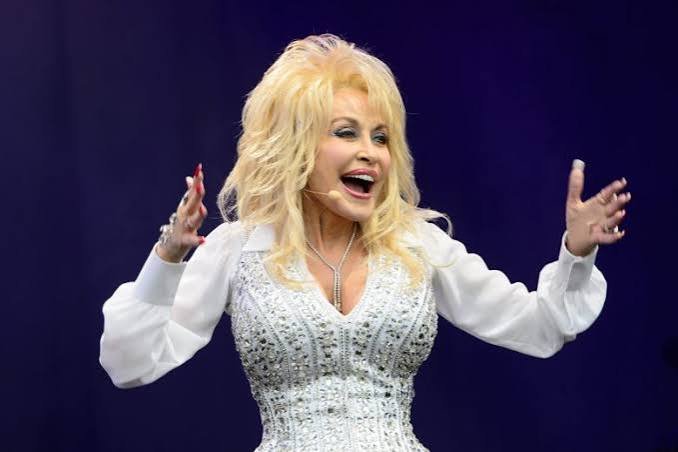
Did Dolly Parton have any children? This is one of the questions many fans ask about the legendary American country music singer, songwriter, actress and philanthropist. Despite being married for nearly six decades, Dolly Parton never had biological or adopted children with her husband, Carl Dean.
Parton, who became one of the most successful female entertainers in music history, often spoke openly about her decision not to have children. Although she did not become a mother herself, she developed a close relationship with her nieces and nephews and dedicated a significant part of her charitable work to helping children around the world.
Her influence on young people is particularly visible through Dolly Parton’s Imagination Library, a literacy initiative that provides books to children and encourages them to develop a love of reading.
Beyond her family life, Parton built an extraordinary career spanning music, film, television, business and philanthropy. Her success also made her one of the wealthiest entertainers in country music, with estimates of her net worth running into hundreds of millions of dollars.
In this article, we explore whether Dolly Parton had children, why she and her husband remained child-free, her marriage, estimated net worth, career achievements and lasting legacy.
Did Dolly Parton Have Any Children?
No. Dolly Parton did not have any biological or adopted children. She was married to Carl Dean from 1966 until his death in 2025, but the couple never had children together.
Although Parton considered the possibility of motherhood at different points in her life, she eventually accepted that having children was not part of the path she would follow.
In interviews over the years, she explained that not having children gave her more freedom to concentrate on her career, travel, write music and pursue charitable projects.
Parton also suggested that her life had developed in a way that allowed her to care for children beyond her immediate family.
In a 2017 interview on the Today show, she expressed the belief that her decision not to have children enabled her to embrace a broader role in the lives of young people.
Her relationship with children was therefore not limited to her nieces and nephews. Through her charitable foundation and literacy programme, she helped make books accessible to children from different backgrounds.
According to Biography.com, Parton believed that her lack of children allowed her to devote attention and resources to other people’s children.
Why Did Dolly Parton Never Have Children?
Parton’s decision not to have children was influenced by her personal circumstances, professional ambitions and outlook on life.
1. Her demanding music career
Parton began pursuing music professionally while she was still a child. After finishing high school in 1964, she moved to Nashville, Tennessee, to pursue her ambitions in the music industry.
Her career gradually expanded from country music into pop music, acting, songwriting, television and business.
As her popularity grew, she spent considerable time touring, recording albums, writing songs and working on film and television projects.
In interviews, Parton acknowledged that raising children would have changed the way she approached her career. She believed motherhood might have limited some of the opportunities she was able to pursue.
That does not mean she regarded motherhood negatively. Rather, she recognised that her life had taken a different direction.
2. Her relationship with Carl Dean
Parton married Carl Dean on May 30, 1966. Dean was a businessman who largely avoided public attention, even as his wife became internationally famous.
The couple maintained a notably private relationship throughout their marriage.
Although they did not have children, they remained together for decades and developed a life that allowed Parton to continue her professional work while protecting their personal space.
Dean died in March 2025 at the age of 82. Parton publicly expressed her grief and reflected on the many years they had shared.
3. Her desire to help children in other ways
Another important part of Parton’s explanation was her belief that she could contribute to children’s lives without being a biological mother.
Rather than concentrating exclusively on raising a family of her own, she used her influence and financial resources to support childhood literacy, education and other charitable causes.
Her Imagination Library became one of the most recognisable examples of this commitment.
For Parton, helping children gain access to books was a practical way to make a difference in their lives.
Who Was Dolly Parton’s Husband?
Dolly Parton’s husband was Carl Thomas Dean, a businessman who was known for maintaining a private life away from the entertainment industry.
The couple met in Nashville in 1964, shortly after Parton arrived in the city to pursue her music career. They married two years later in a private ceremony.
Unlike many celebrity spouses, Dean rarely appeared at public events with Parton and generally avoided interviews and media attention.
Parton respected his preference for privacy, and the couple built a relationship that was largely separate from her public career.
Their marriage lasted from 1966 until Dean’s death in 2025. The pair did not have children, but Parton often spoke affectionately about their relationship.
Their long marriage became an important part of Parton’s personal story, particularly because she managed to maintain a private relationship while living much of her professional life in the public eye.
Did Dolly Parton Have Any Adopted Children?
There is no reliable public evidence that Dolly Parton adopted a child.
Although she had no biological or adopted children, she was closely involved in the lives of younger members of her family.
She also became a godmother to singer and actress Miley Cyrus, a relationship that introduced her to a younger generation of music fans.
Parton’s connection with Cyrus extended beyond the formal role of godmother. The two performed together and spoke warmly about one another in public.
Parton also supported projects intended to help children develop educational opportunities and creative confidence.
Her Imagination Library has been particularly significant because it provides books to young children, helping families establish reading habits from an early age.
The programme reflects a central theme of Parton’s life: using her success to create opportunities for people who might otherwise have limited access to educational resources.
What Was Dolly Parton’s Net Worth?
Dolly Parton’s net worth was estimated to be hundreds of millions of dollars, although published estimates differ.
Following her death in August 2026, Biography.com estimated her net worth at approximately $650 million. Reuters, citing Forbes’ 2025 estimate, reported a figure of about $450 million. These figures are estimates rather than a verified public accounting of her entire estate, so they should not be treated as exact amounts.
Her wealth came from several sources, including music royalties, songwriting, album sales, acting, business investments and tourism-related ventures.
1. Music royalties and songwriting
One of the most important sources of Parton’s wealth was her work as a songwriter.
She wrote thousands of songs during her career, including internationally recognised hits such as Jolene, 9 to 5, Coat of Many Colors and I Will Always Love You.
Her decision to retain valuable songwriting rights helped her continue earning money when her compositions were recorded, performed or licensed for other uses.
A particularly successful example was I Will Always Love You, which Parton wrote and originally recorded before Whitney Houston released her hugely successful version in 1992.
Houston’s recording introduced the song to a much larger international audience and generated substantial royalties for Parton.
Her songwriting catalogue remained a valuable part of her financial legacy. Reuters reported that Forbes estimated the catalogue’s value at approximately $120 million.
2. Dollywood theme park
Parton also built a substantial business presence through Dollywood, the theme park located in Pigeon Forge, Tennessee.
Opened in 1986, the park became a major tourism attraction in the Smoky Mountains region. It combines amusement rides, live entertainment, traditional crafts and attractions inspired by Appalachian culture.
Parton held a 50 per cent stake in Dollywood, making it a significant part of her business portfolio.
The park’s success demonstrated how she transformed her public profile into a long-term commercial venture beyond music.
According to Reuters, Dollywood attracts approximately four million visitors annually, helping support the region’s tourism economy.
3. Film and television projects
Parton’s work in film and television also contributed to her wealth.
She appeared in movies including 9 to 5, The Best Little Whorehouse in Texas and Steel Magnolias. Her acting career expanded her audience beyond country music and strengthened her reputation as a versatile entertainer.
She also wrote music for television productions, stage shows and other entertainment projects.
Her ability to work across several areas of entertainment gave her multiple sources of income throughout her career.
4. Business ventures and other investments
Over the years, Parton expanded into additional businesses and commercial partnerships.
Her ventures included products and attractions associated with her name, as well as newer projects in cosmetics and other consumer markets.
These activities complemented her music royalties and theme park investments.
Her financial success was not simply the result of being a famous singer. It also reflected decades of songwriting, ownership decisions, commercial partnerships and business development.
Important: Net worth estimates can differ because publications use different methods to value private businesses, intellectual property, investments, liabilities and other assets. Parton’s actual estate value may not be identical to any published estimate.
Dolly Parton’s Early Life and Family Background
Dolly Rebecca Parton was born on January 19, 1946, in Locust Ridge, Tennessee, in the United States.
She grew up in a large family and was the fourth of 12 children born to Robert Lee Parton and Avie Lee Owens Parton.
Her childhood was shaped by financial hardship in rural Appalachia. Her family had limited resources, and the experiences of her early years later became an important source of inspiration for her songwriting.
Parton’s upbringing influenced songs such as Coat of Many Colors, which tells a story about her childhood and the meaning of a homemade coat.
Music was part of family life. Her mother sang, and other relatives encouraged her interest in performing.
Parton began appearing on local radio and television while still young. By her teenage years, she had performed at the Grand Ole Opry, one of country music’s most famous stages.
After completing high school, she moved to Nashville in 1964 to pursue a full-time career in music.
Her journey from a modest upbringing to international success became a central part of her public identity.
How Dolly Parton Became a Music Legend
Parton’s career developed over several decades, beginning with her early work as a country singer and songwriter.
A major breakthrough came through her professional partnership with country singer Porter Wagoner. Her appearances on The Porter Wagoner Show helped introduce her to a wider audience.
She eventually established herself as a successful solo performer, releasing songs that combined memorable melodies with storytelling drawn from everyday life.
Her most recognised songs include:
- Jolene: A country classic about a woman pleading with another woman not to take her partner.
- I Will Always Love You: A song she wrote that later became a global hit through Whitney Houston’s recording.
- 9 to 5: A popular song about working life, which also featured in the 1980 comedy film of the same name.
- Coat of Many Colors: A personal song inspired by her childhood.
- Here You Come Again: One of her successful crossover recordings.
Parton’s career extended beyond country music, and she became known for blending musical talent with humour, distinctive fashion and a strong business instinct.
She was inducted into the Country Music Hall of Fame in 1999 and the Rock & Roll Hall of Fame in 2022. Her career also included numerous Grammy Awards and other major honours.
Dolly Parton’s Philanthropy and Imagination Library
Although Parton did not have children of her own, supporting children became a major part of her charitable work.
In 1995, she launched Dolly Parton’s Imagination Library through the Dollywood Foundation. The initiative was created to encourage childhood literacy by providing free books to participating children.
The programme expanded beyond its original community and reached families in multiple countries through partnerships with local organisations.
Its central idea is straightforward: children who have access to books from an early age have more opportunities to develop reading skills and a lasting interest in learning.
Parton’s philanthropy also extended to other causes, including disaster relief, medical research and support for communities in need.
Her charitable work helped shape her public legacy alongside her music and business success.
The Imagination Library is particularly relevant to the question of whether Parton had children. Although she never became a mother herself, she helped create an initiative that benefited many young readers and families.
Did Dolly Parton Have a Godchild?
Yes. Dolly Parton was the godmother of Miley Cyrus, the American singer and actress who rose to fame through the television series Hannah Montana.
Parton and Cyrus developed a close relationship, and their connection brought together two generations of performers.
Parton appeared in Hannah Montana and collaborated musically with Cyrus. Their relationship also reflected Parton’s interest in mentoring younger entertainers.
Although being a godmother is different from being a parent, the role became a notable part of Parton’s family story.
Her connection with Cyrus and her relationships with her nieces and nephews illustrate that her family life was not defined solely by the fact that she had no children.
What Is Dolly Parton’s Legacy?
Dolly Parton’s legacy extends far beyond the question of whether she had children.
She became a prominent songwriter, recording artist, actress, businesswoman and philanthropist whose influence reached audiences across generations.
Her music explored love, heartbreak, family, poverty, ambition and resilience. Songs inspired by her own experiences helped listeners connect with her work, while her performances and distinctive public image made her one of country music’s most recognisable figures.
Her business achievements were equally significant. By building ventures such as Dollywood and retaining valuable songwriting rights, she established a commercial legacy that went beyond album sales and touring.
Her philanthropy also ensured that her influence reached people who might never attend one of her concerts.
The Imagination Library, in particular, reflects her belief that books and education can make a meaningful difference in children’s lives.
Parton died on August 25, 2026, at the age of 80, according to her official website and the Country Music Hall of Fame. Her music, business ventures and charitable projects remain central to her legacy.
Conclusion
So, did Dolly Parton have any children? No. She and her husband, Carl Dean, did not have biological or adopted children during their marriage.
Parton explained that her life took a different direction, allowing her to concentrate on her music career and charitable work. She maintained close relationships with her extended family and became the godmother of Miley Cyrus.
Her estimated net worth was between $450 million and $650 million in published reports, although these figures are not a definitive valuation of her estate.
From her songwriting success and acting career to her ownership stake in Dollywood and the Imagination Library, Parton built a remarkable legacy that reached well beyond the music industry.
Her life demonstrates that a person’s influence on children and communities does not have to depend on becoming a parent. Through her music, philanthropy and business achievements, Dolly Parton left an enduring mark on millions of people around the world.