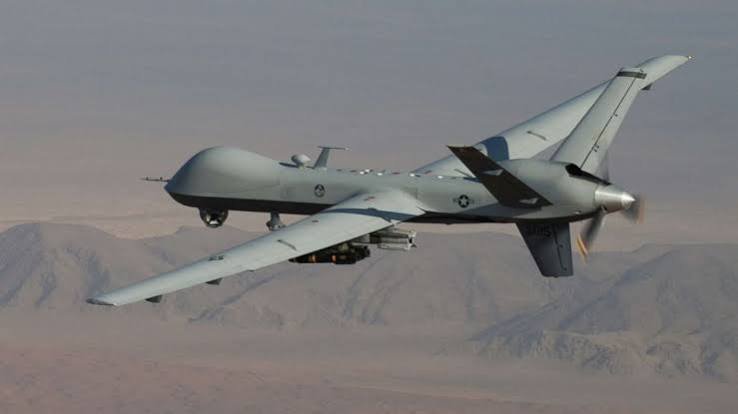
The United States military has carried out another joint operation with Somalia’s federal government, targeting fighters and infrastructure belonging to the al-Shabaab militant group as security forces continue efforts to weaken the organisation’s influence in East Africa.
The airstrikes took place on October 23, 2026, near Bulo Bashiir, approximately seven kilometres northeast of Janale in southern Somalia.
The operation was conducted by US Africa Command (AFRICOM) in coordination with the Federal Government of Somalia and the Somali Armed Forces.
According to AFRICOM, the strikes form part of continuing efforts to reduce al-Shabaab’s ability to threaten American personnel, citizens and security interests in the region.
The operation highlights the continuing military partnership between Washington and Mogadishu as Somalia faces an extended campaign against one of Africa’s most established extremist organisations.
US military intensifies cooperation with Somalia
The latest airstrikes reflect Washington’s continued involvement in Somalia’s counterterrorism operations.
AFRICOM confirmed that its forces worked alongside the Somali government during the October 23 operation. The command said the partnership was aimed at weakening al-Shabaab’s operational capabilities and reducing the threat posed by the group.
However, the US military did not publicly provide detailed information about the aircraft, weapons or personnel involved in the operation.
It also did not release a confirmed casualty figure or provide a detailed assessment of the damage caused by the strikes.
The lack of operational details is consistent with AFRICOM’s approach to protecting information that could affect ongoing military activities.
The command has maintained that cooperation with Somali security forces remains an important part of its efforts to counter extremist groups operating across the Horn of Africa.
Al-Shabaab remains a major security threat
Al-Shabaab is an Islamist militant organisation that has fought the Somali government for years in an attempt to establish its own system of rule.
The group formally joined al-Qaeda in 2012 and has developed an extensive network of fighters, financial operations and local support structures.
Its activities have extended beyond Somalia, with attacks and security threats affecting neighbouring countries, particularly Kenya.
Al-Shabaab has also carried out deadly attacks against civilians, government officials, military personnel and foreign interests.
The organisation is believed to command thousands of fighters and generate substantial income through illegal taxation, extortion and other activities in areas where it exercises influence.
Estimates cited in the original report place its annual revenue between $50 million and $100 million. Such figures are estimates rather than independently audited financial records.
Its ability to raise funds has helped it maintain operations despite years of military pressure from Somali forces and international partners.
Links to al-Qaeda and the September 11 attacks
Al-Shabaab’s formal relationship with al-Qaeda has made it a significant concern for international counterterrorism agencies.
Al-Qaeda was responsible for the September 11, 2001 attacks in the United States, which killed thousands of people and transformed international security policy.
Although al-Shabaab has not claimed responsibility for an attack inside the United States, American authorities have repeatedly warned about the group’s international ambitions and propaganda.
The organisation has encouraged attacks against Western interests and previously published material identifying potential targets outside Africa.
US officials have also raised concerns about individuals allegedly linked to al-Shabaab plots beyond Somalia.
The group’s connection to al-Qaeda therefore gives its activities significance beyond the immediate security situation in the Horn of Africa.
Somalia’s prolonged fight against insurgency
Somalia has faced a prolonged security crisis involving al-Shabaab and other armed extremist organisations.
The federal government, supported by international partners, has repeatedly launched military campaigns to regain territory and disrupt militant operations.
Despite these efforts, al-Shabaab has demonstrated an ability to regroup, conduct attacks and maintain influence in parts of southern and central Somalia.
The country’s security forces continue to face challenges involving limited resources, intelligence gathering, logistics and the protection of areas recovered from militants.
US military assistance has included airstrikes, training, intelligence cooperation and other forms of support for Somali security operations.
The partnership is intended to strengthen the ability of Somali forces to take responsibility for national security while reducing the threat from extremist groups.
Regional implications of the latest operation
The October 23 airstrikes come amid continuing international efforts to prevent al-Shabaab from expanding its operations across East Africa.
The group has previously demonstrated its capacity to carry out attacks beyond Somalia’s borders, particularly in Kenya, where it has targeted security personnel and civilians.
Its financial resources and links to international extremist networks have also made it a concern for governments and security agencies outside the region.
For the United States, cooperation with Somalia is part of a broader strategy to limit the activities of militant organisations that could threaten American interests and regional stability.
For Somalia, international military assistance remains an important element of the campaign to weaken al-Shabaab and strengthen the authority of the federal government.
However, airstrikes alone are unlikely to resolve the country’s wider security problems. Long-term progress will also depend on effective governance, capable security institutions, economic development and efforts to prevent extremist groups from rebuilding their influence.
The latest operation represents another stage in the US-Somalia security partnership, but the wider campaign against al-Shabaab remains ongoing.