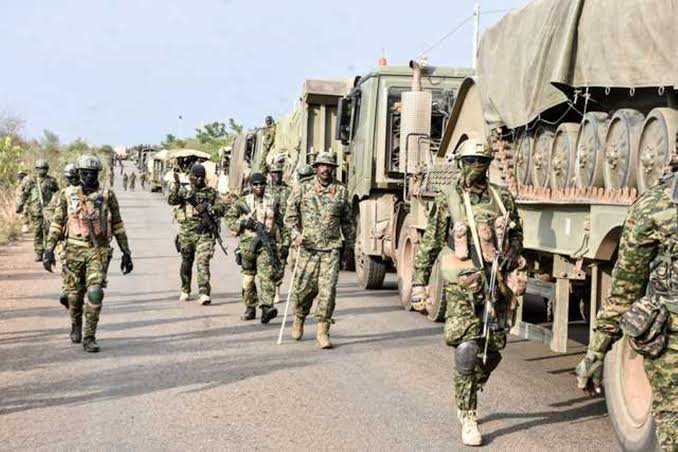
Uganda’s planned military deployment to Gaza has raised an important financial question: who will cover the salaries and additional costs associated with sending Ugandan soldiers to the Middle East?
Uganda’s Parliament approved the deployment of the Uganda People’s Defence Forces (UPDF) in August as part of the proposed International Stabilisation Force (ISF) for Gaza.
The country has committed about 1,200 military personnel to the proposed mission. However, details concerning their compensation and the wider financial arrangements for the deployment remain unclear.
The issue has become more significant as preparations for the mission continue and questions emerge about how participating countries will finance their contingents.
US Funding Does Not Clearly Cover Troop Pay
The United States announced a $206 million funding package in July to support the proposed Gaza force.
According to The EastAfrican, about $200 million of the package is intended for equipment, infrastructure, vehicles and operational expenses, while another $6 million is earmarked for armoured vehicles.
However, the funding announcement did not specifically identify money for the salaries or reimbursements of troops contributed by countries such as Uganda.
A US military official told The EastAfrican that there was no additional information available on troop compensation, adding that troop-contributing countries generally remain responsible for their personnel payrolls.
That position leaves several financial questions unanswered.
What Will Uganda Have to Pay?
Sending more than 1,000 soldiers abroad involves expenses beyond basic salaries.
Uganda would potentially have to consider costs associated with allowances, transportation, accommodation, medical care, equipment, troop rotation and other operational requirements.
The financial burden could therefore extend well beyond the normal payroll of the UPDF personnel assigned to the mission.
Ugandan lawmakers have also sought clarification on the matter.
During the parliamentary discussions surrounding the deployment, questions were raised about who would finance the force and how the country’s participation would be sustained.
Defence Minister Kiryowa Kiwanuka has indicated that further details would be provided at the appropriate time.
Parliament Approved the Mission
Uganda’s Parliament approved the government’s request in August following a motion presented by Defence Minister Kiwanuka.
The government said the deployment followed a request conveyed from US President Donald Trump to President Yoweri Museveni.
Uganda’s participation is being planned under the proposed International Stabilisation Force, which is intended to help provide security in Gaza under the broader US-backed framework.
The UPDF said Parliament’s approval was required under Ugandan law before troops could be sent outside the country.
The proposed force is expected to operate in areas where Israeli forces have withdrawn, with responsibilities including security, support for humanitarian operations and assistance with stabilisation efforts.
Deployment Has Not Yet Taken Place
Despite parliamentary approval, Uganda has not yet sent its troops into Gaza.
The latest disclosure came from UPDF Chief of Joint Staff Lt. Gen. Jack Bakasumba, who told Parliament’s Public Accounts Committee on September 26 that the deployment had not occurred.
He said there was still no binding memorandum of understanding governing the mission and that the soldiers intended for deployment were still undergoing training while awaiting clearance.
The development means that the approval given by Parliament has not yet translated into an operational Ugandan presence in Gaza.
It also gives authorities additional time to settle outstanding questions surrounding the mission, including legal arrangements, logistics and financing.
Uganda’s Experience in Foreign Missions
Uganda is not new to overseas military deployments.
The UPDF has participated in international and regional security operations, particularly in Somalia, South Sudan and the Democratic Republic of Congo.
Ugandan authorities have pointed to this experience as part of the justification for taking part in the proposed Gaza mission.
The country’s military has previously operated under arrangements involving international funding and support, particularly through peacekeeping operations in Somalia.
However, the Gaza deployment presents a different set of logistical and political circumstances, making the financial structure particularly important.
Other Countries Joining the Gaza Force
Uganda is expected to be one of several countries contributing personnel to the proposed International Stabilisation Force.
Morocco has also committed troops, while Indonesia has discussed contributing a substantially larger contingent. Kazakhstan, Kosovo and Albania have also been linked to the planned force.
The proposed international force could eventually involve thousands of personnel, although the final size and composition remain subject to agreements between participating countries and the authorities involved.
Ugandan and Burundian military officials have also visited Israel as discussions over participation in the mission progressed. Burundi, however, has not been confirmed as a final contributor.
Funding Remains a Key Issue
For Uganda, the question is not simply whether it can provide soldiers but how the deployment will be financed over time.
While the United States has announced hundreds of millions of dollars in support for the broader mission, there is still no publicly detailed breakdown showing how much will go toward the compensation of Ugandan personnel.
The lack of clarity is likely to remain an important issue as Kampala works to finalise the arrangements governing the deployment.
Until a binding agreement is completed and the funding structure is made clearer, questions over salaries, allowances and other costs will remain part of the debate surrounding Uganda’s proposed Gaza mission.
For now, Uganda has parliamentary authorisation and a planned contingent of about 1,200 troops, but the UPDF says the soldiers have not yet deployed.