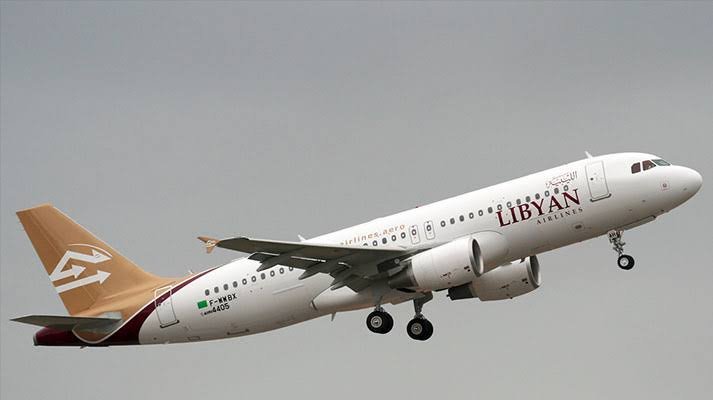
Libya has opened discussions with American aerospace company Boeing over plans to develop and train the workforce required for its proposed national carrier, Libyan United Airlines (LUA), as the government moves forward with efforts to strengthen the country’s aviation industry.
The talks focused on identifying the professional, administrative and technical personnel needed to establish and operate the new airline. They also explored how Boeing could use its international experience to support the training of Libyan workers and transfer essential aviation knowledge to local professionals.
The virtual meeting was led by Mustafa Al-Mana, head of the Executive Team for the Prime Minister’s Initiatives and Strategic Projects, alongside representatives of Boeing.
The discussions form part of the Tripoli-based government’s wider plan to establish a modern airline capable of improving air transport services, expanding international connections and creating greater opportunities for Libyan professionals in the aviation sector.
Boeing to support training and technical knowledge transfer
According to the Libyan government, the meeting examined opportunities to draw on Boeing’s global expertise to prepare local personnel for the airline’s operations.
The proposed cooperation includes specialised training programmes designed to equip Libyans with the technical and operational skills required to manage an airline in line with international standards.
The government also wants to reduce dependence on foreign expertise over time by developing a skilled national workforce capable of handling important responsibilities across the aviation industry.
Training is expected to cover different professional areas, including technical operations, administration and other specialised functions necessary for the airline’s establishment and long-term management.
Boeing was represented by Ibrahim Alfarhan, its marketing director; Karim Freund, account director for the Middle East and Africa at Boeing Global Services; and Michael Castle, a senior aviation consultant.
The discussions did not announce a specific training contract, recruitment programme or number of employees expected to participate. Rather, they centred on identifying workforce requirements and exploring how Boeing’s experience could contribute to the airline’s development.
Libyan United Airlines forms part of wider aviation reforms
The proposed carrier is part of Prime Minister Abdel Hamid Aldabaiba’s broader ambition to modernise Libya’s aviation industry and improve the country’s transport infrastructure.
The government wants the airline to operate under a sustainable financial and operational framework while providing improved services for passengers travelling within Libya and to international destinations.
Officials have also highlighted the importance of connecting the country more effectively to global markets, supporting tourism and facilitating business travel.
The establishment of Libyan United Airlines is therefore being presented as more than the creation of another aviation company. It is intended to contribute to a wider restructuring of the sector through improved services, technical development and investment in local expertise.
The government has repeatedly emphasised that Libyan professionals should eventually play leading roles in the airline’s management and operations.
Libya and Boeing already have a broader cooperation framework
The latest workforce discussions build on an earlier strategic cooperation arrangement between Libya’s Government of National Unity and Boeing.
In May 2026, the two sides signed a memorandum of understanding aimed at supporting the development and modernisation of Libya’s civil aviation sector.
The agreement covered cooperation in acquiring modern aircraft, improving technical and technological capabilities and developing aviation infrastructure in accordance with international standards.
It also provided a broader framework for discussions about the country’s aircraft fleet, technical support, operational requirements and training programmes.
In October 2026, Libyan officials and Boeing representatives held another virtual meeting to review progress on the proposed airline project.
That discussion covered fleet requirements, technical assistance, operational planning, training, feasibility study findings and the project’s financing model.
The November workforce meeting represents a further step in discussions about the practical requirements for establishing the new carrier.
However, the latest announcement did not confirm a new aircraft purchase, the size of the proposed fleet or a final launch date.
Building local aviation expertise
Developing a skilled workforce remains an important part of Libya’s plans to strengthen its aviation industry.
Airlines require more than aircraft to operate successfully. They depend on trained engineers, technical specialists, operations managers, administrative personnel and other professionals who understand international safety and service requirements.
For Libya, building these capabilities locally could help reduce reliance on imported expertise while creating employment and professional development opportunities.
Boeing’s participation could provide access to specialised knowledge and training experience, although the details of any future programmes will depend on further arrangements between the two sides.
The government has said that transferring technical and operational knowledge to Libyan workers is a priority. The objective is to create a workforce capable of managing the airline and supporting its long-term development.
Challenges facing Libya’s aviation ambitions
Despite the government’s plans, establishing a new airline will involve several major requirements beyond workforce development.
The company will need an appropriate aircraft fleet, sufficient financing, qualified personnel, reliable maintenance arrangements and an operational structure that meets international aviation standards.
Regulatory approval and safety oversight will also be essential, particularly as Libya seeks to strengthen its connections with international destinations.
The European Union’s aviation safety restrictions remain an important consideration. Libyan-licensed airlines continue to face restrictions on operating within the EU because of concerns about the country’s aviation safety oversight. A new carrier would therefore need to meet the relevant regulatory requirements before gaining access to markets covered by those restrictions.
The government will also have to demonstrate that the proposed airline can operate on a financially sustainable basis in a competitive international industry.
These challenges mean that training and workforce preparation are important, but they represent only one part of the wider establishment process.
A new phase in Libya’s airline development plans
The latest discussions with Boeing show that Libya is continuing to work on the institutional and technical foundations of Libyan United Airlines.
By focusing on workforce development, the government is seeking to ensure that the proposed carrier has access to trained local professionals who can support its operations and future expansion.
The partnership could also contribute to wider efforts to strengthen Libya’s aviation capabilities through technical cooperation and knowledge transfer.
Nevertheless, important details about the airline’s launch, fleet, financing and operational arrangements remain to be confirmed.
For now, the discussions mark another stage in Libya’s efforts to establish a modern carrier while developing the local expertise needed to manage its aviation sector in the years ahead.