Burkina Faso has secured an improvement in its sovereign credit rating after international agency S&P Global Ratings upgraded the country’s long-term rating from CCC+ to B-, citing reduced liquidity pressures and improvements in public financial management.
The decision, announced on November 6, 2026, represents a positive development for the West African country’s financial outlook, which has been affected by political uncertainty, security challenges and pressure on government finances.
S&P also assigned Burkina Faso a stable outlook, indicating that it expects the country’s financial position to remain broadly consistent with the assumptions supporting the new rating.
The upgrade reflects growing confidence in the government’s ability to meet its debt obligations, alongside improvements in economic activity and the recovery of important revenue-generating sectors.
However, the rating adjustment does not mean that Burkina Faso has overcome its wider economic difficulties. Security risks, political uncertainty and dependence on gold exports continue to present significant challenges.
Why S&P improved Burkina Faso’s sovereign rating
S&P’s decision was largely influenced by the reduction in immediate liquidity risks and the government’s record of meeting its financial commitments.
A sovereign credit rating provides an assessment of a country’s ability and willingness to repay its debt. It is closely monitored by international investors, lenders and financial institutions when evaluating the risks associated with providing financing to a government.
Burkina Faso’s previous CCC+ rating reflected substantial credit risks and vulnerability to adverse financial conditions.
Moving the country to B- represents an improvement, although the rating remains within speculative-grade territory and indicates that considerable financial risks remain.
The stable outlook suggests that S&P does not currently expect an immediate deterioration that would require another rating adjustment under its baseline assessment.
The agency’s decision also reflects improvements in the country’s fiscal position, stronger economic activity and the contribution of mining and agriculture to the recovery.
Public finances show signs of improvement
The recovery of government finances has become an important factor in Burkina Faso’s economic performance.
According to figures cited in recent assessments of the country’s economy, the fiscal deficit narrowed from approximately 5.8% of gross domestic product in 2024 to 1.8% in 2025.
Public debt also declined from about 57.3% of GDP to approximately 53.5% over the same period.
These developments point to an improvement in the government’s fiscal position and efforts to manage public spending and borrowing.
The country’s access to regional financial markets has also remained important, particularly as opportunities for external concessional financing have become more difficult.
However, borrowing through regional markets can carry higher interest costs than loans from development institutions. This means that maintaining fiscal discipline will remain essential if Burkina Faso is to protect the gains recorded in recent years.
Gold and agriculture support economic recovery
The mining and agricultural sectors have played important roles in Burkina Faso’s economic performance.
Gold remains the country’s most important export commodity and a major source of foreign exchange. Higher production and favourable international market conditions have supported export earnings and government revenue.
The mining industry also provides employment and contributes to economic activity through associated businesses and services.
Agriculture is equally important because a large proportion of the population depends on farming and related activities for livelihoods.
Improved agricultural production can support rural incomes, strengthen food supplies and reduce the need for certain imports.
Together, these sectors have helped support economic recovery and strengthen the country’s external financial position.
Nevertheless, heavy reliance on gold creates exposure to changes in international commodity prices. A significant decline in gold prices could reduce export earnings and put pressure on government revenue.
Security and political uncertainty remain major concerns
Despite the improved rating, Burkina Faso continues to face serious challenges linked to insecurity and political uncertainty.
Armed violence and instability have affected economic activities in several parts of the country, disrupting agriculture, trade, transportation and access to essential services.
The security situation has also increased government spending requirements, particularly in defence, humanitarian assistance and support for displaced communities.
These pressures can make it more difficult to maintain fiscal consolidation while financing essential public services.
Political uncertainty is another factor investors and international financial institutions will continue to monitor.
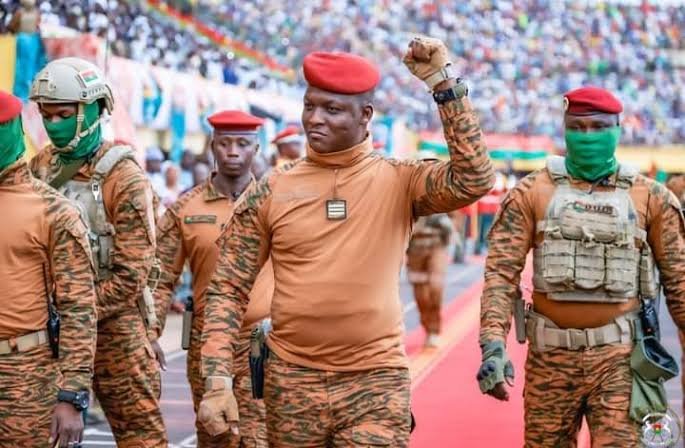
The country’s military-led authorities have faced pressure to address insecurity and establish a clear political transition framework.
Although the rating upgrade recognises improvements in financial conditions, it should not be interpreted as evidence that the security environment has improved to the same extent.
What the rating upgrade means for investors
An improvement in Burkina Faso’s sovereign rating could influence how international investors assess the country’s financial risks.
A higher rating may help strengthen confidence among lenders and investors, particularly if the government continues to demonstrate its ability to meet debt obligations and manage public finances.
It could also support discussions around future financing arrangements and the country’s access to capital markets.
However, a B- rating remains speculative grade. Investors still face considerable risks associated with the country’s economic structure, security conditions and political environment.
The upgrade should therefore be viewed as recognition of improved financial resilience rather than a guarantee of lower investment risks across every sector.
Mining companies, financial institutions and other businesses operating in Burkina Faso will continue to assess conditions based on their individual exposure to security, regulatory and operational challenges.
Debt management remains an important priority
Burkina Faso’s ability to maintain its improved credit standing will depend partly on how effectively the government manages its debt.
Greater reliance on domestic and regional borrowing can increase interest expenses and create refinancing pressures, especially when debt instruments have relatively short repayment periods.
The International Monetary Fund has previously identified the country’s dependence on gold exports, domestic debt rollover requirements and persistent security challenges as important risks to debt sustainability.
The government will therefore need to balance spending on security and development with efforts to control borrowing costs and maintain sustainable public finances.
Access to concessional financing, improved revenue collection and effective public spending management could help reduce pressure on the national budget.
Burkina Faso faces the task of sustaining its progress
The upgrade from CCC+ to B- marks an important development in Burkina Faso’s efforts to improve its financial position.
The decision reflects reduced liquidity concerns, continued debt payments and improvements in economic activity supported by mining and agriculture.
However, the country’s economic recovery remains vulnerable to external shocks, particularly changes in gold prices, as well as domestic security and political challenges.
Maintaining the improved rating will require consistent fiscal management, stronger economic diversification and progress in addressing the conditions that continue to affect investment and public finances.
For now, S&P’s decision provides an encouraging signal about Burkina Faso’s financial resilience, while also highlighting the work still required to establish a more stable and sustainable economic environment.