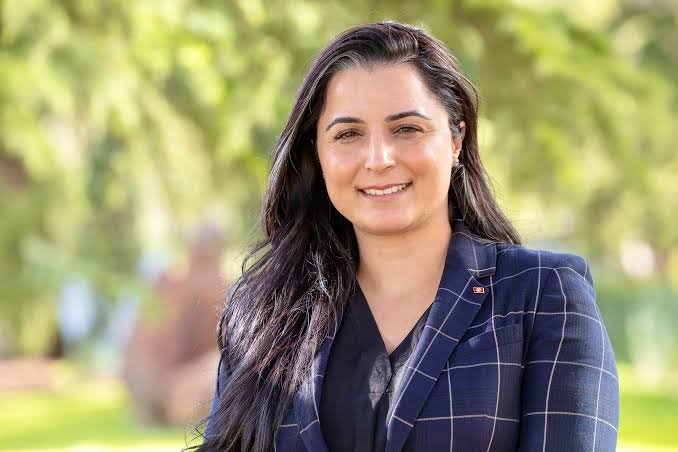
A military court in Tunisia has sentenced opposition politician Olfa Hamdi to four years in prison over charges linked to state security and alleged attempts to encourage members of the armed forces to disobey orders.
The ruling, announced on Wednesday, October 21, 2026, adds to growing political tensions in the North African country, where President Kais Saied’s government has faced criticism over the treatment of opposition figures and restrictions on political freedoms. Hamdi’s lawyer, Akram Moussa, confirmed the sentence to Reuters.
Hamdi leads the Third Republic Party and has been an outspoken critic of Saied. She has called for a transitional government and early presidential elections, positions that have placed her among the prominent voices challenging the president’s leadership.
According to her lawyer, the latest judgment consists of two separate two-year prison sentences. The court also imposed fines totalling 80,000 Tunisian dinars, equivalent to about $26,000.
Former Tunisair Chief Faces Additional Prison Sentence
Hamdi previously served as chief executive of Tunisair, Tunisia’s national airline, but left the position in 2021. She later established a consulting business in the United States and spent time outside Tunisia.
She was detained in February 2026 after arriving at the country’s main airport. Her latest convictions are not her first legal setback this year: in March, she received a separate two-year prison sentence in another case.
The charges in the latest proceedings reportedly stemmed in part from social media posts. Her lawyer said they included allegations of plotting against state security and inciting military personnel to refuse orders.
Hamdi, who holds Tunisian and American citizenship, had also sought to contest the presidency in 2024. Her bid was rejected because she had not reached the minimum age of 40 required for presidential candidates at the time.
Her prosecution is drawing attention because of her political profile and the involvement of a military court in a case concerning an opposition figure.
Political Pressure Mounts on President Kais Saied
The sentence comes amid a broader dispute over the state of democracy and political freedoms in Tunisia. Opposition politicians, activists, lawyers and journalists have faced arrests and prosecutions since Saied consolidated power in 2021.
Critics accuse the president of weakening democratic checks and using the legal system to marginalise political opponents. They argue that the prosecutions have narrowed the space for dissent and made it harder for opposition groups to challenge the government.
Saied rejects claims that he is governing as a dictator. He has defended his actions on the grounds that the law must apply to everyone and has maintained that his government is working to protect the country and address wrongdoing.
The contrasting positions have deepened divisions in Tunisia, where the political system that emerged after the 2011 revolution has undergone major changes. Saied’s critics say those changes have undermined the democratic gains made after the fall of longtime president Zine El Abidine Ben Ali.
New Protests Highlight Public Discontent
The case against Hamdi comes days after thousands of Tunisians took part in a major protest in Tunis, demanding the restoration of democratic freedoms and denouncing what they described as increasing restrictions on civil liberties.
The demonstration, organised amid mounting political and economic concerns, reflected growing frustration among sections of the population over the country’s direction. Protesters also criticised the government’s economic management as households continue to face financial pressures.
The protest has added to the challenges facing Saied, who has maintained that his political decisions are necessary to reform Tunisia’s institutions and address longstanding problems. The latest developments suggest that tensions between the government and its critics remain unresolved.
US Monitoring Hamdi’s Case
Hamdi’s American citizenship has also brought international attention to the proceedings. A US State Department spokesperson told AFP that Washington was closely monitoring the situation, while emphasising the administration’s commitment to the safety and security of American citizens.
The statement did not indicate that the United States had taken a formal position on the court’s ruling. However, the case could draw further diplomatic scrutiny as international observers continue to assess the condition of political freedoms and judicial independence in Tunisia.
For Hamdi and her supporters, the latest sentence represents another major obstacle to her political activity. For Tunisia more broadly, the case has become part of a wider debate about the balance between national security, the authority of the courts and the right to oppose the government.
As criticism of Saied’s leadership continues, attention is likely to remain focused on the treatment of opposition figures and whether Tunisia can preserve meaningful political competition.