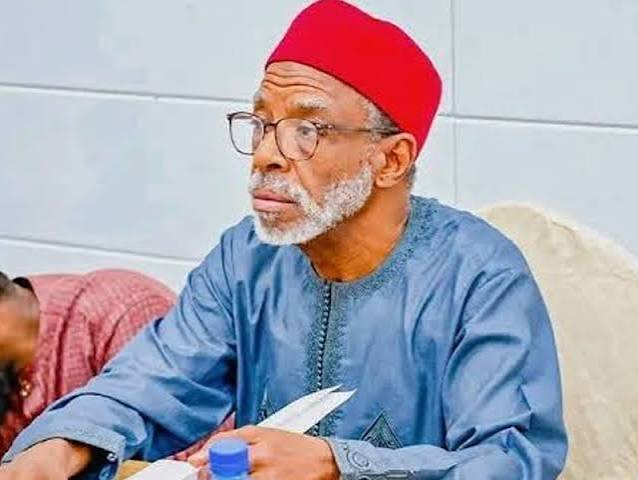
President Bola Ahmed Tinubu and the Northern Nigeria Governors’ Forum (NNGF) have expressed their condolences following the death of Malam Nafiu Baba-Ahmed, the Secretary-General of the Supreme Council for Shari’ah in Nigeria (SCSN).
Baba-Ahmed died in the early hours of Tuesday, October 6, 2026, after a career marked by religious leadership, legal expertise, public service and involvement in national affairs. The Supreme Council for Shari’ah confirmed his death in a statement issued by its president, Sheikh Professor Bashir Aliyu Umar.
President Tinubu, in a statement issued by his Special Adviser on Information and Strategy, Bayo Onanuga, described the deceased as a respected religious leader and administrator who devoted much of his life to serving Islam and Nigeria.
The President said Baba-Ahmed played an important role in guiding the affairs of the Supreme Council for Shari’ah and was known for his commitment to justice, unity and peaceful coexistence.
Tinubu also recalled his longstanding relationship with the late SCSN secretary-general. According to the President, their association dated back to the period surrounding the 2011 election and continued over the years, including Baba-Ahmed’s counsel and support during Tinubu’s 2023 presidential campaign.
Tinubu Highlights His National Contributions
The President also acknowledged Baba-Ahmed’s contribution to national conversations on important social and religious issues.
Tinubu said the late Islamic leader helped maintain the Supreme Council for Shari’ah’s participation in discussions on national matters while promoting greater understanding, moral renewal and social justice.
He extended his condolences to the leadership and members of the Shari’ah Council, the deceased’s family, the government and people of Kaduna State, as well as Muslims across Nigeria.
Tinubu prayed for Allah’s mercy on the deceased and asked God to give his family and the wider Muslim community the strength to cope with the loss.
Northern Governors Pay Tribute
The Northern Nigeria Governors’ Forum also joined the growing tributes to Baba-Ahmed.
NNGF Chairman and Gombe State Governor, Muhammadu Inuwa Yahaya, described the late religious leader as a respected voice whose interventions on matters of justice, morality and national responsibility earned him recognition beyond Northern Nigeria.
Yahaya said the death represented a major loss to the North, the Muslim Ummah and the country.
The governor also praised Baba-Ahmed’s contribution to public discourse, noting that his counsel and engagement on national issues helped strengthen conversations around justice and social responsibility.
Yahaya conveyed his sympathy to the Baba-Ahmed family, the Supreme Council for Shari’ah, the Kaduna State Government and the Nigerian Muslim community.
He further prayed for the deceased to be granted Aljannatul Firdaus and for his family and associates to receive the fortitude needed to endure the bereavement.
Baba-Ahmed’s Professional Legacy
Beyond his position within the Shari’ah Council, Baba-Ahmed had a broad professional background spanning law, public administration and Nigeria’s financial sector.
The Supreme Council said he was born on June 11, 1956, in Zaria, Kaduna State. He studied law at Ahmadu Bello University and combined his legal training with Islamic education and extensive involvement in public policy and national affairs.
His career included service at the Nigerian Deposit Insurance Corporation, where he served as a director, board member and corporate secretary. He also held a senior position at First Interstate Merchant Bank.
The council further credited him with playing a role in the development of Islamic banking in Nigeria and said he served as an independent non-executive director of Jaiz Bank.
Baba-Ahmed was also a member of the National Institute of the National Institute for Policy and Strategic Studies (NIPSS), Kuru, reflecting his involvement in national policy and strategic discussions.
His death has therefore prompted tributes from political leaders, religious institutions and members of the wider Muslim community, with many highlighting his combination of professional knowledge, religious commitment and public service.