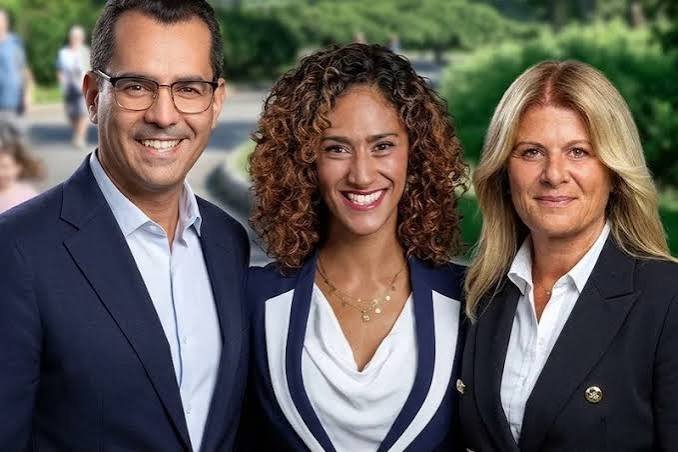
Three politicians with Moroccan roots have won seats in Quebec’s National Assembly following the province’s October 5, 2026 election, marking a notable moment for the Moroccan community in Quebec.
Monsef Derraji, Nada Boumeftah and Valérie Assouline, all candidates for the Quebec Liberal Party, emerged victorious in their respective electoral districts as the province underwent a major political shake-up.
The election returned the separatist Parti Québécois (PQ) to power after more than a decade in opposition. However, the party fell short of the 64 seats required for a majority in the 127-member legislature, winning 59 seats and setting the stage for a minority government under leader Paul St-Pierre Plamondon.
The outcome also marked a dramatic setback for the Coalition Avenir Québec, which had governed the province since 2018. The party was left without a seat in the legislature, while the Quebec Liberals strengthened their position with 40 seats and are set to form the official opposition.
Derraji Retains Nelligan Seat
Monsef Derraji, who was born in Morocco, successfully defended his Nelligan constituency and secured another term under the Quebec Liberal banner.
Derraji first entered the National Assembly in 2018 and had already established himself as a prominent figure within Quebec politics. During his previous time in office, he took on opposition responsibilities involving areas including healthcare and transportation.
His re-election means he will return to the legislature for a third mandate as the Quebec Liberal Party prepares to take up its role on the opposition benches.
His victory also reinforces the growing participation of politicians from Quebec’s North African diaspora in provincial politics.
Boumeftah Makes Legislative Debut
Nada Boumeftah recorded another significant victory for candidates of Moroccan descent by winning the Maurice-Richard riding in Montreal.
Boumeftah, a lawyer with expertise in criminal and penal law as well as youth protection, entered the election as a Quebec Liberal candidate. She previously established her own legal practice and has also worked as a legal commentator.
Her victory was particularly notable because she defeated Québec Solidaire candidate Anne Latendresse in a closely fought contest. Boumeftah will now take her place in the National Assembly for the first time.
Her election represents a fresh political voice for Quebec’s Moroccan-origin population and adds another member of the community to the provincial legislature.
Assouline Wins Saint-Laurent
Valérie Assouline also secured a seat, winning the Saint-Laurent riding for the Quebec Liberal Party.
Assouline is a lawyer whose professional work has focused on family and youth law. Before entering provincial politics, she was involved in the Montreal legal community and served as bâtonnière of the Montreal Bar for 2025-2026.
She also previously served as a municipal councillor in Dollard-des-Ormeaux.
Assouline’s victory follows the departure of former Liberal MNA Marwah Rizqy and gives the Liberals another representative in the Montreal-area legislature.
Moroccan Community Gains Political Visibility
The election results are being viewed as an important development for Quebec’s Moroccan diaspora, with three candidates of Moroccan origin securing seats in the same provincial election.
Their success comes at a time when Quebec is entering a new political period. The return of the Parti Québécois has revived discussions about Quebec sovereignty, while the party’s lack of a legislative majority means it will have to negotiate with opposition parties to advance major policies.
The new government is also expected to face debates over immigration, the economy and Quebec’s relationship with the Canadian federal government.
For Derraji, Boumeftah and Assouline, the challenge will now shift from campaigning to representing their constituents in a legislature dominated by a minority government.
Their victories demonstrate the increasingly diverse nature of Quebec’s political landscape and highlight the growing participation of citizens with immigrant backgrounds in public life.
The three politicians will sit with the Quebec Liberal Party, which emerged from the election as the second-largest party and official opposition.
As the new National Assembly begins its work, their presence could provide an additional platform for issues affecting Montreal and other communities with strong immigrant populations.
The October 5 election has therefore produced more than a change in government. It has also brought new political representation for Quebec’s Moroccan-origin population, with three elected officials preparing to begin or continue their work at the provincial level.