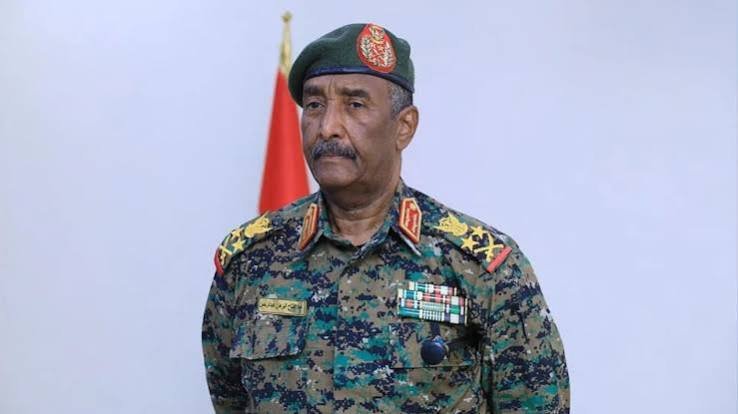
Sudan’s military leader, Abdel Fattah al-Burhan, has rejected attempts by foreign powers to influence the country’s political future and ruled out negotiations with the paramilitary Rapid Support Forces (RSF), insisting that the group must surrender its weapons.
Speaking during a public address in Wadi Halfa, in Sudan’s Northern State, Burhan reaffirmed his opposition to what he described as external interference in Sudanese affairs. He maintained that the country’s leadership must be determined by its own citizens rather than imposed by foreign governments or political groups operating from abroad.
The remarks underline the continued hardening of the army chief’s position as Sudan’s devastating conflict persists and efforts to find a political settlement remain challenging.
Burhan Says Sudan’s Leadership Must Be Decided by Its People
Burhan also dismissed the possibility of political forces returning to power with foreign support. Referring to former Prime Minister Abdalla Hamdok and the Forces for Freedom and Change (FFC) coalition, he made clear that he would oppose any attempt to restore their influence through external pressure.
The army chief argued that no outside actor should have the authority to determine Sudan’s political direction. He called on groups he accused of working against the country to return and engage within Sudan rather than attempt to influence events from overseas.
His comments reflect the continuing political divisions surrounding Sudan’s leadership and the role of civilian movements in shaping the country’s future.
Sudan Army Chief Rejects Negotiations With RSF
A major part of Burhan’s address focused on the ongoing war between the Sudanese army and the RSF.
He again rejected dialogue with the paramilitary organisation, insisting that its fighters must surrender their weapons. According to his position, military operations would continue if the group refused to lay down its arms.
The statement leaves little indication of an immediate shift towards negotiations between the two rival forces. It also highlights the obstacles facing efforts to end a conflict that has caused widespread displacement, disrupted essential services and deepened Sudan’s humanitarian emergency.
Burhan’s remarks represent his stated position on the conflict; they do not establish whether future negotiations or mediation efforts will take place.
Burhan Calls for Elections to Determine Sudan’s Future
Despite his firm stance against foreign involvement and negotiations with the RSF, Burhan said the right to choose Sudan’s leadership ultimately belongs to the Sudanese people.
He argued that elections should determine who governs the country, rejecting the idea that either foreign governments or external political actors should dictate the outcome.
The military leader also sought to reassure citizens about Sudan’s future, urging them not to lose confidence in the country’s ability to move forward despite the difficulties it faces.
However, turning that vision into reality will depend on developments in the conflict, the security situation and the prospects for an agreed political process.
Burhan Praises Egypt-Sudan Relations
Burhan also addressed relations between Sudan and neighbouring Egypt, thanking Cairo for its relationship with Khartoum.
He said Egyptian nationals living in Sudan were safe and did not face problems, while emphasising the importance of continued communication and cooperation between the two countries.
The comments highlight the significance of bilateral ties as Sudan confronts a prolonged conflict with consequences extending beyond its borders.
Egypt remains an important regional neighbour as developments in Sudan continue to affect diplomatic relations, population movements and wider regional stability.
What Happens Next in Sudan?
Burhan’s address reinforces the military leadership’s opposition to foreign-imposed political arrangements and its refusal to negotiate with the RSF under the conditions he outlined.
His insistence that elections should determine Sudan’s future also raises questions about how and when a credible political transition could take place while fighting continues.
For now, the immediate challenge remains ending the violence and creating conditions that would allow civilians to participate meaningfully in determining the country’s future.
The prospects for peace will depend on whether the warring parties change their positions, whether mediation efforts can make progress and whether a political process acceptable to Sudanese stakeholders can emerge.