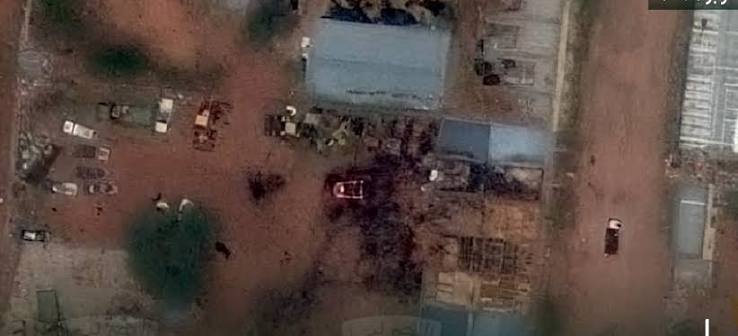
Airstrikes carried out by the Sudanese army in Nyala, the capital of South Darfur, have reportedly killed 30 civilians and destroyed commercial shops at a busy livestock market, according to a coalition affiliated with the paramilitary Rapid Support Forces (RSF).
The Sudanese military said the operation targeted RSF command and control facilities in the city. However, reports of civilian deaths have intensified concerns about the impact of Sudan’s ongoing conflict on residents and local businesses.
The incident was reported on October 17, 2026, by Sudan Tribune, which cited statements from the rival sides and local sources.
Sudanese Army Says Airstrikes Targeted RSF Command Centres
According to the Sudanese army, its forces carried out a series of airstrikes on Friday, October 16, targeting command and control centres operated by the RSF in Nyala.
The military described the operation as an attack on the paramilitary group’s infrastructure. The army’s statement, as reported by Sudan Tribune, did not provide a detailed account of civilian casualties from the strikes.
Local sources told the publication that a long-range drone had been used to attack RSF positions in the city. Residents also reported hearing several explosions across Nyala during the operation.
Nyala is an important urban centre in South Darfur and serves as an administrative base for authorities associated with the RSF-aligned Tasees, also known as the Founding coalition.
The reported strike has raised questions about the choice of targets and the potential consequences for civilians living and working in areas affected by the fighting.
RSF-Affiliated Coalition Reports 30 Civilian Deaths
The Tasees coalition said the bombardment killed 30 civilians, including 17 women and five children.
The group reported that the attack struck Nyala’s livestock market, where traders and other residents were reportedly present when the bombing occurred.
According to the coalition, the strike caused extensive destruction, including damage to commercial shops in the market. The reported casualties and property losses have added to the difficulties faced by communities caught up in Sudan’s prolonged war.
The figures were provided by the RSF-affiliated coalition and have not been independently verified in the available report. Further investigation would be needed to establish the full casualty toll and determine the circumstances surrounding the attack.
The incident also highlights the dangers faced by civilians in commercial areas that can become exposed to military operations during the conflict.
Egypt Accused of Involvement in the Attack
The RSF and the Tasees coalition accused the Sudanese army and Egypt of being involved in the operation.
In their statements, the groups alleged that a drone used in the attack had been launched from the Jebel Uweinat base inside Egyptian territory.
The allegation has not been independently established in the available reporting. No independently verified evidence was presented in the article to confirm the drone’s launch location or establish Egypt’s role in the incident.
The accusation adds an international dimension to an already complex conflict. However, it is important to distinguish the claims made by the parties involved from facts that have been independently confirmed.
The Sudanese army’s stated objective was to destroy RSF command and control facilities in Nyala, while the RSF and its allies focused on the reported civilian casualties and damage to the livestock market.
Emergency Lawyers Condemn Strike on Livestock Market
The Emergency Lawyers group confirmed that the strike hit the livestock market and condemned the incident, according to Sudan Tribune.
The Tasees coalition said the market was crowded with civilians when the bombing occurred. It argued that attacks affecting populated areas and civilian trading centres pose serious risks to people who are not participating in hostilities.
The group also described the destruction of shops and other commercial facilities, warning of the consequences for residents whose livelihoods depend on local markets.
Markets are particularly important in communities affected by conflict because they provide access to food, livestock and other essential goods. Damage to such facilities can disrupt trade, threaten household incomes and make it harder for residents to obtain basic supplies.
The reported destruction in Nyala therefore raises concerns that extend beyond the immediate death toll, particularly if traders are unable to resume business and residents lose access to important commercial services.
Coalition Calls for International Investigation
Following the reported attack, the Tasees coalition called on the United Nations Security Council and international human rights organisations to intervene.
The group urged international bodies to take steps to protect civilians and establish an independent investigation into the incident.
It also alleged that the Nyala strike formed part of a broader pattern of attacks on markets in other locations, including Abu Zaeima, Jebel Hilla, Broush, Abu Adam, Al-Nayem and Umm Zalita.
These claims were presented by the coalition and would require further independent investigation to establish the circumstances of the incidents and identify those responsible.
An independent inquiry into the Nyala bombing could help clarify the intended targets, the weapons used, the extent of civilian casualties and whether the operation complied with applicable international humanitarian law.
Sudan’s War Continues to Put Civilians at Risk
The reported attack underscores the continuing dangers faced by civilians as Sudan’s military and the RSF battle for control of territory.
Although the army said its operation targeted RSF command facilities, reports that a livestock market was hit have renewed concerns about the protection of non-combatants during military operations.
International humanitarian law requires parties to an armed conflict to distinguish between civilians and combatants and to take precautions to reduce civilian harm. Whether a particular attack violated these obligations depends on the facts, including the target, the circumstances of the operation and the precautions taken.
For Nyala’s residents, the immediate concerns include the reported loss of life, damage to businesses and the potential disruption of essential economic activity.
The conflicting accounts also underline the importance of independent verification, particularly when casualty figures and allegations of foreign involvement emerge from parties directly engaged in the conflict.
As calls for an investigation grow, the full circumstances of the airstrikes and the extent of the damage remain matters requiring further clarification.