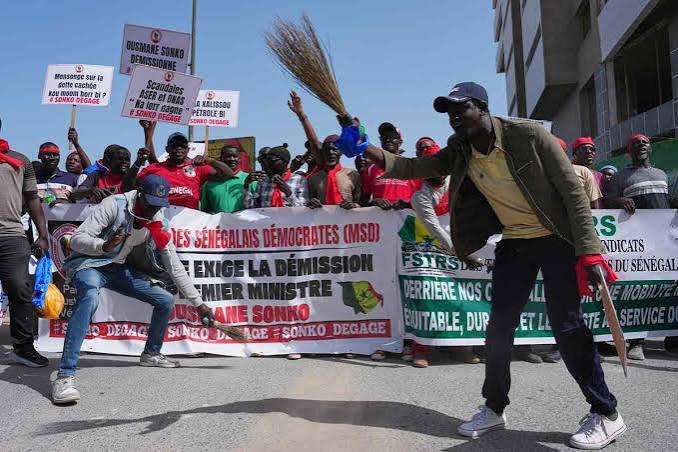
Workers in Senegal have taken to the streets of Dakar to demand better working conditions, improved purchasing power and action on rising living expenses, as trade unions prepare for a 72-hour general strike scheduled to begin on October 21.
The demonstration brought together around 150 people responding to a call from trade union federations. Protesters want the government to honour commitments previously made to workers and address the financial pressures affecting households across the country.
The planned strike, running from October 21 to 23, threatens to disrupt public services and economic activity at a sensitive time for Senegal. The country is preparing to host the Youth Olympic Games, which are due to begin later in October.
The labour dispute reflects growing frustration among workers who say their earnings are no longer keeping pace with the cost of everyday necessities. Union leaders are also criticising what they describe as insufficient engagement from the authorities over outstanding labour demands.
Workers Say Their Purchasing Power Is Declining
The rising cost of living has become a central concern for Senegalese workers, with unions arguing that salaries and existing employment benefits are not providing enough protection against financial pressure.
Sara Konaré, secretary general of the National Union of Petroleum and Gas Workers of Senegal, said the demonstration showed that different parts of the labour movement were increasingly united in pressing for change.
Konaré accused the authorities of failing to involve workers adequately in discussions about their concerns. Union representatives say previous agreements must be implemented rather than left unresolved while the cost of living continues to weigh on employees.
The demands include action on workers’ benefits and conditions, alongside measures intended to ease the pressure on household budgets. The dispute also reflects broader dissatisfaction over the implementation of commitments made by the authorities since the current leadership came to power.
For the unions, the march was a warning that workers expect tangible improvements and are prepared to take collective action if their concerns remain unresolved.
Healthcare Services Could Face Major Disruption
One of the main concerns surrounding the planned stoppage is its potential impact on healthcare, particularly for patients who depend on regular treatment.
Ndeye Seck Fall, who manages a dialysis centre, warned that a shutdown affecting public services could leave patients with fewer options for medical care. She said many people would struggle to pay for treatment in private facilities if public healthcare services were disrupted.
Dialysis patients often require treatment on a regular schedule, making interruptions particularly serious. Any disruption could place additional pressure on patients and their families, especially those who cannot afford to seek care elsewhere.
The strike could also affect other sectors, depending on the level of participation by workers and the response of public institutions. The extent of disruption remains uncertain, but the prospect has raised concerns among people who rely on essential services.
Dispute Extends Beyond Wages
The unions’ grievances include the cost of living, working conditions and the implementation of agreements reached with the government. Labour groups have also raised concerns about employment protections and benefits under Senegal’s updated Labour Code.
The protest comes amid wider debate over the government’s handling of economic pressures and its commitments to workers. Union representatives argue that meaningful dialogue and the fulfilment of outstanding promises are needed to prevent the dispute from escalating.
The government, meanwhile, has called for dialogue and urged the unions to reconsider the strike. Senegal’s Ministry of Public Service, Labour and Public Service Reform said the notice submitted by the unions did not satisfy the legal requirements for a general strike covering public, parapublic and private-sector workers. It warned that a strike deemed unlawful could result in salary deductions or disciplinary action.
The disagreement over the strike’s legality adds another layer to the dispute, as unions weigh their demands against the government’s position on the procedures required for industrial action.
Youth Olympic Games Add Pressure on Authorities
The labour dispute comes less than two weeks before Dakar is scheduled to host the Youth Olympic Games, an event expected to bring athletes, officials and visitors from around the world to Senegal.
As the first African city to host the Youth Olympics, Dakar is preparing for an international sporting event that will place attention on the country’s organisation, infrastructure and public services.
A nationwide strike could complicate preparations if transport, healthcare, education or other essential services are affected. The timing has therefore increased pressure on the government and union leaders to find common ground.
However, workers’ representatives maintain that their demands should not be sidelined because of the approaching sporting event. They want the authorities to address their concerns and demonstrate progress on previously agreed commitments.
The challenge for the government is to maintain public services and preparations for the Games while responding to the grievances driving the labour movement.
What Happens Next?
The three-day strike is scheduled for October 21 to 23, following the demonstration in Dakar. Its overall impact will depend on how many workers participate and whether negotiations produce any agreement before or during the stoppage.
For workers, the immediate priorities are better protection against rising living costs, improved employment conditions and action on outstanding agreements. For the government, the challenge is to address those demands while managing the potential consequences of industrial action.
The dispute also highlights the importance of sustained dialogue between authorities and organised labour. Without progress on the issues raised by unions, tensions could continue beyond the planned strike.
For now, Senegal faces a period of uncertainty as workers prepare to press their demands and the government seeks to avoid widespread disruption ahead of a major international event.