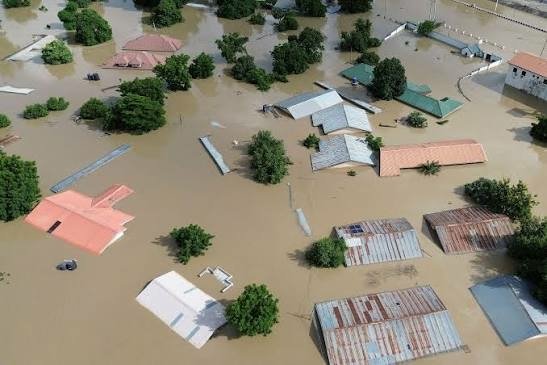
The Nigeria Hydrological Services Agency has issued a fresh flood warning, forecasting a high risk of riverine flooding across 15 states between September 19 and 25, 2026.
The agency advised residents living in communities located along floodplains and other vulnerable areas to prepare for possible evacuation as water levels in major rivers are expected to rise during the seven-day period.
NiHSA Director-General and Chief Executive Officer, Arch Umar Mohammed, announced the forecast in the agency’s latest National Flood Advisory released on Saturday.
According to the agency, the anticipated rise in river stages could result in flooding in several communities and put important public and private infrastructure at risk. Among the facilities identified as potentially exposed are schools, hospitals and other healthcare centres, markets, farms and places of worship.
Mohammed called on state governments and relevant emergency management authorities to take immediate preventive measures, particularly by moving residents in highly vulnerable locations to safer and elevated areas before flooding occurs.
He said the forecast covered Imo, Cross River and 13 other states, warning that communities situated on floodplains should remain alert and be ready to relocate.
The agency specifically identified monitoring stations at Obubra, Itigidi and Epento along the Cross River as locations where rising water levels could contribute to flooding.
In Imo State, seven local government areas were identified as being at risk. They are Aboh-Mbaise, Ahiazu-Mbaise, Ehime Mbano, Ezinihitte, Ideato North, Ihitte/Uboma and Ikeduru.
NiHSA said the potential impact in the state extends to 958 communities, 1,022 schools, 553 healthcare facilities, 161 markets and 198 religious buildings.
The situation is also a concern in Cross River State, where Abi, Akamkpa, Akpabuyo, Biase, Calabar, Calabar South, Ikom and Obubra were listed among the affected local government areas.
The agency estimated that 2,471 communities could be exposed, alongside 703 schools, 344 healthcare facilities, 145 markets and 453 religious buildings. About 854 hectares of farmland were also identified as being vulnerable to flooding.
In Ebonyi State, the forecast covers Abakaliki, Afikpo, Afikpo South, Ebonyi, Ezza North and Ezza South local government areas.
The exposure assessment indicates that 2,574 communities, 1,064 schools, 422 healthcare facilities, 480 markets and 629 religious buildings could be affected. A total of 1,882 hectares of farmland were also listed as exposed.
For Benue State, NiHSA named Buruku, Gboko, Guma, Katsina-Ala, Logo and Ukum as vulnerable areas. The agency identified 303 communities, 100 schools, 48 healthcare facilities, 32 markets and 151 religious buildings as exposed, along with 55 hectares of farmland.
In Anambra State, Aguata, Anambra East, Anambra West, Anaocha, Awka North, Awka South and Ayamelum are among the areas facing possible flooding.
The assessment places 1,314 communities, 1,308 schools, 1,089 healthcare facilities, 280 markets and 610 religious buildings at risk. It also estimates that 1,529 hectares of farmland could be affected.
Meanwhile, eight local government areas in Akwa Ibom State were listed in the advisory. They include Abak, Eket, Etinan, Ibeno, Ibesikpo Asutan, Ibiono Ibom, Ika and Ikono.
NiHSA said 249 communities, 323 schools, 211 healthcare facilities, 74 markets and 289 religious buildings are among the assets exposed in the state.
Beyond these states, the agency also named Edo, Bayelsa, Enugu, Kogi, Delta, Abia, Taraba, Rivers and Lagos among locations expected to face significant flood risks during the forecast period.
The latest advisory underscores the need for residents in flood-prone communities to remain vigilant, monitor official updates and follow evacuation instructions from relevant authorities.
NiHSA’s call for early relocation is aimed at reducing the potential loss of lives and damage to property as rising river levels create increased flooding risks across the affected areas.
With the forecast covering September 19 to 25, authorities and residents in vulnerable communities are expected to take precautionary measures ahead of possible flooding.