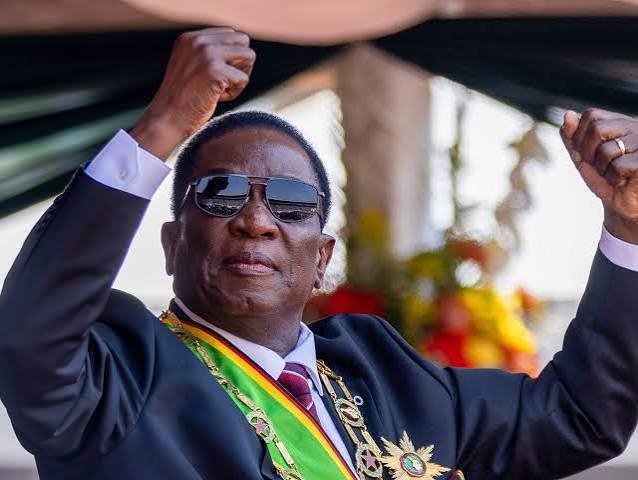
Zimbabwean President Emmerson Mnangagwa has pointed to improvements in the country’s economy while warning that poor rainfall during the 2026-2027 agricultural season could create fresh challenges for food production.
Mnangagwa made the remarks while delivering his State of the Nation Address at the opening of the fourth session of Zimbabwe’s 10th Parliament in Mount Hampden, near the capital, Harare.
The president said Zimbabwe had recorded progress in several areas of the economy, particularly currency and exchange-rate stability. He attributed the improvement partly to increased foreign-currency inflows and measures aimed at strengthening the country’s financial-sector institutions.
Agriculture Records Strong Growth
Agriculture was among the sectors highlighted during the address.
According to figures presented by Mnangagwa, Zimbabwe’s economy expanded by 8.3 per cent in 2025, with agriculture growing by 27.9 per cent. The sector contributed 2.2 percentage points to the overall economic expansion.
However, the president cautioned that the outlook for the coming farming season is less favourable.
He said forecasts for the wider Southern African Development Community region indicate that rainfall could fall below normal levels during the 2026-2027 season, raising concerns about agricultural output and the availability of food and livestock feed.
To prepare for the possible effects of drought, the government has introduced a six-part resilience programme. The measures include strengthening strategic grain reserves, expanding climate-smart farming, improving access to agricultural financing and supporting livestock affected by dry conditions.
The programme also incorporates early-warning systems and efforts to improve the ability of communities to respond to future climate-related shocks.
Mining Remains Central to Economy
Mnangagwa also identified mining as an important pillar of Zimbabwe’s economic development.
He said the government was increasing efforts to encourage mineral exploration while promoting the processing of raw materials within the country.
The president highlighted the production of Zimbabwe’s first locally manufactured lithium sulphate as an example of the government’s push for mineral beneficiation. Additional lithium-processing facilities are also being developed.
Gold and platinum production are undergoing expansion, while investments in iron and steel are contributing to changes in Zimbabwe’s industrial landscape.
The government is also seeking to formalise and provide equipment for small-scale mining operations as part of its broader strategy for developing the mineral sector.
Government Points to Wider Economic Reforms
Beyond agriculture and mining, Mnangagwa said his administration had taken steps to improve the environment for businesses and investors.
He said inflation had fallen to single-digit levels from January 2026 and that foreign-currency inflows had provided additional support for economic stability.
Government figures cited in the State of the Nation Address showed foreign-currency inflows of about $10.7 billion during the first half of 2026, with the figure projected to approach $20 billion by the end of the year.
The president also said reforms involving licences, permits, levies, fees and other regulatory requirements across several sectors were intended to make it easier for businesses to operate and improve the competitiveness of local industries.
Manufacturing, including sectors such as cement, pharmaceuticals and iron and steel, was also reported to be benefiting from increased capacity and value-chain development.
Energy and Infrastructure Projects
Mnangagwa said measures taken in the energy sector had helped bring an end to prolonged power shortages.
He cited electricity from the Kariba hydroelectric facility and Hwange Thermal Power Station, alongside contributions from independent power producers, captive power plants and solar projects.
The government is also continuing with major road projects, including sections of highways connecting Harare with Beitbridge, Kanyemba, Nyamapanda and Chirundu, as well as routes linking Bulawayo with Victoria Falls.
Zimbabwe is additionally preparing for expanded aviation activity, with two more international airlines expected to begin operating in the country next year, according to the president.
Drought Risk Remains a Major Concern
Despite the economic gains outlined in the address, the potential impact of drought remains one of the major issues facing Zimbabwe.
A poor rainy season could affect crop yields, livestock and food supplies, making the government’s preparedness measures particularly important.
Mnangagwa said communities, including those working through traditional local leadership structures, were being prepared to respond to possible future shocks.
The government will therefore have to balance its efforts to maintain economic growth with measures designed to protect agriculture and rural livelihoods if rainfall levels decline as forecast.
For Zimbabwe, the coming agricultural season could prove important in determining whether recent progress in farming can be sustained while the country continues efforts to strengthen its broader economy.