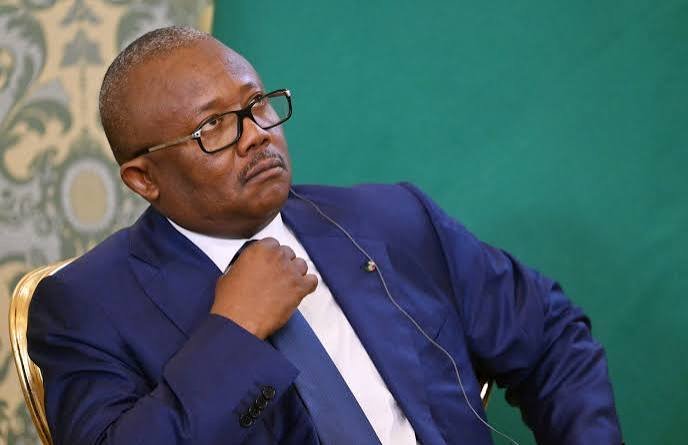
Guinea-Bissau’s military authorities have prevented ousted former President Umaro Sissoco Embaló from returning to the country, saying the current security situation does not allow for his safe arrival.
The decision comes just days after Embaló announced that he planned to return from exile in Morocco and contest the presidential election scheduled for December 6.
In a statement, Guinea-Bissau’s military high command said it had assessed the country’s security environment and concluded that the necessary conditions were not yet available to guarantee Embaló’s return. The junta said the decision was based on national security, maintaining public order and avoiding developments that could threaten social stability.
Embaló Had Announced October 4 Return
Embaló, who has been living in Morocco since he was removed from office, had announced plans to return to Guinea-Bissau on October 4.
The former president said he intended to participate in the December election and seek another term in office. His announcement came as the military-led transitional authorities prepare for elections they say are intended to restore civilian rule.
The junta’s decision now creates uncertainty over whether Embaló will be able to participate in the electoral process.
Reuters reported that Embaló had planned to return on October 4 to contest the presidential election.
Military Cites Security Concerns
The military leadership did not announce a permanent ban on Embaló’s return. Instead, its statement said that the conditions were currently unsuitable.
The authorities said their assessment followed an examination of the country’s national situation and security environment.
The announcement also reaffirmed restrictions on political demonstrations, gatherings and meetings that were introduced after the military takeover.
The restrictions have added to concerns about the political environment ahead of the December vote, particularly as rival political groups prepare for an election intended to mark a return to constitutional civilian government.
Political Tensions Rise Before Election
The latest dispute comes against the backdrop of renewed political tension in Bissau.
Reports earlier this week indicated there had been unrest involving members of the presidential guard. Authorities subsequently called for calm, while reports circulated on social media about movements and transfers involving military personnel.
The military takeover that removed Embaló occurred in November 2025, shortly after a presidential election and before provisional results were announced.
The army suspended the electoral process and established a transitional administration headed by General Horta N’Tam.
N’Tam, who is serving as transitional president, is barred under the transitional charter from contesting the upcoming presidential election.
Embaló Disputes Political Exclusion
Before the junta blocked his return, Embaló had publicly indicated that he intended to participate in the December contest.
He had also urged supporters and citizens to ensure that his return was peaceful, stressing the importance of national stability and avoiding political confrontation.
The former president’s supporters have argued that his removal from power followed a military coup and that he remains entitled to return to his country.
Some analysts have also questioned whether there is a legal basis for preventing his return. Political analyst Malam Cisse previously told AFP that Embaló had not signed an agreement renouncing his political rights or his position.
However, the military authorities have now relied on security considerations to justify their decision.
December Election Faces New Questions
The junta has maintained that presidential and legislative elections will take place on December 6.
The election timetable was announced as part of the military authorities’ stated plan to end the transitional period and return the country to civilian government.
It remains unclear whether the dispute surrounding Embaló’s return will affect the election schedule or his ability to participate.
The military has not indicated that the December vote has been cancelled, but the continued restrictions on political activity could become an important issue as campaigning approaches.
Guinea-Bissau’s Long History of Political Instability
The confrontation comes in a country with a long history of military intervention in politics.
Guinea-Bissau has experienced several coups and attempted coups since gaining independence from Portugal in 1974. The country’s political instability has also been linked to persistent economic difficulties and allegations surrounding organised crime and drug trafficking.
The November 2025 military takeover further disrupted an already fragile political system.
The junta has since presented the December elections as a route towards restoring civilian government, while opposition groups and political actors continue to question aspects of the transitional process.
The situation involving Embaló therefore adds another layer of uncertainty to an already tense electoral period.
What Happens Next?
For now, Embaló remains outside Guinea-Bissau, while the military authorities have said that the conditions for his return are not in place.
The former president’s planned arrival had been expected to become a major political event ahead of the December election. The junta’s decision has instead created another confrontation between the former leader and the military authorities who removed him from power.
Whether the restrictions will remain in place, whether Embaló will challenge the decision and whether the dispute will affect the December 6 election remain key questions as Guinea-Bissau moves closer to the planned return to civilian rule.