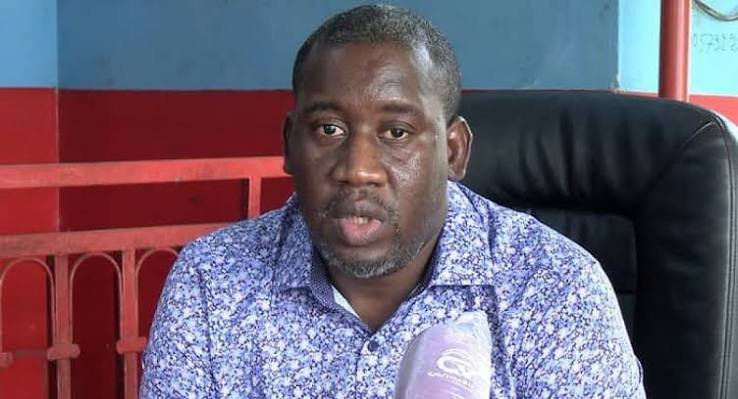
Guinea’s opposition leader Aliou Bah has been released after President Mamadi Doumbouya granted him a presidential pardon, bringing an end to nearly two years of imprisonment for one of the country’s prominent critics of military rule.
Bah, who heads the Liberal Democratic Movement (MoDeL), was among 217 prisoners granted clemency by Doumbouya in a decree issued to mark Guinea’s Independence Day. The decree was read on state television by Amara Camara, the secretary-general of the presidency.
His release comes at a significant moment for Guinea, where the authorities have faced sustained criticism from opposition groups and rights organisations over restrictions on political activity and freedom of expression.
Aliou Bah Had Been in Prison Since 2024
Bah was detained in December 2024 and later convicted over comments directed at the country’s military authorities and President Doumbouya.
He was sentenced to two years in prison after being found guilty of offences described by the authorities as insulting or defaming the head of state. His conviction was upheld by an appeals court in 2025.
The opposition figure had criticised the country’s political situation and called on religious leaders to speak out. He also described the ruling National Committee of the Rally for Development, known as the CNRD, in highly critical terms.
His sentence had been expected to keep him behind bars until around December 2026.
Presidential Pardon Comes Amid Regional Legal Pressure
The pardon also came as Bah’s case was being considered through the legal system of the Economic Community of West African States (ECOWAS).
In a letter dated September 25, the regional court called for Bah’s immediate and unconditional release, adding another layer of pressure around a case that had attracted attention from opposition figures and human rights advocates.
His release therefore represents a notable development in a case that had extended beyond Guinea’s domestic courts.
The decision by Doumbouya to include Bah in the presidential pardon means the opposition leader will no longer have to serve the remainder of his original sentence.
Who Is Aliou Bah?
Aliou Bah is the president of MoDeL and has emerged as one of the prominent political voices challenging Guinea’s ruling authorities.
His imprisonment made him a prominent figure in discussions surrounding freedom of expression and political opposition in the West African country.
The case attracted criticism because it involved statements made by a political opponent about the country’s leadership and political direction.
The pardon now allows Bah to return to public life after spending close to two years in detention.
Guinea’s Changing Political Landscape
Bah’s release comes against the backdrop of a major transformation in Guinea’s political system.
Doumbouya seized power in September 2021, overthrowing President Alpha Condé in a military coup. The takeover ended Condé’s presidency and placed the country under military-led transitional rule.
The political landscape has remained contentious since then.
Several opposition parties have faced suspension or dissolution, while demonstrations have been restricted. Critics of the authorities have also been arrested, forced into exile or reported missing, according to rights groups and opposition sources.
Doumbouya later won the December 2025 presidential election, a contest held amid the absence of several major opposition figures.
Rights Groups Continue to Watch Guinea
Bah’s imprisonment has been part of broader concerns about civil liberties in Guinea.
Amnesty International has documented restrictions affecting political parties, demonstrations and freedom of expression, while also reporting cases involving the detention or disappearance of critics of the authorities.
The organisation has previously highlighted Bah’s two-year sentence following his conviction for insulting and defaming the transitional president.
His release could therefore be viewed as an important development by those monitoring Guinea’s political and human-rights situation, although it does not by itself resolve the wider concerns surrounding opposition activity in the country.
What Happens Next for Guinea’s Opposition?
Bah’s return could provide the Guinean opposition with one of its better-known political voices after a lengthy period behind bars.
His release also comes at a time when Guinea’s political system is undergoing significant change following the end of the military transition and Doumbouya’s emergence as elected president.
For opposition supporters, the key question will be whether Bah’s release is followed by greater room for political participation and freedom of expression.
For now, his presidential pardon marks the end of a lengthy imprisonment and removes one of the most prominent opposition figures from the country’s prison system.
The decision has also renewed attention on Guinea’s broader political environment and the continuing debate over the space available to critics of the government.