Cameroon has approved fresh financing worth about $630 million to support major infrastructure projects, with the funds expected to strengthen road networks and improve regional trade connections.
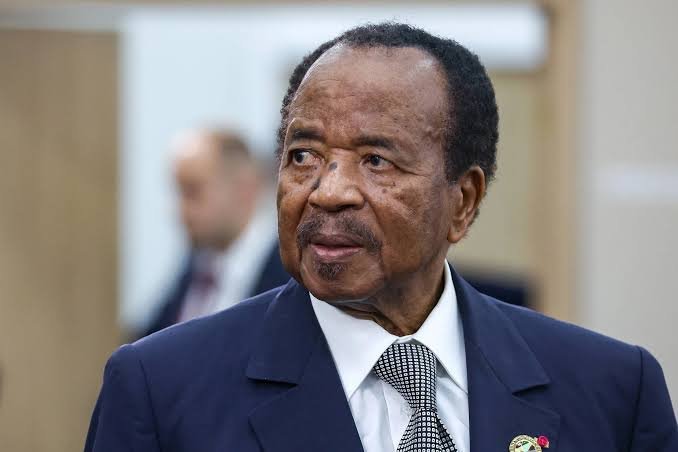
The financing was authorised through two separate agreements approved by President Paul Biya, according to presidential decrees issued on Friday, October 2, 2026. The loans will target two important transport projects involving Cameroon and neighbouring countries as well as a major domestic highway.
The first financing package is a €347.5 million ($390.9 million) loan from the World Bank’s International Bank for Reconstruction and Development (IBRD).
The money will be used for the Douala-Bangui Economic Corridor project, an infrastructure programme designed to improve transportation and commercial links between Cameroon and the Central African Republic.
Douala is Cameroon’s main economic centre and a major port city, while Bangui serves as the capital of the Central African Republic. Better connectivity between the two cities is expected to support the movement of goods and people along the regional corridor.
The second agreement involves €212.35 million ($238.87 million) in financing from the Islamic Development Bank.
The funding is earmarked for the rehabilitation of the Douala-Bafoussam highway, one of the country’s important road routes. The project is expected to improve road infrastructure and facilitate transportation between major economic areas.
Focus on transport infrastructure
The latest borrowing adds to Cameroon’s broader efforts to secure external financing for infrastructure and development programmes.
Road transportation remains particularly important to Cameroon’s economy because highways connect production centres, commercial cities and border markets. Improvements to major routes can also influence the cost and speed of transporting agricultural products and other goods.
The Douala-Bangui corridor has an additional regional dimension because it connects Cameroon with the Central African Republic. Improving the route could therefore support cross-border commerce and strengthen the movement of goods through Central Africa.
The World Bank’s project database lists the Douala-Bangui Economic Corridor Project among its recent Cameroon commitments, with a project approval amount of about $407 million as of August 2026.
Cameroon expands development borrowing
The new agreements come after Cameroon received approval in August to raise up to 930 billion CFA francs, equivalent to about $1.67 billion, through domestic and external borrowing.
That broader borrowing authorisation was intended to help finance development programmes and address outstanding government arrears, according to the report.
The latest $630 million package represents a significant portion of that financing framework and is specifically tied to infrastructure projects.
Cameroon has also secured substantial development financing from other international institutions this year. In March, the African Development Bank announced a €309.93 million loan to support the opening-up and connectivity of economic areas in the country’s eastern region. The project includes construction and paving work along a 156-kilometre section of a strategic road linking parts of eastern Cameroon toward the Congo border.
Potential impact on regional trade
The infrastructure investments could have implications beyond road quality. Improved highways can reduce travel difficulties, strengthen links between producers and markets and make cross-border trade more efficient.
For the Douala-Bangui route in particular, better infrastructure could improve the connection between Cameroon’s Atlantic-facing economic hub and landlocked Central African Republic.
The Douala-Bafoussam project, meanwhile, focuses on an important domestic transport link and could improve mobility between communities and commercial centres along the route.
The financing also highlights the continued role of international development institutions in supporting large-scale infrastructure projects across Cameroon.
With the World Bank and Islamic Development Bank now involved in the latest projects, implementation and the eventual delivery of the planned road improvements will be closely watched as Cameroon continues its infrastructure development programme.