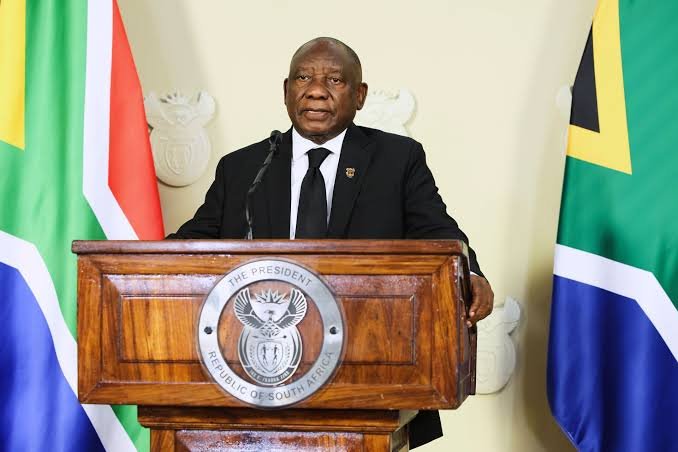
South African President Cyril Ramaphosa has announced a series of urgent measures to strengthen the country’s response to gender-based violence and femicide following the discovery of the bodies of at least 11 women in Ekurhuleni since July.
The killings have generated widespread concern across South Africa, with communities demanding stronger action from law enforcement and government authorities to protect women and bring those responsible to justice.
In a national address on Tuesday, September 29, Ramaphosa acknowledged the seriousness of the situation and announced a multi-pronged response targeting unresolved crimes, forensic delays and unsafe public spaces.
The president said authorities could no longer accept a situation in which women continued to bear the consequences of violence while institutions struggled to respond effectively.
Review of Unresolved Cases
One of the key measures announced by Ramaphosa is a national case-recovery operation involving unresolved murders, attempted murders, rape cases and serious sexual offences against women and children.
The initiative will involve the police and justice authorities working with the South African Police Service and the National Prosecuting Authority, while respecting the latter’s prosecutorial independence.
According to the Presidency, an initial audit is expected to establish the number and age of unresolved cases, identify investigations waiting for forensic evidence and determine cases where suspects have been identified but remain at large.
The government has set a 60-day period for the audit, followed by recovery plans for priority cases that have stalled. Those plans are expected to specify outstanding investigative steps, responsible officials and deadlines.
Action on Forensic Backlogs
Ramaphosa also directed police and forensic authorities to develop a funded strategy for reducing delays in processing evidence connected to gender-based violence and femicide cases.
The proposed plan is expected to assess the size of the forensic backlog, identify shortages in personnel and equipment, and establish turnaround targets for priority cases.
Evidence connected to rape and murder cases involving women and children is expected to receive urgent attention, while progress will be reported publicly on a quarterly basis.
The move comes amid longstanding concerns that delays in forensic processing can slow investigations and make it more difficult for authorities to build cases against suspects.
Focus on Unsafe Areas
Another part of the government response will focus on improving safety in communities.
Municipalities have been instructed to conduct women’s safety audits to identify locations considered particularly dangerous. These assessments will cover issues such as inadequate lighting, abandoned buildings and poorly secured public spaces.
The findings are expected to be used to develop practical safety plans involving municipalities, provincial authorities and police.
The measures come after a series of bodies were discovered in Ekurhuleni, east of Johannesburg. Police have been investigating whether some of the killings are connected, although authorities have cautioned that there is not yet conclusive evidence that one person or group is responsible for all the deaths.
Police Investigations Continue
The latest deaths have intensified pressure on South African authorities, particularly as the country continues to struggle with high levels of violence against women.
Four people have been arrested in connection with the recent killings, while investigators have collected forensic material and other evidence as they work to establish what happened to the victims.
The discovery of the bodies has also renewed national debate about the effectiveness of existing measures designed to tackle gender-based violence.
Ramaphosa’s latest announcement therefore goes beyond the individual cases in Ekurhuleni, placing renewed emphasis on recovering stalled investigations and improving the wider criminal justice response.
A Wider National Crisis
The president’s intervention comes against the backdrop of a broader gender-based violence crisis in South Africa. Previous reports have highlighted the country’s exceptionally high levels of violence against women, while campaigners and community groups have repeatedly called for stronger preventive measures and more effective prosecution.
The government has also faced calls to address conditions that can make communities less safe, including poorly lit streets, abandoned properties and inadequate policing.
Ramaphosa said the latest measures were intended to provide a more coordinated response, while urging South African men to play a greater role in confronting violence against women and girls.
For communities affected by the recent killings, the focus now turns to whether the announced deadlines will translate into faster investigations, improved public safety and prosecutions where sufficient evidence exists.
The Ekurhuleni cases remain under investigation, and authorities have yet to establish whether the deaths form part of a single pattern or involve separate incidents.