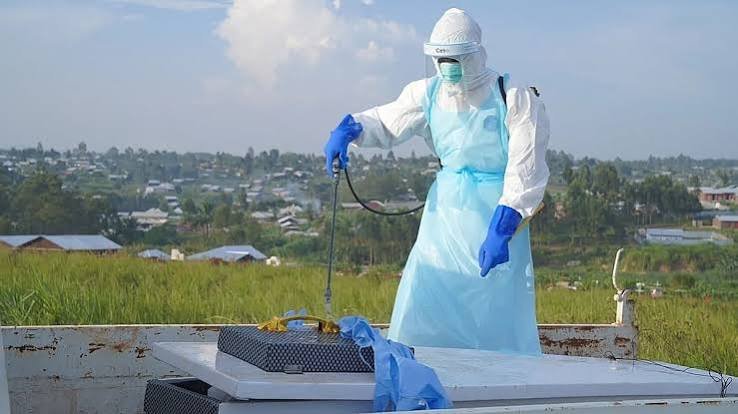
The Democratic Republic of Congo is facing its largest and deadliest Ebola outbreak on record, with confirmed infections rising beyond 8,000 and the death toll approaching 4,000.
According to the latest figures released by Congolese health authorities, 8,067 people have tested positive for Ebola while 3,901 deaths have been recorded in the ongoing outbreak. The figures represent a significant increase from the previous week as health officials continue to expand testing, surveillance and contact tracing.
The outbreak is being caused by the Bundibugyo strain of the Ebola virus, a variant for which there is currently no licensed vaccine or specifically approved treatment. The scale of the epidemic has now surpassed the country’s previous record outbreak between 2018 and 2020.
International partners increase assistance
As the health crisis continues to worsen, international organisations and foreign governments have stepped up financial and technical assistance to support the Congolese response.
The European Union announced €7.5 million in additional assistance for the country’s Ebola response. The funding is intended not only to support immediate efforts against the outbreak but also to strengthen disease surveillance, preparedness and the country’s longer-term health capacity.
The United States has also committed significant additional resources. Washington announced $267 million in new health and humanitarian assistance to help tackle the epidemic.
The US funding is expected to support several areas of the response, including Ebola treatment centres, safe and dignified burial teams, protective equipment, disease surveillance, medical supplies and contact tracing.
Vaccine research underway
The absence of a licensed vaccine specifically targeting the Bundibugyo strain remains one of the major challenges facing health authorities.
The World Health Organisation has said trials of potential vaccines against the strain could begin later in 2026. Meanwhile, Congolese authorities, working with WHO and Doctors Without Borders, have begun studying whether an existing vaccine developed for another Ebola strain could provide some protection.
The vaccine being assessed is Ervebo, which is licensed for protection against the Zaire species of Ebola. Its effectiveness against Bundibugyo virus in humans remains uncertain, making the ongoing study important for future outbreak responses.
Eastern Congo remains the main area of concern
The epidemic has affected numerous communities across the country, with eastern provinces among the hardest hit.
Earlier WHO data showed that Ituri province was the main epicentre, while cases have also been detected in North Kivu, Haut-Uélé, Bas-Uélé, Tshopo and other affected areas. Insecurity and population displacement in parts of eastern Congo have made disease surveillance and access to healthcare more difficult.
Crowded settlements, limited healthcare access and movement of people can make it harder for response teams to identify infections quickly and trace people who may have been exposed.
Authorities and humanitarian agencies are therefore expanding surveillance beyond the immediate outbreak zones. The International Organization for Migration has increased screening at displacement sites and major transport routes, while neighbouring countries are also strengthening preparedness measures because of the possibility of cross-border transmission.
Health authorities face a major challenge
The rapid increase in infections has placed additional pressure on medical facilities and Ebola response teams.
Earlier in September, European health authorities described the situation as critical and deployed epidemiological experts to the DRC to strengthen surveillance and outbreak-response operations. The European Centre for Disease Prevention and Control said the risk of Ebola being imported into the EU remained very low despite the continuing outbreak in Congo.
For the DRC, however, the immediate priority remains controlling transmission within affected communities, identifying patients early and protecting health workers.
The latest figures underline the scale of the challenge. With more than 8,000 confirmed cases and nearly 4,000 deaths, the outbreak has become a major public-health emergency for the country.
Continued financial assistance, improved surveillance, community awareness and research into effective vaccines and treatments will be critical as Congolese authorities and their international partners work to bring the epidemic under control.