The humanitarian crisis in Yemen is worsening as renewed fighting forces tens of thousands of people from their homes, with the United Nations warning that thousands more could flee across the Red Sea to neighbouring Djibouti.
The UN refugee agency, UNHCR, said on September 22 that more than 130,000 people had already been displaced inside Yemen since the beginning of September. It warned that the number could rise above 230,000 if the fighting continues to intensify.
At the same time, more than 3,000 Yemenis have already made the dangerous journey across the Red Sea to Djibouti. UN agencies are preparing for the possibility that the number of arrivals could reach 10,000 in the coming months.
Fighting drives Yemenis from their homes
The latest displacement follows renewed clashes between Houthi forces and troops aligned with Yemen’s internationally recognised government.
Fighting has expanded across several areas, particularly along Yemen’s western coast, forcing families to leave their homes with little warning.
UNHCR said the recent violence has already uprooted more than 130,000 people within Yemen. It estimates that another 100,000 could be displaced over the next three months if the conflict continues at its current pace.
Many of those affected are women and children, adding to concerns about access to food, shelter, healthcare and other essential services.
The latest movement of civilians comes on top of a much larger displacement crisis. More than 5.2 million people were already internally displaced in Yemen before the latest escalation.
Thousands make dangerous journey to Djibouti
For some Yemenis, remaining in areas affected by the fighting is no longer considered safe.
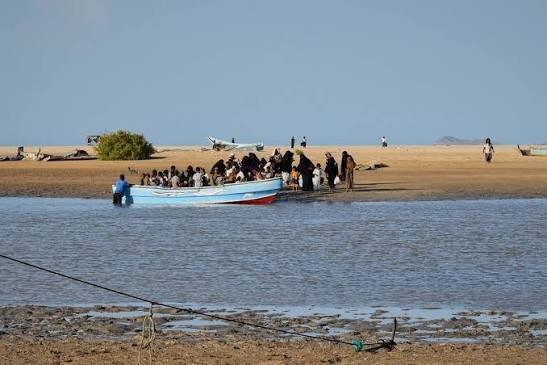
More than 3,000 people have crossed the Bab el-Mandeb Strait by boat and arrived in Djibouti, according to UN agencies.
The sea journey is dangerous, particularly because many refugees are travelling in small vessels under difficult conditions. UNHCR previously reported that some families arrived after leaving relatives behind and that thousands of others seeking to escape were unable to travel because of insecurity and fuel shortages.
Most of the new arrivals are being received around Obock, in northern Djibouti, where humanitarian organisations and government authorities are providing assistance.
The UN expects the number of arrivals to increase as sea conditions become calmer around mid-October, potentially making the crossing easier for people attempting to escape Yemen.
Djibouti prepares for more refugees
Djibouti is preparing for a possible influx of as many as 10,000 Yemeni refugees.
UNHCR and its partners are planning to provide registration, reception facilities, protection and other basic services to new arrivals.
The agency has stressed, however, that the 10,000 figure is an estimate rather than a fixed prediction. The number could rise further if the fighting spreads or becomes more intense.
Other Yemenis fleeing the conflict have also travelled towards parts of Somalia and Somaliland, while some may seek refuge in other neighbouring countries.
The movement of people across the Red Sea adds another dimension to an already serious humanitarian emergency in the region.
Humanitarian needs continue to grow
Yemen was already facing one of the world’s most severe humanitarian crises before the latest fighting.
The United Nations estimates that about 22 million people in Yemen require humanitarian assistance. The renewed displacement is placing additional pressure on humanitarian organisations that were already struggling with limited resources.
UNHCR’s Yemen operation is currently only about 18 percent funded for 2026, while its Djibouti operation is also facing a major funding gap.
The refugee agency said it urgently needs additional funding to support people displaced by the conflict and those arriving in Djibouti.
Red Sea crisis adds regional concerns
The latest fighting also has wider implications because Yemen’s western coastline lies close to the strategically important Bab el-Mandeb Strait, a major maritime route connecting the Red Sea with the Gulf of Aden.
The conflict has therefore created concerns beyond Yemen’s borders, with renewed violence threatening regional stability and adding pressure to an already fragile humanitarian situation.
For civilians, however, the immediate concern remains finding safety.
Families forced from their homes are seeking shelter within Yemen or taking the dangerous route across the Red Sea in search of protection.
UN warns displacement could worsen
The United Nations has warned that the current figures could rise substantially if the fighting continues.
Internal displacement could climb beyond 230,000 people, while the number of Yemenis reaching Djibouti and other countries could exceed the current planning figure of 10,000.
The crisis is therefore putting pressure on both Yemen and neighbouring countries to expand humanitarian assistance.
For thousands of Yemenis who have already fled, the journey to safety has come at enormous risk. For those still trapped in conflict-affected areas, the prospect of further fighting raises fears of another wave of displacement.
As the conflict continues, UN agencies are urging greater international support to help displaced families inside Yemen and refugees arriving across the Red Sea.