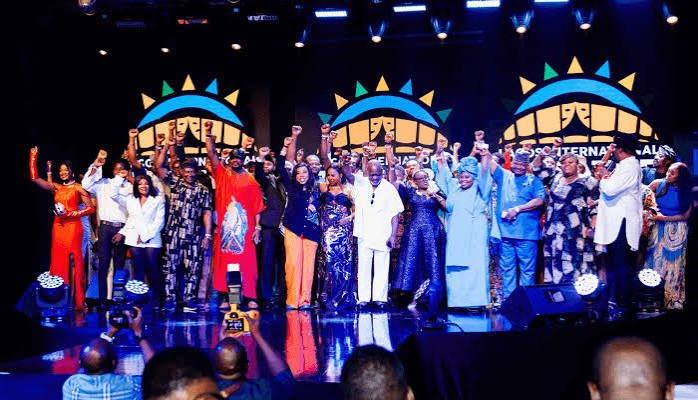
Lagos is set to become a major meeting point for theatre and cultural expression when the Lagos International Theatre Festival (LITF) returns for its 2026 edition in November.
The two-day festival is scheduled to take place on November 14 and 15 at the MUSON Centre in Lagos, bringing together performers, directors, theatre professionals and audiences from Nigeria and other parts of the world.
This year’s programme will feature participants from Nigeria, Kenya, Canada and Brazil, creating a platform for artists with different cultural backgrounds to present their work and engage with audiences.
Organisers expect the festival to attract more than 25,000 people across its various activities, reflecting the growing interest in theatre and live performance within Lagos’s creative community.
The central theme for the 2026 edition is “The Masks We Wear,” supported by the message “The Stage Is Everywhere.” The organisers say the theme will examine the different identities and responsibilities people adopt in their everyday lives.
Rather than presenting theatre simply as entertainment, the festival intends to use performance as a way of exploring personal identity, social expectations and the roles people play in different circumstances.
The idea that “The Stage Is Everywhere” also broadens the traditional understanding of theatre. It suggests that dramatic expression can exist beyond conventional theatre buildings and can be found in everyday spaces and experiences.
One of the international productions expected at the festival is Under The Mango Tree, presented by Canada’s Grand Theatre and directed by Lynette Randall.
The production will be part of a wider international programme that includes performances and artistic contributions from Kenya and Brazil. These international presentations will appear alongside productions created by Nigerian theatre practitioners.
Nigeria’s contribution will feature artists and productions from several cities, including Lagos, Abuja, Enugu and Abeokuta.
Among the productions on the programme are Monkey Laundry, directed by Olarotimi Fakunle; tHERapy, directed by Tosin Adeyemi; Men-Oh-Pause, directed by Elvina Ibru; and Behind Closed Doors, directed by Bolanle Austen-Peters.
The festival will also provide space for young and emerging performers. Students and developing theatre makers from Atlantic Hall, Evergreen College and Children International School are expected to participate, giving them an opportunity to present their work alongside established professionals and independent practitioners.
For founder Bolanle Austen-Peters, the theme of this year’s festival is closely connected to everyday human experience.
She explained that people constantly move between different roles in their personal and professional lives, adding that theatre can provide a space where those identities can be examined and questioned.
According to Austen-Peters, the festival’s concept is also intended to remind audiences that theatrical experiences are not restricted to formal performance venues.
Festival Director Vanessa Jev similarly highlighted the international character of the 2026 programme. She said bringing together Nigerian performers with artists from Kenya, Canada and Brazil would expose audiences to different artistic approaches, cultures and viewpoints.
However, the festival will not begin with the main performances at MUSON Centre. Organisers have prepared a week-long programme of activities designed to build momentum before the main event.
The activities will begin on November 9 with Theatre Meets Food, an event hosted by Hilda Baci. It will bring together members of the creative sector, cultural figures, partners and artists for an evening combining food, performance and conversation.
The following two days, November 10 and 11, will be dedicated to Embassy Nights. The programme will provide an opportunity for diplomatic representatives, artists and creative-sector stakeholders to interact and celebrate international cultural relationships.
On November 12, the festival will present Conversations & Culture, featuring discussions and masterclasses covering a range of subjects relevant to contemporary creative professionals.
Topics expected to feature include mental health and wellbeing, voice and vocal performance, DJing and copyright, among other issues affecting people working in the creative industries.
The pre-festival programme will reach its high point with an Opening Night Gala on November 13, one day before the main festival programme begins.
LITF 2026 is receiving support from the Lagos State Government, Lekoil, Pillar Oil, Afrexim and Amstel, together with a wider group of international and cultural partners.
Since its establishment by Austen-Peters, the Lagos International Theatre Festival has sought to strengthen the visibility of theatre and live performance while creating opportunities for Nigerian artists to connect with practitioners from other parts of the world.
The 2026 edition continues that approach by combining international productions, Nigerian performances, educational activities, industry conversations and cultural events.
With artists from four countries expected to participate and a programme extending beyond the main festival weekend, LITF 2026 is positioned as both a celebration of theatre and a broader gathering for Lagos’s creative community.
The November event will ultimately offer audiences an opportunity to experience different forms of storytelling while considering the identities, expectations and roles that shape everyday life — the central idea behind “The Masks We Wear.”