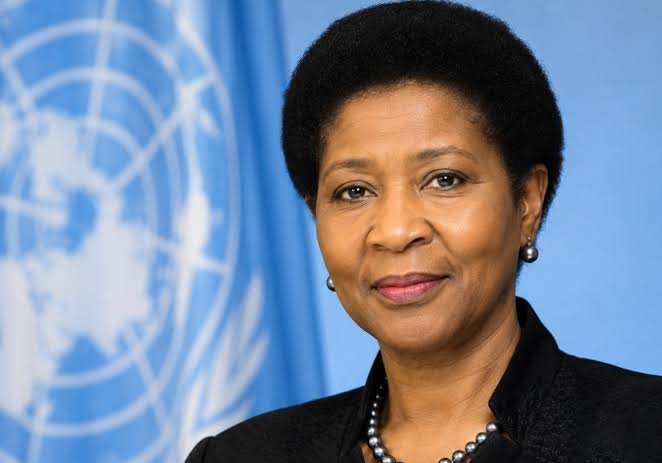
South Africa is mourning the death of former Deputy President Phumzile Mlambo-Ngcuka, with political leaders, international organisations and prominent figures expressing condolences following the announcement of her passing.
Mlambo-Ngcuka, who made history as South Africa’s first female deputy president, died at the age of 71. Her death was announced on Friday, November 20, 2026, by Acting President Paul Mashatile on behalf of the government.
The announcement triggered tributes from the African National Congress (ANC), President Cyril Ramaphosa, United Nations Secretary-General António Guterres and several other leaders who recognised her contributions to South Africa’s democracy and the advancement of women’s rights.
The Presidency said Mashatile had conveyed condolences to the family on behalf of Ramaphosa, the government and the people of South Africa. The family, meanwhile, requested privacy as they grieve, while expressing appreciation for the messages of support received from across the country and beyond.
ANC mourns former deputy president
The African National Congress expressed sadness over the death of Mlambo-Ngcuka, describing her as a respected party leader and a dedicated public servant whose contributions extended beyond South Africa.
ANC Secretary-General Fikile Mbalula said the party was deeply saddened by the loss of a leader who played important roles in the country’s political journey and international engagements.
The party highlighted her commitment to women, children and social development, noting that her work in government and at the United Nations helped advance conversations around equality and empowerment.
Mlambo-Ngcuka was widely recognised within the ANC for her involvement in public service and her leadership in several government positions before and after becoming deputy president.
The party also extended condolences to her husband, children, relatives, friends and colleagues.
Ramaphosa pays tribute to Mlambo-Ngcuka
President Cyril Ramaphosa expressed sorrow over the death of his former deputy, describing her as a committed South African leader whose work helped promote the advancement of women across the continent and internationally.
Ramaphosa acknowledged her contribution to the country’s leadership and her efforts to champion the empowerment of women and girls.
Mlambo-Ngcuka served as deputy president between 2005 and 2008, becoming the first woman to occupy the position in South Africa’s history.
She also held other important government roles, including Minister of Minerals and Energy and Deputy Minister of Trade and Industry, while serving as a member of Parliament.
Her political career was closely linked to the country’s democratic transformation following the end of apartheid, as she became one of the prominent women in South African politics.
António Guterres and UN Women express condolences
United Nations Secretary-General António Guterres also joined those mourning Mlambo-Ngcuka, recognising her longstanding advocacy for women’s rights and gender equality.
Guterres described her as a lifelong champion of the rights and empowerment of women and girls, emphasising her belief that equality should be recognised as a fundamental right.
Mlambo-Ngcuka’s connection with the United Nations was particularly significant through her leadership of UN Women, where she served as executive director from 2013 to 2021.
During her tenure, she worked with governments, civil society organisations and international institutions on initiatives aimed at improving the status of women and girls, strengthening gender equality and promoting women’s participation in leadership.
UN Women also mourned her death, highlighting her journey from anti-apartheid activism to becoming South Africa’s first female deputy president and later leading the global organisation.
Mlambo-Ngcuka’s legacy in South Africa and beyond
Mlambo-Ngcuka’s career spanned politics, public administration, international diplomacy and advocacy for social justice.
As a former anti-apartheid activist, she was involved in efforts to challenge racial inequality before becoming part of South Africa’s democratic political institutions.
Her appointment as deputy president in 2005 marked a significant moment in the country’s political history, while her later leadership at UN Women expanded her influence beyond national politics.
Her work focused on women’s rights, education, social development and the promotion of greater opportunities for women and girls.
The death of Mlambo-Ngcuka has drawn tributes from across South Africa and the international community, with many recognising her contributions to public service and gender equality.
Further details concerning her funeral and memorial arrangements are expected to be announced after consultations with her family.