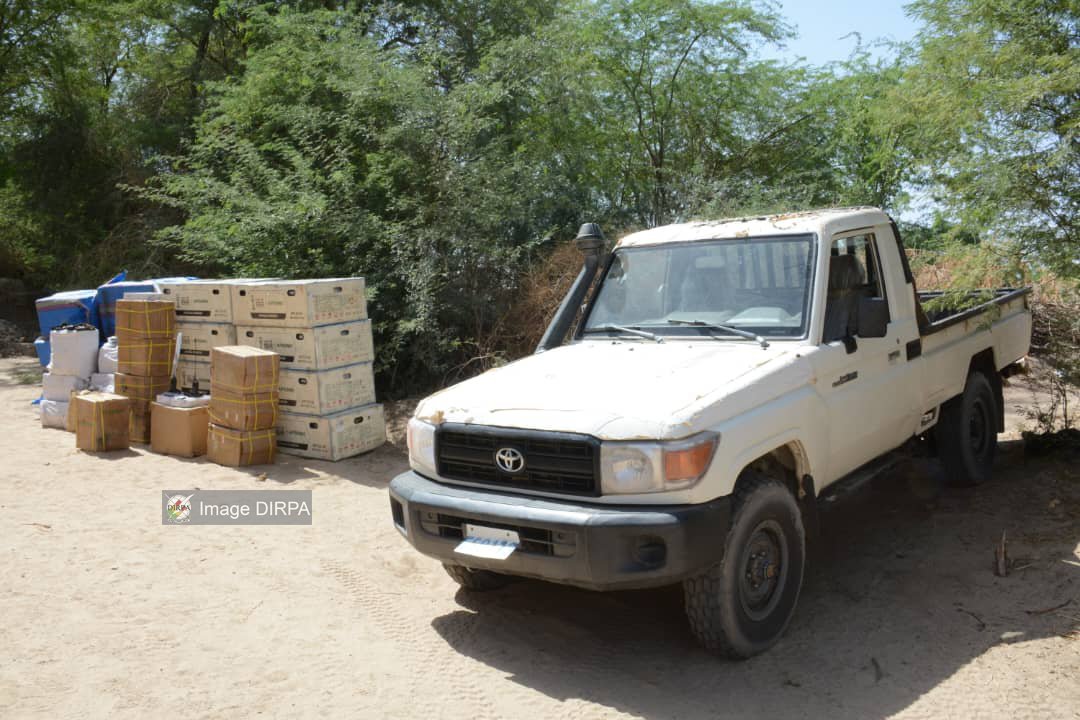
Mali’s armed forces say they intercepted a shipment of 2,000 radios, a pickup truck and eight motorcycles north of Timbuktu, alleging that the equipment was bound for armed groups operating in the region.
The operation took place on Monday, November 9, as part of Operation Dougoukoloko, according to a statement published by the Malian Armed Forces on November 11. It was led by Colonel Cheick Abdoul Kader Diarra, the operations chief for Sector 3’s coordination centre. The army said one person was detained during the operation.
The seized communications equipment consisted of 2,000 TYT-brand radios. The transport items were a pickup and eight Apsonic motorcycles, the military said. It described the cargo as equipment intended for “terrorist armed groups” and said the interception was part of efforts to disrupt their logistics and mobility.
The army’s account included details it attributed to the detained person. It said he told investigators the shipment had come from Bassikounou, in Mauritania, and was being moved toward Zarho, east of Ber in Mali’s Timbuktu region. According to the statement, the equipment was to be collected by other people, but their final destination was not known.
The detained person reportedly said he had been hired as a driver for 50,000 CFA francs. The military did not identify him, specify whether he had been formally charged or say whether he remained in custody. Its public account also did not identify the people expected to collect the shipment or provide independent evidence confirming who owned the cargo and where it was ultimately going.
The destination claim therefore needs to be read with care: the army characterized the shipment as intended for armed groups, while its own account said the ultimate recipients were unknown. The reported route and the alleged driver’s explanation have not been independently confirmed in the available coverage.
The military presented the seizure as a security gain because radios and motorcycles can support communications and movement in remote areas. However, the statement did not explain how the radios would have been used, whether they were configured for a particular network, or whether the equipment had already reached a specific armed group. The army said the broader aim of the operation was to weaken armed groups’ logistical capacity and help improve security and freedom of movement in the Timbuktu region.
Operation Dougoukoloko has featured in previous Malian military announcements about security actions in the north. In June, authorities said forces in Sector 3 intercepted more than 50 motorcycles and a shipment of logistical supplies in the area around Timbuktu. The government described that separate operation as part of efforts to limit armed groups’ mobility. The June seizure was a different incident, not part of the November shipment.
The November announcement comes as armed groups remain active in several parts of Mali, including the north. The country’s security crisis involves both Islamist militant organizations and separatist forces, whose aims and alliances are not identical. Public statements from the army often describe targets as terrorist groups, but the radio-seizure statement did not name a specific organization allegedly connected to this shipment.
The army has not publicly released further details about the detained person, the investigation, or any charges. Nor has it provided photographs, an inventory document or other material that would allow the quantities and origin of the seized goods to be independently checked. The available reporting rests on the Malian military’s account, carried by APA and other outlets.
What has been reported is a substantial interception of communications and transport equipment in the Timbuktu region, along with one detention. If the army’s account of the shipment’s intended use is confirmed, the loss could disrupt a supply effort for armed groups. But with no identified recipients and no public details of the investigation, the connection between the cargo and any particular group remains unverified.