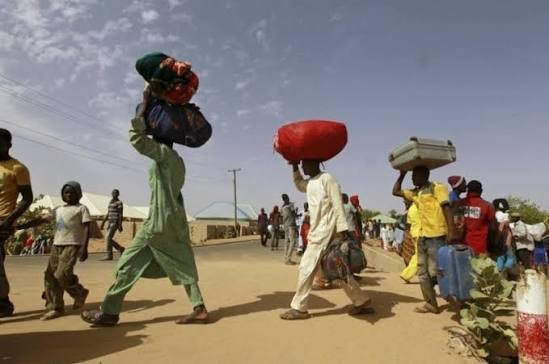
Nearly 64,000 people have crossed from northern Nigeria into Niger since the start of 2026, fleeing violence by Islamist militants and armed groups, the UN refugee agency said. The arrivals are adding pressure to communities already dealing with insecurity, food shortages and climate-related hardship.
The United Nations High Commissioner for Refugees (UNHCR) said Niger is hosting more than half a million refugees and asylum-seekers, including about 327,500 Nigerians who sought protection there before this year’s influx. Several hundred Nigerians have also sought refuge in neighbouring Benin.
Most of the new arrivals have settled in Niger’s border regions of Diffa and Tahoua. More than 23,000 people—over two-thirds of them children—have reached Diffa since January, according to UNHCR. The agency says the wider influx is straining the capacity of local authorities and host communities to provide basic services.
Many families are living in makeshift shelters with limited access to food, safe drinking water and healthcare. UNHCR Director of External Relations Dominique Hyde said some women walk several kilometres each day to collect water. Aid groups have also reported rising malnutrition, respiratory infections and poor sanitation among new arrivals.
Registration is another concern. Only about five per cent of Nigerians who arrived in Niger this year have been formally registered, UNHCR said. Without documentation, many people may struggle to access humanitarian support and public services.
The displacement is part of a wider security crisis in northern Nigeria, where attacks by armed groups and criminal gangs have driven people from their homes over many years. Reuters, citing UNHCR, said the recent exodus reflects violence involving Islamist militants and armed gangs. The available reporting does not attribute every person’s flight to a single group or attack.
Conditions in Niger are also difficult for the communities receiving displaced families. UNHCR warned that insecurity and climate pressures are compounding needs, particularly in Diffa. Irregular rainfall and drought have damaged agriculture and grazing land: grain production is expected to fall short in about 700 of the region’s 1,000 villages, while an estimated 70 per cent of pasture has been lost.
Nigerien authorities and host communities have continued to support arriving families, including by making land available for temporary shelter. But UNHCR says their capacity is increasingly stretched as more people arrive and essential needs remain unmet.
The agency is seeking $11.4 million to expand its response across Niger, Nigeria and Benin. Of that amount, $2 million is intended for immediate needs such as water, food, shelter, healthcare, registration and protection. UNHCR warned that without additional funding, thousands of families could be left without essential assistance.
The nearly 64,000 figure refers to people who arrived in Niger from northern Nigeria since the beginning of 2026; it is separate from the approximately 327,500 Nigerians already hosted in the country. Together, the figures show the scale of the pressure on Niger’s border communities and humanitarian services. UNHCR says an expanded response will need to address urgent needs while also supporting livelihoods and longer-term solutions for displaced people and their hosts.