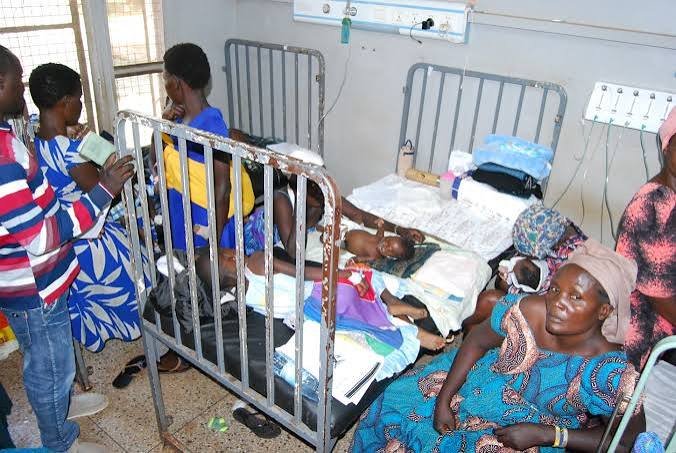
A major children’s hospital in eastern Uganda is struggling with severe overcrowding, with reports that as many as five babies sometimes have to share a single hospital bed as demand for paediatric healthcare continues to exceed available facilities.
Nalufenya Children’s Hospital, a specialised paediatric unit operating under Jinja Regional Referral Hospital in Jinja City, is facing growing pressure from rising patient numbers, ageing infrastructure and shortages of medical personnel.
Health workers have warned that the situation is making it increasingly difficult to provide children with the specialised treatment they need, particularly those admitted with serious medical conditions.
Dr Emmanuel Tenywa, a consultant paediatrician and cardiologist at the facility, said the children’s unit has an official capacity of 89 beds but sometimes accommodates up to 220 patients.
The hospital receives between 200 and 300 outpatients daily and admits approximately 30 to 40 children each day. The number of admissions has placed considerable pressure on its limited space, forcing some patients to share beds while others are accommodated in corridors.
The situation has raised concerns about patient safety, infection prevention and the working conditions of medical staff.
Rising admissions overwhelm hospital facilities
Nalufenya serves children from Jinja and surrounding communities, including several districts across Uganda’s Busoga sub-region.
Its position as a referral facility means it receives patients who require treatment beyond the capabilities of smaller health centres and hospitals.
However, the hospital’s infrastructure has struggled to keep pace with the growing demand.
Dr Tenywa said the overcrowding makes it difficult for medical personnel to deliver specialised care effectively. He called for additional space, improved facilities and more healthcare workers to help address the pressure.
The facility also needs an emergency paediatric ward and an intensive care unit to manage children who arrive with critical medical conditions.
Without adequate space and equipment, doctors and nurses face additional difficulties when treating patients who require close monitoring and specialised attention.
The shortage of accommodation also affects caregivers, many of whom remain beside their sick children throughout their hospital stay.
Hospital management seeks urgent government intervention
Hospital officials have called on the Ugandan government to provide financial and administrative support to improve conditions at Nalufenya.
Dr Afizi Kibuuka, deputy director of Jinja Regional Referral Hospital, said the hospital’s management board had recognised the need to transform the children’s unit into a National Specialised Paediatric Hospital.
The proposed upgrade would give the facility a stronger institutional structure and enable it to provide specialised children’s healthcare on a wider scale.
However, the plan requires government approval, funding and a clear commitment to expanding the hospital’s capacity.
Management has also highlighted the need to renovate ageing staff accommodation. Some of the existing quarters have reportedly been condemned, adding to the difficulties faced by workers at the facility.
Hospital officials believe that expanding the infrastructure and improving working conditions would help attract and retain qualified medical personnel.
Minister promises to present concerns to Cabinet
The hospital’s challenges came into focus during a visit by Uganda’s Minister for the Presidency, Milly Babalanda, on November 6, 2026.
During the visit, Babalanda met hospital officials and assessed the difficulties confronting the children’s facility.
She commended doctors, nurses and other healthcare workers for continuing to provide services despite the difficult working environment.
The minister also pledged to present the hospital’s concerns to Cabinet in an effort to secure government intervention.
Her visit has renewed attention on the need to improve paediatric healthcare infrastructure in the region, particularly as the hospital continues to receive more patients than its existing facilities can comfortably accommodate.
The government has not yet announced a specific funding package or construction timetable for the proposed upgrade.
More than two decades of growing healthcare demand
Nalufenya has played an important role in children’s healthcare in eastern Uganda for more than two decades.
The facility was initially owned by the Madhvani Group before being refurbished and handed over to the government in January 2005 for use as a children’s healthcare unit.
Since then, demand for paediatric services has increased, putting pressure on the hospital’s original infrastructure.
Earlier reports also highlighted problems involving children sharing beds, patients sleeping in corridors and shortages of diagnostic equipment.
The latest figures indicate that the pressure has continued despite previous efforts to improve the facility.
The hospital’s situation reflects a wider challenge facing healthcare providers in rapidly growing communities: expanding access to treatment while ensuring that hospitals have enough beds, equipment, personnel and funding to meet demand.
Concerns over patient safety and quality of care
Overcrowding in children’s hospitals presents particular challenges because young patients can be vulnerable to infections and often require individual attention.
When several babies share a bed, maintaining adequate separation between patients becomes more difficult. Limited space can also affect hygiene, monitoring and the ability of healthcare workers to respond quickly when a child’s condition deteriorates.
For families, the situation adds emotional and financial pressure to an already difficult experience of seeking treatment for sick children.
Expanding Nalufenya would therefore involve more than simply providing additional beds. The facility also requires suitable wards, diagnostic equipment, specialised treatment units and enough trained staff to manage the growing number of admissions.
The proposed transformation into a national specialised paediatric hospital could provide a framework for addressing some of these challenges if it receives the necessary government backing.
For now, doctors and hospital administrators continue to call for urgent action as patient numbers remain far above the facility’s official capacity.