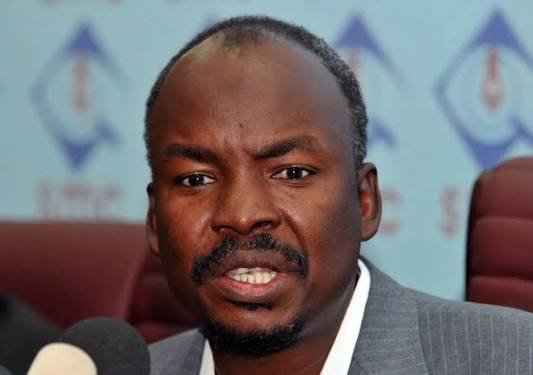
Sudan’s military authorities have re-arrested Ahmed Haroun, a former senior official under ousted president Omar al-Bashir who is wanted by the International Criminal Court (ICC) over alleged war crimes and crimes against humanity committed during the Darfur conflict.
Haroun, who previously chaired Bashir’s National Congress Party (NCP), was detained on Sunday, November 8, 2026, according to two lawyers representing him. The arrest marks his return to custody after he escaped from prison during the early stages of Sudan’s ongoing conflict in 2023.
The lawyers initially reported that he had been detained in the eastern state of Kassala. They later said he was arrested in Omdurman, a city neighbouring the capital, Khartoum.
They added that his whereabouts remained unknown following the operation.
Haroun’s re-arrest comes shortly after he made a prominent public appearance in a four-hour interview on Sudan Podcast, during which he discussed the country’s political situation, his relationship with the military leadership and the origins of the conflict involving the Sudanese army and the paramilitary Rapid Support Forces (RSF).
The circumstances surrounding the latest detention remain unclear, although his defence lawyers linked it to comments made during the interview.
Who is Ahmed Haroun?
Ahmed Haroun was one of the influential figures in Bashir’s government, holding senior positions during the former president’s three-decade rule.
He served as a security official and later became chairman of the National Congress Party, which dominated Sudanese politics under Bashir.
Haroun was among the senior figures arrested in April 2019 after months of popular protests forced the military to remove Bashir from power.
He was held alongside the former president and other members of the previous administration in a Khartoum prison.
However, Haroun and several other former regime officials escaped in 2023 after the outbreak of fighting between the Sudanese army and the RSF. The prison was attacked during the conflict, allowing a number of detainees to leave.
Following his escape, Haroun largely stayed out of public view before resurfacing in the recent podcast interview.
ICC charges linked to Darfur conflict
The International Criminal Court has accused Haroun of involvement in atrocities committed in Darfur during the early 2000s.
The conflict began in 2003 after rebel groups launched an insurgency against Bashir’s government, accusing authorities of marginalising communities in the western region.
The government responded by mobilising forces that included the Janjaweed militias, which were accused of carrying out widespread violence against civilian populations.
Haroun faces allegations involving murder, rape, persecution, torture and the forced displacement of civilians between 2003 and 2004.
The ICC has brought 20 counts of crimes against humanity and 22 counts of war crimes against him. He has denied the accusations.
The court has repeatedly sought his surrender so that he can face proceedings in The Hague. However, Sudan’s military authorities previously declined to transfer him to the international court.
The United States also announced a reward of up to $5 million in 2024 for information leading to Haroun’s arrest.
His latest detention has therefore renewed questions about whether Sudan’s authorities will eventually cooperate with the ICC.
Podcast interview preceded his arrest
Haroun’s reappearance in public came through an extensive interview on Sudan Podcast, hosted by journalist Rabie Siraj.
During the programme, he discussed the fall of Bashir’s government, his detention in Kober prison, the circumstances surrounding his escape and the ongoing war between the army and the RSF.
He also addressed the relationship between his former ruling party and the Sudanese military.
Haroun said the National Congress Party and the army might not be politically aligned but shared an interest in fighting the RSF.
His comments attracted attention because of continuing accusations that Islamist figures from Bashir’s former government have regained influence within the military establishment.
Haroun rejected claims that the National Congress Party and the Islamic Movement were responsible for starting the current conflict.
The interview reportedly generated strong reactions among activists and groups associated with the 2019 uprising that ended Bashir’s rule.
His lawyers said they had not been given an official explanation for the re-arrest, but believed the authorities’ action was connected to his recent public statements.
National Congress Party demands his release
The National Congress Party condemned Haroun’s detention and demanded his immediate release.
In a statement, the party described the arrest as an arbitrary exercise of power, arguing that he had been detained for expressing his views about Sudan’s political situation.
The party also criticised what it described as a contradiction between calls for national dialogue and the detention of political figures.
However, its statement did not address the ICC’s outstanding allegations against Haroun or the court’s request for his surrender.
The position has added another political dimension to the arrest, particularly as Sudan’s military leadership continues to rely on support from different political and ideological groups during the war.
Rights groups call for ICC transfer
The Emergency Lawyers group, a network of Sudanese legal professionals and activists associated with the movement against Bashir, welcomed the renewed detention as an opportunity to pursue accountability.
The organisation criticised Haroun’s podcast appearance, describing it as a challenge to international justice.
It also urged the authorities to transfer him to the ICC alongside Bashir and former defence minister Abdel-Rahim Muhammad Hussein, who are also wanted by the international court.
The group argued that accountability for alleged crimes committed in Sudan should not be influenced by political alliances or military considerations.
Its position reflects longstanding demands from victims’ groups and human rights advocates for those accused of atrocities in Darfur to face international justice.
Sudan’s war continues to deepen instability
Haroun’s arrest comes as Sudan remains engulfed in a devastating conflict that began in April 2023 between the national army and the RSF.
The fighting has caused widespread displacement, food shortages and extensive destruction, with Darfur among the regions experiencing particularly severe violence.
The United Nations and international human rights organisations have documented allegations of mass rape, ethnically motivated killings and other abuses during the conflict.
UN experts have also said that the RSF’s attack on El Fasher in Darfur bore the hallmarks of genocide.
The RSF emerged from the Janjaweed militia networks mobilised during the earlier Darfur conflict under Bashir’s government.
Against this background, Haroun’s re-arrest has revived questions about the legacy of the former regime and the possibility of holding senior figures accountable for past atrocities.
Whether Sudan’s military authorities will hand him over to the ICC remains uncertain. For now, his detention has reopened a significant legal and political issue as the country continues to struggle with war and instability.