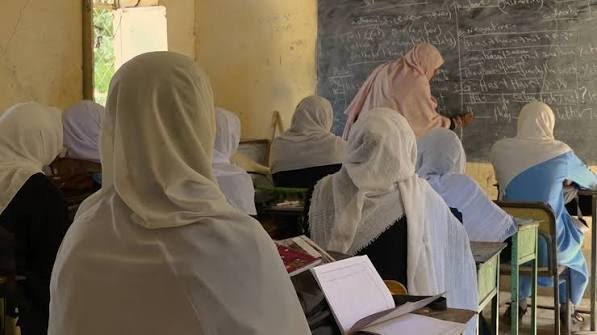
Sudan’s ongoing conflict is pushing millions of children out of classrooms, deepening an education emergency that threatens the future of an entire generation. With schools damaged, occupied or converted into shelters, and teachers struggling without regular salaries, access to learning has become increasingly difficult across the country.
The war between the Sudanese Armed Forces (SAF) and the paramilitary Rapid Support Forces (RSF), which began in April 2023, has severely disrupted the country’s public education system. Reports from international organisations and education groups indicate that millions of school-age children remain out of school, while many others have lost years of continuous learning.
The crisis extends beyond closed school buildings. Displacement has forced families to move repeatedly, educators have left their jobs or sought other sources of income, and the authorities’ ability to maintain a consistent national curriculum has weakened.
For children who were already facing poverty and limited educational opportunities before the war, the disruption could have lasting consequences for their employment prospects, wellbeing and ability to rebuild their communities.
Millions of children have lost access to classrooms
The scale of the education emergency has grown since the fighting began. In October 2023, the UN Sustainable Development Group warned that approximately 19 million children in Sudan were out of school, including around seven million who had already been excluded from education before the conflict.
A UNICEF report in September 2024 estimated that more than 17 million school-age children were still not attending school, with most schools in many states either closed or operating only in limited areas. By January 2026, Save the Children reported that more than eight million children were no longer attending school, while many school buildings remained closed or had been repurposed.
Although the figures differ because they refer to different periods and measures, they point to the same underlying problem: the conflict has interrupted education for children on an extraordinary scale.
The impact is particularly severe for families displaced by fighting. Children who have fled their homes may lose access to textbooks, school records and stable places to study. Some families move between states in search of safety, making it difficult for children to enrol in another school or continue at the same level.
For students approaching major examinations, the disruption can determine whether they progress to further education or enter the workforce. Younger children also face the risk of falling behind in basic reading, writing and mathematics.
The longer schools remain unavailable, the harder it becomes to restore learning without additional teaching support and catch-up programmes.
Schools damaged, occupied or turned into shelters
The conflict has affected schools in different ways, leaving many communities without functioning educational facilities. Some buildings have been damaged during fighting, while others have been used as military positions or accommodation for displaced families.
A February 2026 report by the Global Partnership for Education highlighted the extent to which schools had been repurposed for military use or emergency shelter. In Darfur, the report found that only a small proportion of schools remained open.
Converting classrooms into shelters may provide displaced families with urgently needed protection, but it also leaves local children with fewer places to continue their education. Where school buildings remain intact, insecurity, shortages of teaching materials and a lack of staff can still prevent lessons from taking place.
The consequences are especially serious in areas where conflict has continued for long periods. Even if fighting subsides, damaged facilities will need repairs, learning materials must be replaced and teachers will need support before schools can return to normal operation.
Teachers face unpaid salaries and worsening conditions
Sudan’s teachers are among those bearing the burden of the conflict. Education groups say many have gone without regular salaries for extended periods, forcing some to leave their posts, relocate with their families or seek alternative employment.
The Sudanese Teachers’ Committee has argued that the true scale of the education crisis is not fully reflected in headline figures. It says some children have had no access to schooling since the conflict began, while others who reached school age after April 2023 have had no opportunity to enrol.
The disruption is also visible in national examination participation. Before the war, approximately 570,000 students sat Sudan’s national secondary school-leaving examination in 2023. During the conflict years, participation fell to around 200,000, leaving a substantial number of students unable to take the examination.
The teachers’ committee has also estimated that between 150,000 and 200,000 students, most of them girls, have missed the examination for three consecutive years in Darfur, Blue Nile and the Kordofan states.
Teachers have called for unpaid entitlements to be settled and for a revised salary structure that reflects the cost of living. Their demands include payment of arrears and a proposed minimum wage of 500,000 Sudanese pounds.
Without reliable pay, retaining qualified educators will remain difficult. Even where schools can reopen, the shortage of experienced teachers may prevent students from receiving consistent instruction.
Separate examination systems threaten national unity
The war has also disrupted the administration of education across territories controlled by opposing sides.
For the first time in Sudan’s modern history, separate versions of the Sudanese Certificate examination results have been issued through authorities operating in different areas. One system is administered by the education ministry in territories controlled by the army, while another has been organised in areas held by the RSF and its allies.
The development raises concerns about the future of a unified national curriculum and a common system for recognising educational qualifications.
If different authorities continue to operate separate examination systems, students may face uncertainty over whether their certificates will be accepted by universities, employers or institutions in other parts of Sudan. Reintegrating the systems after the conflict could require substantial coordination over curricula, examination standards and student records.
Education experts warn that this division could become another lasting consequence of the war, deepening regional differences even if a political settlement is reached.
Children face growing risks beyond lost lessons
The loss of education can expose children to problems that extend far beyond academic performance. School closures remove an important source of routine, social support and protection, particularly for children living in displacement camps or unstable communities.
When education is interrupted for years, young people may be pushed into work or other responsibilities to help their families survive. Girls can face additional barriers to returning to school, while children with disabilities and those living in remote areas may encounter even greater difficulties accessing alternative learning arrangements.
The crisis also threatens Sudan’s future workforce. A prolonged gap in education can reduce the number of young people equipped with the skills needed for higher education, skilled employment and rebuilding public services.
Education specialists have called for flexible approaches, including temporary classrooms in community centres and public buildings, so that learning can continue even where traditional schools are unavailable. Such initiatives would still require trained teachers, learning materials, safe facilities and dependable funding.
Urgent support needed to prevent a lost generation
Restoring education in Sudan will require action on several fronts: protecting schools from military use, reopening safe learning spaces, paying teachers, supplying materials and helping displaced children return to education.
Humanitarian agencies, local organisations and international partners will also need to coordinate their efforts so that children can continue learning regardless of where their families have sought refuge.
The scale of the crisis means that reopening school buildings alone will not be enough. Many students will need catch-up lessons, psychological support and flexible opportunities to complete missed examinations.
For Sudan’s children, every additional month without education increases the challenge of recovering lost ground. The longer the conflict continues, the greater the risk that temporary school closures will become permanent barriers to learning.
The future of millions of young people now depends on whether education can be protected as an essential service during the war and rebuilt as part of Sudan’s eventual recovery.