Uganda has introduced stricter health measures requiring its citizens returning from the Democratic Republic of the Congo (DR Congo) to undergo a 21-day quarantine, as authorities step up efforts to prevent the spread of Ebola across East and Central Africa.
The decision, announced by Health Minister Chris Baryomunsi on October 25, 2026, comes amid growing regional concern following Ebola cases reported in Kenya and Nigeria. Although Uganda says it has no active Ebola infections, officials are strengthening border surveillance and monitoring travellers whose movements could pose a public health risk.
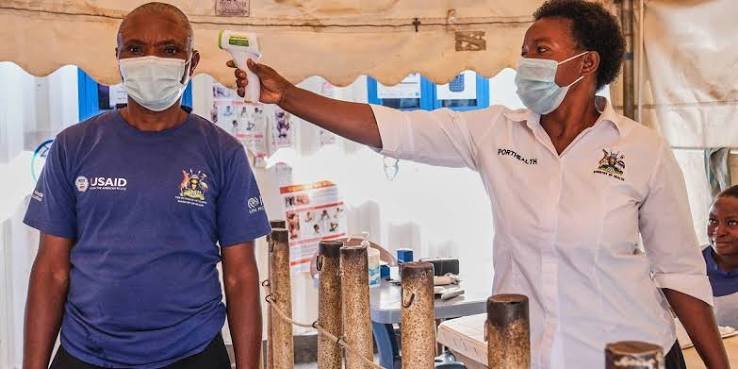
Under the new directive, Ugandan citizens who have travelled to DR Congo must complete the quarantine period at their own expense. Health officials have also increased screening at Entebbe International Airport and land border crossings, while requiring incoming travellers to provide passenger locator information to support contact tracing if necessary.
The measures highlight the growing challenge facing governments in the region as they attempt to contain the outbreak while maintaining cross-border movement for trade, work and essential services.
Uganda strengthens border controls
The quarantine requirement forms part of a broader effort to tighten Uganda’s health screening system. Authorities are checking travellers at major entry points and collecting information that could help investigators establish where people have travelled and who they may have encountered.
Uganda has also restricted transit through its territory for travellers with a history of travel to DR Congo, including those using chartered flights. Under the announced measures, non-essential travellers from DR Congo may be returned through the nearest border crossing at their own expense, while people entering the country illegally could face prosecution.
The rules reflect the government’s concern that people may carry the virus across borders before symptoms appear. Ebola symptoms can take up to 21 days to develop, making follow-up monitoring an important part of outbreak control.
Authorities are urging travellers to comply with screening procedures and provide accurate information about their movements. The goal is to identify possible exposure early and prevent infections from spreading unnoticed into communities.
Uganda says it has no active Ebola cases
The Ugandan government maintains that the country has no confirmed active Ebola infections following the closure of its previous outbreak on July 28, 2026. That outbreak involved 20 reported infections and two deaths, according to the country’s health authorities.
However, recent cases elsewhere in the region have prompted renewed concern. Kenya has reported Ebola infections and two deaths, while Nigeria confirmed an imported case involving a woman who had travelled through Uganda before arriving in Abuja.
The Nigerian case has drawn particular attention because officials are still investigating where the woman contracted the virus. Swiss authorities indicated that she likely became infected during travel to Uganda, while Ugandan officials have questioned whether all possible exposure routes have been examined.
Uganda’s Health Minister Baryomunsi said investigators were examining the woman’s movements and contacts, including possible links to relatives who had travelled to DR Congo. The circumstances surrounding her infection remain under investigation, and no definitive conclusion about where transmission occurred had been established in the reports available on October 25.
Ebola investigations cross national borders
The investigations are taking place against the backdrop of a major outbreak in DR Congo, where the Bundibugyo strain of Ebola has caused thousands of reported deaths and a substantial number of infections.
The same regional concern has extended to Kenya, where authorities have investigated a patient who travelled from DR Congo through Uganda before arriving in Nairobi. According to reports, the patient died after testing positive, and additional infections were later identified among people who had been in contact with him.
Ugandan authorities said 60 people identified as contacts of Kenya’s initial patient had completed 21 days of monitoring without developing symptoms. They were subsequently released from follow-up, an outcome that officials will hope to replicate as further investigations continue.
The cases demonstrate how quickly an outbreak investigation can become a regional responsibility when patients travel across multiple countries. Cooperation between health ministries, laboratories and international health agencies is essential for tracing possible exposure and determining whether infections are connected.
What is the Bundibugyo strain of Ebola?
The Bundibugyo virus is a type of Ebola virus that can cause severe illness and can spread through direct contact with the blood or other bodily fluids of an infected person, as well as contaminated materials.
The strain responsible for the current outbreak does not have an approved vaccine or specific treatment, making early detection, isolation and supportive medical care especially important. Health officials rely on surveillance, laboratory testing and contact tracing to identify cases and limit further transmission.
Symptoms may include fever, weakness, headache, muscle pain, vomiting and diarrhoea. Because these symptoms can resemble other illnesses, anyone who believes they may have been exposed should contact health professionals rather than attempting to diagnose the infection independently.
Public health authorities also advise people to follow official guidance, practise good hand hygiene and avoid contact with the bodily fluids of anyone suspected of having Ebola.
Regional cooperation remains crucial
Uganda’s 21-day quarantine requirement reflects the pressure facing governments trying to prevent further infections while keeping essential travel and commerce moving.
The measures place additional financial and practical responsibilities on returning citizens, particularly those required to pay for quarantine themselves. At the same time, authorities must ensure that screening procedures are effective, information is communicated clearly and people who may have been exposed receive appropriate support.
Uganda has also deployed Ebola specialists to DR Congo to assist with containment efforts, according to reports. Such cooperation is important because border screening alone cannot stop an outbreak if cases continue to spread in neighbouring communities.
For now, the Ugandan government’s priority is to maintain its Ebola-free status while investigators work with regional partners to clarify the origins and possible connections of recent infections.
The quarantine order is therefore both a precautionary step and part of a wider regional response. Its impact will depend on effective monitoring, reliable information-sharing and continued coordination between Uganda, DR Congo, Kenya, Nigeria and international health agencies.