A new report by Human Rights Watch (HRW) has raised serious concerns about civilian casualties in Mali, alleging that drone attacks carried out by the country’s armed forces and their Russian allies killed 94 civilians between April and August 2026.
The report, published on October 19, says military operations against armed insurgent groups have intensified in recent months, with some strikes apparently failing to distinguish between combatants and civilians. The findings are based partly on data from the Armed Conflict Location and Event Data project (ACLED), which monitors political violence and armed conflict.
The allegations have renewed concerns about the impact of Mali’s ongoing security crisis on ordinary people, particularly communities in central and northern parts of the country.
Drone Strikes and Civilian Deaths More Than Double
According to the report, ACLED recorded 47 drone strikes attributed to Malian forces and Russia’s Africa Corps between April and August 2026. The incidents were associated with 94 civilian deaths.
The figures represent a significant increase compared with the same period in 2025, when 22 drone strikes reportedly killed 44 civilians. The data therefore points to a sharp rise in both the number of reported attacks and the civilian death toll.
Human Rights Watch said some of the operations appeared to have been conducted without sufficient regard for the protection of civilians. The organisation also documented other alleged abuses by government forces, adding to concerns about the conduct of military operations during the conflict.
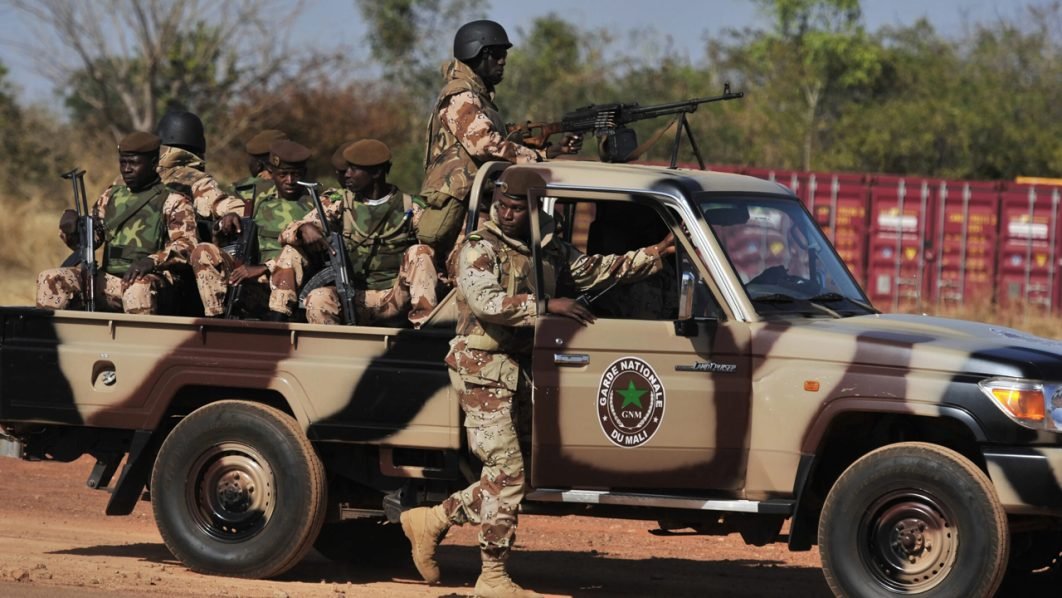
The findings come as Mali’s military-led government continues its campaign against Islamist militants and separatist fighters operating across the country.
Insurgent Offensive Intensifies Mali’s Security Crisis
The increase in military operations followed a major insurgent offensive launched on April 25, 2026. The attacks targeted several towns and cities, as well as the main airport in Bamako, Mali’s capital.
The offensive also resulted in the death of Mali’s defence minister, according to reports on the attacks. It highlighted the continuing difficulties faced by the authorities in containing armed groups and restoring security.
Mali has been governed by military leaders who took power in coups in 2020 and 2021. Since then, the authorities have increasingly turned to Russia for assistance in their fight against insurgent groups.
The Russian-linked Africa Corps, which took over much of the role previously played by the Wagner Group in the region, has supported Malian forces in security operations. Its involvement has drawn renewed attention as rights organisations investigate the impact of military campaigns on civilians.
Cattle Market and Health Centre Among Reported Targets
Human Rights Watch highlighted several incidents in which drone strikes allegedly endangered civilians and civilian facilities.
One incident occurred on August 19 at a cattle market in the Bandiagara region of central Mali. The attack reportedly killed six men, raising questions about the risks posed by military operations in places where civilians gather for everyday activities.
Another incident took place before dawn on July 29, when a drone strike hit a health centre in the Kidal region of northern Mali, close to the Algerian border. The incident added to concerns about the consequences of air attacks in areas where residents depend on medical facilities for treatment.
The rights organisation said the incidents formed part of a wider pattern of violence that requires greater scrutiny. Attacks affecting markets and healthcare facilities can have consequences beyond immediate casualties, disrupting essential services and making already vulnerable communities less secure.
Report Also Documents Alleged Abuses by Malian Soldiers
The report examined alleged abuses that did not involve drones. In one case, Human Rights Watch said Malian soldiers shot and killed five young girls in the Ségou region on July 12 after reportedly mistaking them for attackers.
The allegation adds another troubling dimension to the security situation, with civilians facing risks not only from aerial operations but also from encounters with armed personnel on the ground.
Human Rights Watch said it had written to Mali’s defence minister on August 5 to present its findings and seek answers. However, the organisation reported that it had not received a response to the letter.
A spokesperson for the Malian military also did not respond to a request for comment on the latest allegations. Mali has previously denied killing civilians during counterinsurgency operations, while the Russian embassy in Bamako had not immediately commented on Africa Corps’ alleged involvement in the reported incidents.
The lack of responses means the latest allegations remain contested and should be understood in the context of the information presented by the rights organisation.
Armed Groups Also Accused of Violations
Human Rights Watch’s findings did not focus exclusively on the Malian military and its Russian allies. The organisation also documented alleged abuses by insurgent groups operating in the country.
Among the incidents cited was the reported execution of 19 Malian soldiers in the northern Gao region in July.
The Jama’at Nusrat al-Islam wal-Muslimin (JNIM), an al-Qaeda-linked armed group active in the Sahel, acknowledged to Human Rights Watch that the killings had occurred but denied ordering them. The group also said such acts were not part of its policy.
Meanwhile, the Tuareg-led Azawad Liberation Front denied responsibility for executing the soldiers.
These allegations demonstrate the broader dangers facing Mali, where government forces and armed groups have been accused of violations that put civilians and captured combatants at risk.
Human Rights Concerns Grow Over Mali’s Conflict
The latest report has renewed calls for greater attention to civilian protection as Mali continues to battle armed groups across parts of its territory.
Human Rights Watch has urged the African Union’s Peace and Security Council to take a more active role in monitoring abuses and pressing all parties to respect international humanitarian law. The organisation argues that violations by government forces and insurgents alike require serious scrutiny and accountability.
For communities caught in the conflict, the consequences extend beyond the immediate loss of life. Attacks on civilian gathering places and healthcare facilities can undermine livelihoods, restrict access to essential services and deepen fear among residents.
The figures released by Human Rights Watch also raise questions about whether the growing use of drone strikes is adequately protecting civilians during military operations.
As Mali’s authorities continue their campaign against insurgents, the central challenge remains how to improve national security without exposing ordinary people to further harm. Independent investigations, transparent responses to allegations and accountability for proven violations will be important in addressing concerns surrounding the conflict.