Equatorial Guinea is stepping up its fight against malaria by extending a health programme that has significantly reduced infections on Bioko Island to the country’s mainland and the remote island of Annobón.
The Central African nation hopes to eliminate malaria nationwide by 2030 through a combination of mosquito control, improved disease monitoring, childhood vaccination and community engagement. However, health officials face considerable challenges in extending the programme across a much larger territory where environmental conditions and cross-border transmission make controlling the disease more difficult.
The initiative builds on more than two decades of malaria prevention work on Bioko, where a sustained campaign involving insecticide spraying, mosquito nets, larval control and detailed data collection has helped reduce the prevalence of the disease.
According to reporting by The Associated Press published by ABC News on October 18, 2026, malaria prevalence on Bioko has fallen from around 50% to approximately 7%, while deaths among children under five have declined by 78%. The results have encouraged authorities to expand the strategy to other parts of the country.
The government is now attempting to reproduce those gains nationwide through its Malaria Elimination Vision 2030 initiative, supported by public funding and contributions from private-sector partners.
Bioko Island Provides a Model for Malaria Prevention
Bioko Island has become the centrepiece of Equatorial Guinea’s malaria control efforts, demonstrating how sustained investment and coordinated public health interventions can reduce the burden of a disease that has affected communities for generations.
The programme uses several complementary approaches to limit mosquito populations and prevent infections.
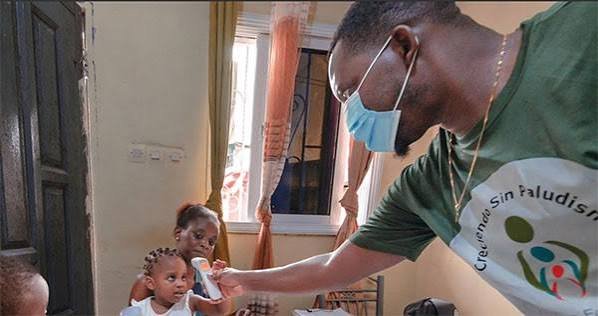
Health workers spray insecticides inside homes to kill mosquitoes that may transmit malaria. Other measures include distributing treated mosquito nets, controlling mosquito larvae and monitoring infection patterns to identify areas where transmission remains high.
The programme also relies on extensive data collection to determine where interventions are needed most.
Because many homes in Equatorial Guinea do not have conventional street addresses, programme workers developed a system to map residential buildings and record information about households, spraying activities and reported malaria cases.
This information allows health officials to identify locations where infections continue to occur and adjust their activities accordingly.
The approach has required considerable investment and cooperation from local residents. Health workers regularly visit communities to explain the purpose of insecticide spraying and encourage households to participate.
Although convincing every household has not always been easy, officials believe community engagement has played an important role in the programme’s progress.
The experience on Bioko has provided the government with a practical foundation for its wider ambition to eliminate malaria across the country.
Government Secures $116 Million for Nationwide Expansion
Funding is a major component of the expansion, as the government seeks to extend malaria prevention services beyond Bioko Island.
According to the report, a funding package worth approximately $116 million was announced in 2026 to support the rollout across mainland Equatorial Guinea and Annobón.
The expansion builds on earlier investments exceeding $130 million made over approximately two decades by the government and US energy companies, including ConocoPhillips and Chevron, to support malaria control on Bioko.
The involvement of oil companies reflects a shared interest in improving public health. Malaria-related illness can keep workers away from their jobs, reduce productivity and place additional pressure on healthcare services.
For the government, the investment is also linked to its broader economic ambitions. Officials believe reducing malaria could improve living conditions, strengthen the workforce and make the country more attractive to tourists and investors.
However, Equatorial Guinea faces a difficult contrast: despite earning substantial revenue from oil, poverty remains widespread, and many residents live in homes with inadequate construction or limited protection against mosquitoes.
These conditions can make disease prevention more difficult, particularly in densely populated communities where standing water and poor housing can increase exposure to mosquito bites.
Maintaining sufficient funding over several years will therefore be essential if the programme is to achieve its nationwide objectives.
Childhood Vaccination and New Technologies to Strengthen the Campaign
Equatorial Guinea plans to supplement its existing mosquito-control measures with additional technologies and preventive tools.
One priority is the introduction of the R21 malaria vaccine, recommended by the World Health Organization for preventing malaria in children in areas where the disease is a public health risk.
The programme aims to vaccinate approximately 300,000 children across the country, according to the Associated Press report. Vaccination would complement other preventive measures rather than replace them.
Authorities are also exploring the use of drones to help identify mosquito breeding sites and improve surveillance. Aerial monitoring could assist teams in locating areas that are difficult to access on foot, although its effectiveness will depend on how the information is incorporated into local control operations.
Another proposed avenue involves genetically modified mosquitoes being researched by scientists at the University of California, Davis.
The research explores ways of altering mosquitoes so they cannot transmit the malaria parasite, or of reducing populations of mosquitoes responsible for spreading the disease.
Such approaches remain subject to scientific evaluation and the necessary regulatory and safety procedures. They should not be confused with an already established nationwide intervention.
By combining established prevention methods with vaccination and carefully assessed new technologies, the government hopes to strengthen its chances of reaching the 2030 elimination target.
Why Expanding the Programme to Mainland Equatorial Guinea Will Be Difficult
Despite Bioko’s progress, health specialists caution that reproducing the same results across the entire country will be considerably more complicated.
The mainland is approximately 13 times larger than Bioko, creating additional demands for staffing, transportation, surveillance and the delivery of preventive services.
The mainland also shares borders with Cameroon and Gabon, where malaria remains widespread. People travelling across these borders can introduce infections into areas where transmission has been reduced, making elimination more difficult.
Unlike an island, a mainland territory cannot rely on geographical separation to limit the movement of infected people and the spread of disease.
This means that success will require more than spraying homes and distributing mosquito nets. Authorities will also need to coordinate surveillance and prevention activities across different communities and, where possible, work with neighbouring countries.
Local conditions present another challenge. Rainfall, humidity, housing quality and mosquito behaviour can vary significantly between regions, meaning that an intervention that works well in one location may need adjustments elsewhere.
Health experts therefore emphasise the importance of adapting strategies to local transmission patterns rather than applying an identical approach everywhere.
The programme’s ability to identify high-risk areas and respond quickly to new infections will be critical to its long-term success.
Malaria Remains a Major Public Health Challenge Across Africa
Equatorial Guinea’s campaign is part of a wider effort to tackle malaria, which continues to cause substantial illness and death across Africa.
According to the latest World Health Organization figures cited in the report, approximately 610,000 people died from malaria worldwide in 2024. African countries accounted for around 95% of global malaria cases and deaths.
Children remain particularly vulnerable, making access to prevention, early diagnosis and effective treatment essential.
Although malaria vaccines have introduced an additional tool for protecting children, vaccination alone cannot eliminate the disease. Mosquito control, treated nets, timely treatment and effective disease surveillance remain important parts of a comprehensive response.
The WHO has also warned that progress against malaria faces obstacles, including funding shortages, insecticide resistance, drug resistance in some regions and weaknesses in healthcare delivery.
For Equatorial Guinea, these challenges underline the importance of maintaining a long-term commitment to prevention rather than relying on a single intervention.
The country’s experience on Bioko offers encouragement, but nationwide elimination will require sustained resources and coordinated action across different communities.
Poverty and Housing Conditions Complicate Malaria Elimination
Beyond medical interventions, living conditions will play an important role in determining whether Equatorial Guinea can achieve its malaria elimination target.
In communities where houses have damaged roofs, unfinished walls or inadequate protection against insects, residents may face greater exposure to mosquitoes.
Limited access to healthcare can also delay diagnosis and treatment, increasing the risk that infections will continue circulating within communities.
These challenges are particularly important in rural areas, where health facilities and preventive services may be harder to reach.
Malaria also has economic consequences for households. When someone becomes ill, family members may lose income through missed work or spend money on treatment and transportation to healthcare facilities.
For households already struggling financially, repeated infections can deepen economic hardship.
Health specialists therefore argue that lasting progress depends on improving healthcare access, housing conditions and broader living standards alongside disease-control campaigns.
Equatorial Guinea’s oil revenues provide an important source of funding, but ensuring that investment translates into better health outcomes for ordinary residents will remain a central challenge.
Can Equatorial Guinea Eliminate Malaria by 2030?
The government’s ambition is to eliminate malaria throughout Equatorial Guinea by the end of the decade. Bioko’s progress provides evidence that sustained intervention can dramatically reduce infections, but extending those results nationally will require considerable effort.
Authorities will need to expand access to mosquito control, ensure that children receive appropriate preventive services, strengthen disease surveillance and maintain public participation.
They will also need to respond to differences in local transmission patterns and address the risk of infections arriving from neighbouring countries.
The proposed use of drones and genetically modified mosquitoes could provide additional tools, but their contribution will depend on successful testing, implementation and integration with existing public health measures.
Funding will be equally important. A programme that achieves early reductions but cannot maintain its activities over time could struggle to prevent malaria from returning.
For that reason, the 2030 target should be viewed as an ambitious national objective rather than a guaranteed outcome.
Equatorial Guinea’s expansion of its malaria elimination programme represents a significant public health effort. Whether the country can meet its 2030 goal will depend on sustained funding, effective prevention, community cooperation and the ability to overcome challenges that were less pronounced on Bioko Island.