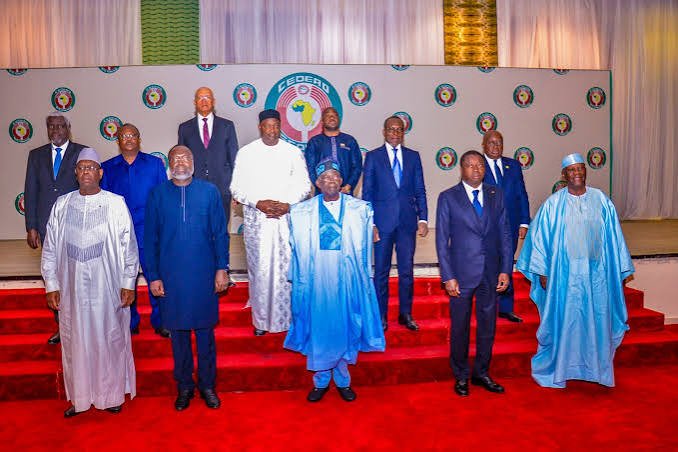
Nigeria has stepped up efforts to rebuild relations between the Economic Community of West African States (ECOWAS) and three Sahelian countries that withdrew from the regional bloc, in a diplomatic initiative aimed at preventing deeper divisions across West Africa.
The latest negotiations, held in Dakar, Senegal, bring together representatives of ECOWAS and the Alliance of Sahel States (AES), comprising Mali, Burkina Faso and Niger. The three countries have increasingly pursued an independent political and security strategy following disagreements with ECOWAS over military rule, sanctions and demands for a return to constitutional government.
Nigeria’s Minister of State for Foreign Affairs, Ambassador Sola Enikanolaiye, led the country’s delegation to the discussions on October 16, 2026. The talks are part of a broader effort to establish a framework for renewed engagement between the two sides ahead of ECOWAS’s end-of-year summit scheduled for Abuja in December.
The initiative reflects Nigeria’s interest in preserving regional cooperation despite growing political differences among West African governments. Officials have stressed that the departure of the three Sahelian nations from ECOWAS should not destroy the longstanding cultural, economic and geographical connections linking their populations with neighbouring countries.
Nigeria Seeks Common Ground Between ECOWAS and AES
The discussions in Senegal represent an important diplomatic step towards reducing tensions between ECOWAS and the three countries that have formed their own regional alliance.
Nigeria’s Foreign Affairs Ministry spokesperson, Oluwafemi Adeniyi, said the engagement was designed to help ECOWAS members coordinate their positions before entering structured negotiations with the AES countries.
According to the ministry, the discussions are expected to produce an agreed draft General Framework Agreement between the two groups. The proposed document would provide a foundation for future engagement and help identify areas where cooperation remains possible despite their political disagreements.
However, the framework remains under negotiation, and no final agreement has been announced.
Nigeria’s participation highlights its determination to keep diplomatic channels open and prevent the regional divide from becoming permanent.
As one of ECOWAS’s founding members and a major political and economic power in West Africa, Nigeria has a significant interest in maintaining stability across the subregion.
The government believes that the departure of Mali, Burkina Faso and Niger should not prevent countries from cooperating on shared challenges, particularly those involving security, trade and cross-border movement.
The Dakar discussions therefore offer an opportunity for both sides to explore practical arrangements that could preserve cooperation without requiring the three countries to reverse their withdrawal from ECOWAS immediately.
How Mali, Burkina Faso and Niger Split From ECOWAS
The diplomatic rift developed after military takeovers in Mali, Burkina Faso and Niger brought their governments into conflict with ECOWAS.
The regional organisation has traditionally promoted constitutional governance, democratic elections, economic integration and cooperation on security matters.
However, relations deteriorated as the military-led governments resisted pressure to establish timelines for returning to civilian rule. Sanctions and other regional measures further strained relations.
The three countries subsequently strengthened their cooperation and established the Alliance of Sahel States as a platform for political coordination and collective defence.
Their withdrawal from ECOWAS became effective on January 29, 2025, marking a significant setback for regional integration.
The split reduced ECOWAS from 15 member countries to 12 and complicated efforts to coordinate responses to security threats that cross national boundaries.
Although the AES countries have pursued a separate regional strategy, their geographical location means that they remain closely connected to their former partners through trade routes, migration, family relationships and shared security concerns.
These connections explain why Nigeria and other ECOWAS members continue to seek ways to maintain working relationships with the three governments.
The challenge is finding a sustainable diplomatic arrangement that accommodates political differences while preserving practical cooperation between neighbouring countries.
Regional Security Remains a Major Concern
Security is among the most important reasons for renewed engagement between ECOWAS and the AES countries.
Mali, Burkina Faso and Niger face persistent attacks from armed groups operating across the central Sahel. Violence and instability have also threatened neighbouring countries, particularly in areas close to the northern borders of Benin and Togo.
Nigeria faces its own security challenges, including militant activity in the northeast and attacks by armed groups in other parts of the country.
These threats cannot easily be contained within individual national borders. Armed groups can exploit gaps in intelligence-sharing, border surveillance and cooperation between security forces.
A political division between ECOWAS and the AES therefore creates additional difficulties for governments seeking to coordinate their responses.
The two sides may have different views on foreign partnerships, military strategy and regional governance, but they continue to face interconnected security problems.
Rebuilding communication could help create opportunities for cooperation on border management, intelligence exchange and efforts to prevent armed groups from moving freely between neighbouring countries.
However, diplomatic engagement alone will not resolve the region’s security crisis. Progress would also depend on political commitment, practical agreements and sustained cooperation among the countries involved.
Trade and Cross-Border Movement at Stake
Beyond security, the political dispute threatens to complicate economic relations across West Africa.
Nigeria maintains commercial and social connections with neighbouring countries, including Niger, while regional trade routes link markets throughout the Sahel.
Businesses depend on cross-border transport to move agricultural products, fuel, manufactured goods and other commodities. Traders and transport operators also rely on predictable border procedures to manage costs and avoid delays.
A breakdown in cooperation could create additional obstacles for businesses operating across the region, potentially affecting prices, supply chains and employment.
The movement of people is equally important. Families, traders and workers have longstanding connections that cross modern national boundaries, making regional mobility a practical necessity for many communities.
ECOWAS has previously maintained transitional arrangements intended to reduce disruption to trade and travel following the AES countries’ withdrawal.
Continued dialogue could help clarify how such arrangements should operate in the future and establish a more stable basis for economic relations.
For Nigeria, preserving these connections is important not only for diplomacy but also for protecting commercial interests and maintaining access to neighbouring markets.
A successful agreement could help prevent political disagreements from imposing unnecessary costs on ordinary citizens and businesses.
December ECOWAS Summit Could Become a Turning Point
The negotiations in Dakar are taking place ahead of the ECOWAS summit scheduled to be held in Abuja in December 2026.
The proposed General Framework Agreement is expected to be an important subject of the diplomatic process leading up to that meeting.
If negotiators can reach common ground, the document could provide a starting point for more structured relations between ECOWAS and the AES.
Nevertheless, the immediate objective is to establish an agreed draft framework rather than announce a complete reconciliation.
Significant differences remain between the two sides, including disagreements over political transitions, regional leadership and the role of external partners in West African security.
Overcoming these differences will require compromise and a willingness to separate practical areas of mutual interest from broader political disputes.
Nigeria’s role will be particularly important because of its influence within ECOWAS and its direct interest in stability across the Sahel.
The outcome of the negotiations could help determine whether the regional divide becomes a lasting obstacle to cooperation or creates an opportunity for a new diplomatic arrangement.
For now, the Dakar talks represent a renewed attempt to prevent West Africa’s political divisions from weakening its collective response to security and economic challenges.