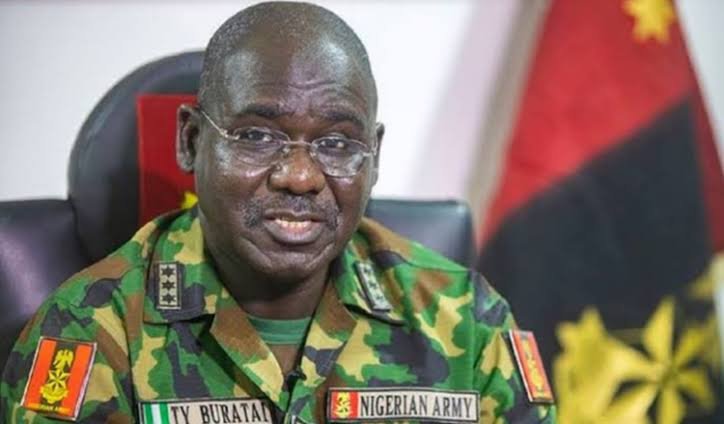
Former Chief of Army Staff, Lieutenant General Tukur Buratai (retd.), has clarified that the $1 billion approved for military equipment procurement during his tenure was released to the Federal Ministry of Defence rather than directly to the Nigerian Army, Navy or Air Force.
Buratai made the clarification while speaking at the Defence Correspondents Association of Nigeria (DECAN) Conference and Awards Ceremony in Abuja on Monday, October 12, 2026. He addressed the long-running controversy surrounding the funds, insisting that neither he personally nor the accounts of the three military services received the money.
The retired general said the National Economic Council (NEC) approved the funding for defence procurement, while the Ministry of Defence was responsible for managing the procurement process.
His remarks have renewed attention on the handling of the controversial funding and the need for greater transparency in Nigeria’s defence spending.
Buratai Rejects Allegations Over $1 Billion Arms Fund
Buratai described allegations surrounding the $1 billion allocation as politically motivated, claiming that the controversy emerged during the 2019 general election period.
According to him, opposition figures had alleged that the money was diverted to support political activities, an accusation he said the Federal Government publicly rejected at the time.
The former army chief argued that the allegations nevertheless continued to affect the reputations of military service chiefs, despite his position that the funds were not handled by the individual services.
He maintained that the distinction between the institution that approved the funding and the agency responsible for managing it was essential to understanding the controversy.
Buratai also called for a clearer explanation of how the money was spent, saying the responsibility for providing procurement records should rest with the institution that administered the funds.
His comments represent his account of the controversy; determining how the money was ultimately allocated and spent requires documentary evidence and an explanation from the relevant authorities.
Former Army Chief Calls for Greater Transparency
Beyond defending his role in the controversy, Buratai urged the Ministry of Defence to improve public accountability in military procurement.
He argued that questions surrounding defence expenditure could persist when the relevant institutions failed to provide sufficient information about contracts, payments and the delivery of equipment.
To address the problem, the retired general proposed establishing a dedicated Defence Procurement Transparency Portal.
Under his proposal, the platform would publish information about defence contracts, the organisations awarded the contracts and expected delivery schedules, subject to legitimate national security restrictions.
Such a system, he suggested, could help Nigerians understand how public money allocated to defence is used without exposing sensitive operational information.
The proposal comes amid continuing public interest in government expenditure and the resources allocated to tackling insecurity across the country.
Nigeria faces several security challenges, including terrorism, banditry, kidnapping and other forms of organised violence. Ensuring that defence funds translate into effective equipment and operational capabilities remains an important concern.
Buratai Supports Investigations Into Human Rights Allegations
The retired general also addressed allegations of human rights violations involving members of Nigeria’s security forces.
He said credible complaints should be investigated and prosecuted where evidence establishes wrongdoing.
Buratai acknowledged that the military must demonstrate that its disciplinary procedures are effective, transparent and capable of holding personnel accountable when violations occur.
He maintained that the armed forces should not be considered above the law and that allegations should be assessed through appropriate procedures.
However, he cautioned that the publication of disciplinary records must be handled carefully to protect the rights of accused personnel and avoid compromising ongoing military operations.
As part of his recommendations, he proposed the release of quarterly accountability reports summarising court-martial outcomes involving human rights complaints and operational conduct.
Such reports, he suggested, could strengthen public confidence in military institutions while demonstrating that allegations of misconduct are being addressed.
Lawan Calls for Dedicated Funding for Security Agencies
Former Senate President Ahmed Lawan also called for more consistent funding for Nigeria’s armed forces and other security agencies.
Lawan argued that allocating a dedicated percentage of government revenue to security could help provide the resources needed to purchase equipment and improve operational capacity.
He said the National Assembly had continued to support requests for security funding through the budgetary process, stressing that national security remained a major responsibility of government.
According to him, lawmakers had generally supported funding requests submitted by the executive for the armed forces and other security institutions.
His remarks highlighted the continuing debate over how Nigeria should finance its security operations while ensuring that allocated resources produce measurable results.
Defence Ministry Emphasises Intelligence and Technology
At the conference, Defence Minister Christopher Musa, represented by retired Air Commodore Steven Ogunmodede, stressed the importance of intelligence, technology and cooperation among security institutions.
The minister’s message focused on the changing nature of security threats, noting that criminal and terrorist groups increasingly exploit technology, financial networks and weaknesses in coordination.
He argued that military effectiveness depends not only on personnel and equipment but also on the ability to gather intelligence, identify threats early and respond effectively.
Modern surveillance systems, improved communications and stronger intelligence analysis can help security agencies understand threats and coordinate their operations.
However, he stressed that technological investment must be supported by trained personnel, reliable equipment and sound operational decision-making.
The minister also emphasised the need for cooperation across Nigeria’s security institutions, noting that no single agency possesses all the capabilities required to address the country’s complex security challenges.
Accountability Remains Central to Defence Spending Debate
The controversy surrounding the $1 billion arms procurement allocation highlights the importance of transparency in managing public funds intended to protect the country.
Buratai’s position is that the Ministry of Defence received and managed the money, rather than the Nigerian Army, Navy or Air Force. His proposed transparency portal would provide one possible mechanism for making procurement information more accessible to the public.
However, establishing how the money was disbursed, which contracts were awarded and whether the relevant equipment was delivered would require detailed records from the responsible authorities.
For Nigeria, the broader issue extends beyond the controversy itself. Defence spending must be accompanied by effective procurement procedures, proper oversight and credible reporting on how public resources are used.
As insecurity continues to affect communities across the country, Nigerians have a strong interest in ensuring that money allocated to the armed forces and other security agencies delivers tangible improvements in national security.
Buratai’s comments have placed renewed emphasis on the need to clarify institutional responsibilities and strengthen accountability in defence procurement.