One year after youth-led demonstrations forced former president Andry Rajoelina from power, Madagascar is still struggling to deliver the political reforms and improved governance that protesters demanded. The military-backed administration that took over has promised a fresh start, but activists say progress has been slow and many of the problems that triggered the uprising remain unresolved.
The protests, which began in September 2025, were initially driven by frustration over persistent water shortages and electricity blackouts. However, public anger soon expanded to include corruption, economic hardship, limited opportunities for young people and dissatisfaction with the country’s political leadership.
Rajoelina eventually left Madagascar on October 12, 2025, after weeks of demonstrations and growing pressure from sections of the military. His departure marked a dramatic turning point in the country’s politics, raising hopes that a new administration would introduce meaningful changes.
Yet, as Madagascar marks the anniversary of the uprising on October 12, 2026, questions remain over whether the political transition can deliver the transformation that demonstrators expected. Reporting by Radio France Internationale (RFI), carried by AllAfrica, highlights the gap between the promises made after Rajoelina’s removal and the concerns still expressed by young activists.
How Madagascar’s Gen Z Movement Changed the Political Landscape
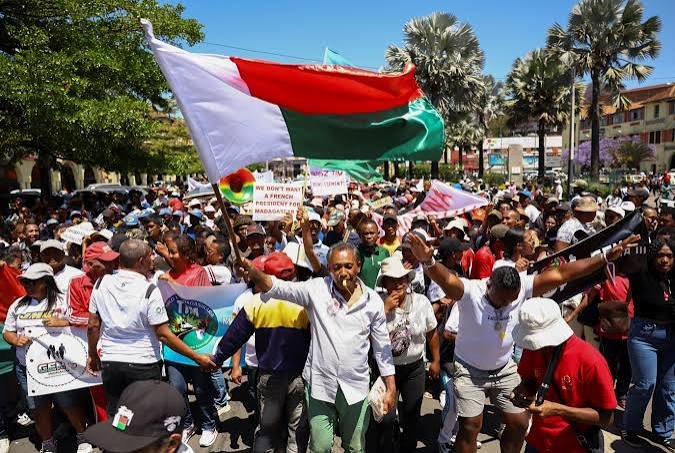
Madagascar’s youth-led movement gained momentum on September 25, 2025, when demonstrators took to the streets to protest against unreliable access to water and electricity.
What began as anger over basic public services quickly developed into a broader challenge to the government. Young people used social media to coordinate demonstrations, share information and bring attention to grievances that had accumulated over years.
The movement attracted support from citizens who were frustrated by the cost of living, unemployment, corruption allegations and what they viewed as the failure of political leaders to address everyday problems.
The authorities’ response failed to end the unrest. Instead, demonstrations continued, while the United Nations reported that at least 22 people had died during the early phase of the protests. Security forces faced criticism over their handling of the demonstrations.
A decisive development came when members of the military’s Capsat unit moved against Rajoelina’s leadership and sided with the protesters. The shift weakened the president’s position and accelerated the political crisis.
Rajoelina subsequently left the country, and the military assumed power, bringing an end to his presidency but opening a new and uncertain chapter for Madagascar.
For many young demonstrators, the departure of the former president represented only the beginning of the change they wanted. Their expectations included better public services, greater accountability, more political participation and a government that would respond to the needs of ordinary citizens.
Military Transition Faces Questions Over Reform
Following the change of power, Colonel Michael Randrianirina, commander of the Capsat military unit, emerged as the country’s new leader under a transitional administration.
The military authorities presented their takeover as an opportunity to rebuild state institutions and establish a new political direction. They pledged to organise elections within a transition period and pursue a process described as a national political refoundation.
However, the passage of a year has not convinced all the activists who helped bring down the previous government.
Mihary Rakotondravelo, a prominent participant in the Gen Z protests, told AFP that the movement’s fundamental demands had yet to be fulfilled. Her group has representation on national consultation committees involved in discussions about a new constitution, but the wider reform process has faced delays.
The government’s timetable envisages a constitutional proposal followed by a referendum, with presidential elections expected in late 2027. Yet the pace of preparations has raised doubts about whether the authorities can meet their stated deadlines.
The challenge facing the transition is not simply to replace the previous leadership. It must also demonstrate that new political arrangements can produce better governance, protect civil liberties and address the social and economic problems that fuelled the protests.
Young Activists Say Their Expectations Have Not Been Met
Disappointment among young people has become one of the most significant challenges facing Madagascar’s transitional authorities.
Many protesters believed that removing Rajoelina would open the way for a political system that was more transparent, responsive and accountable. Instead, some activists say the changes introduced so far have fallen short of their expectations.
The frustration became particularly visible in April 2026, when activists organised fresh demonstrations to demand faster reforms. Several participants were detained, including prominent figures associated with the original protest movement.
One activist, Herizo Andriamanantena, told AFP that he and other demonstrators had faced accusations of endangering state security. He described the experience as deeply discouraging, saying people who had protested for their country’s future were being treated as criminals. His account was reported by Africanews.
These developments have fuelled concerns about whether the new administration will tolerate criticism and allow civic groups to hold leaders accountable.
The situation also highlights a difficult reality for protest movements: removing a political leader does not automatically transform the institutions, practices or power structures that contributed to public dissatisfaction.
For Madagascar’s young activists, the challenge is to ensure that their movement’s demands remain central to the transition rather than being sidelined once new leaders consolidate their authority.
What Happened to Andry Rajoelina?
Although Rajoelina is no longer in power, his departure has not yet resulted in a clear legal resolution of the controversies surrounding his administration.
The former president has spent much of his time in exile in Dubai, where he has reportedly sought support from other African leaders.
His political position inside Madagascar has weakened considerably. According to RFI’s reporting, many lawmakers previously aligned with him have switched their support to the military-backed authorities, while some former allies have left the country or faced imprisonment.
Rajoelina has also avoided prosecution so far. The country’s Court of Accounts documented the alleged diversion of public resources for the benefit of people in his inner circle, but parliament did not vote to impeach him before his departure.
The unresolved questions surrounding his administration remain part of Madagascar’s wider debate over accountability and the rule of law.
For critics of the former president, establishing responsibility for alleged wrongdoing would be an important test of whether the country’s political transition can deliver justice. Any legal proceedings, however, would need to follow appropriate judicial procedures and allow the accused to respond to the allegations.
Madagascar’s Political Transition and the 2027 Election Question
The proposed election timetable is another major test for the transitional government.
The authorities have indicated that presidential elections should take place by the end of 2027, following consultations on political reform and the proposed new constitution.
However, delays in the consultation process have raised questions about whether sufficient time remains to complete the necessary preparations.
An assessment published by the French Institute of International Relations, drawing on an interview with Africa researcher Thierry Vircoulon on RFI, warned that the election timetable appeared increasingly difficult to achieve. The analysis pointed to delays in national consultations and unresolved issues involving electoral preparations and institutional reform.
For elections to command public confidence, Madagascar will need more than an announced date. Important issues include the credibility of the electoral register, the rules governing elections, the independence of electoral institutions and the ability of political parties and civil society organisations to participate.
Failure to make credible progress could deepen tensions between the authorities and groups that expect the transition to produce a return to constitutional government.
The military leadership must therefore balance its stated reform ambitions with growing pressure to demonstrate measurable progress.
Russia’s Growing Role Adds a Geopolitical Dimension
Madagascar’s political transition is also unfolding against a changing international backdrop.
Since the military-backed authorities came to power, Russia has sought to expand its presence in the country through security cooperation, economic engagement and cultural outreach.
A May 2026 report by Le Monde described Moscow’s efforts to develop relationships across Madagascar’s security, media and cultural sectors. France, meanwhile, has sought to preserve its own influence through security cooperation and economic engagement.
The growing Russian presence has added another dimension to Madagascar’s transition, as external partners compete for relationships with the new leadership.
Nevertheless, international partnerships alone cannot resolve the domestic issues that triggered the protests. Access to reliable electricity and water, economic opportunities, public accountability and confidence in political institutions remain central concerns for Madagascar’s population.
The direction of the country’s foreign relations may shape its future partnerships, but the success of the transition will ultimately depend on whether the government can respond to the expectations of its citizens.
What Lies Ahead for Madagascar?
A year after Rajoelina’s departure, Madagascar remains at a critical point in its political development.
The Gen Z protests demonstrated the ability of young people to mobilise around shared grievances and challenge established political authority. They also exposed the depth of public frustration over poor services, economic pressures and governance.
But the transition that followed has yet to convince many activists that the country is moving towards the fundamental changes they demanded.
The coming months will be important. Progress on constitutional consultations, credible preparations for elections and greater openness to public criticism could help rebuild confidence. Continued delays or further confrontations with activists, by contrast, could intensify disappointment.
The military-backed administration faces a clear test: whether it can turn the promise of political renewal into practical reforms that improve daily life and strengthen democratic institutions.
For the young people who helped bring about the political upheaval, the departure of a president was a milestone, not the final objective. Their central question remains whether the change in leadership will lead to a genuinely different system of government.