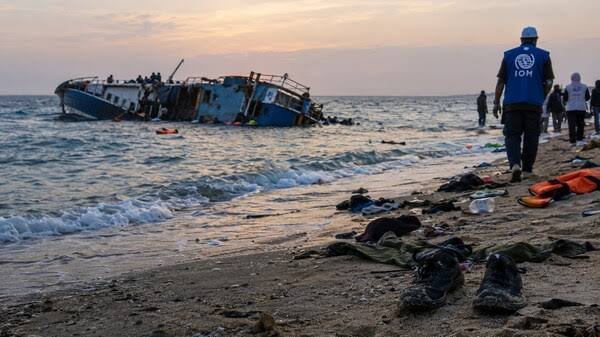
At least 139 migrants, including 15 children, have died after an overcrowded boat capsized off the coast of Djibouti while carrying passengers towards Yemen, in one of the deadliest recent disasters along the migration route connecting the Horn of Africa to the Arabian Peninsula.
The vessel was transporting more than 300 people when it overturned near Guhere, close to the coastal town of Obock, during the night of October 8–9, 2026. The passengers were attempting to cross the Gulf of Aden, hoping eventually to reach Gulf countries in search of employment, improved living conditions and greater economic opportunities.
The International Organization for Migration (IOM) reported that 82 people survived the disaster, while another 84 remained missing as rescue efforts continued. Most, if not all, of the passengers were believed to be Ethiopian nationals.
The tragedy has renewed concerns about the dangers facing migrants who undertake the hazardous sea crossing despite regional instability, limited access to safe migration routes and the risks associated with overcrowded boats.
According to the IOM, survivors described a frightening journey in which the vessel began to sink shortly after passengers boarded. The circumstances surrounding the accident are still being investigated, while authorities continue searching for missing people and assisting those who survived.
The disaster has also highlighted the difficult choices facing thousands of people from the Horn of Africa who leave their homes because of poverty, conflict, drought and a lack of economic opportunities.
Rescue Operations Continue as Death Toll Rises
Djiboutian authorities have continued search-and-rescue operations following the capsizing, while humanitarian teams work to provide emergency assistance to survivors.
The IOM has deployed personnel to support local authorities, assist injured passengers and help survivors contact their families. Medical care and other essential services are also being provided to those rescued from the sea.
Alexandre Coissac, the IOM’s chief of mission in Djibouti, said the incident was a painful reminder of the dangers migrants encounter while attempting to reach other countries.
The agency has warned that the official death toll may not represent the full scale of the tragedy because some bodies have yet to be recovered or formally identified.
The loss of life has left families desperate for information about relatives who boarded the vessel. With dozens of passengers still missing, uncertainty remains over how many people may ultimately be confirmed dead.
The incident also presents significant challenges for local authorities, who must coordinate rescue efforts, arrange burials and provide support to survivors while dealing with the consequences of a disaster involving hundreds of people.
The IOM has renewed its call for greater international cooperation to prevent similar tragedies and ensure migrants have access to safer ways of travelling.
Why Migrants Are Travelling From Djibouti to Yemen
The sea crossing between Djibouti and Yemen forms part of the migration corridor commonly known as the Eastern Route, used by people travelling from the Horn of Africa towards the Arabian Peninsula and, in many cases, Gulf countries.
Many migrants undertaking the journey are Ethiopian nationals seeking employment, financial security or an escape from difficult circumstances at home.
However, the route is particularly dangerous because it involves crossing waters where overcrowded and poorly equipped boats can quickly get into difficulty.
The latest disaster demonstrates the potentially fatal consequences of travelling on vessels that may not be suitable for transporting large numbers of passengers.
Despite these dangers, the route continues to attract migrants who believe that reaching Yemen could bring them closer to better-paying jobs and improved living conditions elsewhere in the Gulf region.
The journey is especially troubling because Yemen itself remains affected by armed conflict and humanitarian difficulties. People arriving there may face further insecurity rather than the stability they hoped to find.
The IOM has repeatedly warned that the combination of dangerous sea travel, trafficking risks and difficult conditions along the route leaves migrants vulnerable to exploitation and death.
The disaster off Djibouti underscores the need to address the circumstances that drive people to undertake such journeys, alongside measures to prevent dangerous crossings.
Conflict and Economic Hardship Drive Migration
The tragedy has drawn renewed attention to the conditions pushing people to leave Ethiopia and other parts of the Horn of Africa.
For many migrants, the decision to leave is influenced by a combination of economic hardship, environmental pressures and insecurity. Drought and difficult living conditions have affected communities in parts of Ethiopia, while renewed fighting has created additional concerns for residents of conflict-affected areas.
The IOM has reported that some Ethiopian migrants identified drought and poor living conditions as reasons for leaving their homes. Others cited conflict and alleged forced recruitment by armed groups.
Renewed violence in Ethiopia’s Tigray region has added to fears of further displacement. The latest escalation has raised concerns about the possibility of a return to a wider conflict following the devastating 2020–2022 Tigray war.
The situation has created additional uncertainty for civilians who are already struggling to secure food, employment and personal safety.
For some, migration represents an attempt to escape these difficulties and find opportunities elsewhere. However, the journey can expose them to dangerous conditions long before they reach their intended destinations.
The deaths off Djibouti illustrate how people fleeing hardship can encounter further life-threatening risks while searching for a more secure future.
Yemen’s Conflict Adds to the Risks Facing Migrants
The boat was heading towards Yemen, a country that has endured years of conflict and continues to experience serious security and humanitarian challenges.
Although Yemen has historically served as a transit point for migrants travelling towards Gulf countries, renewed fighting has made the journey increasingly complicated.
The conflict between Yemen’s internationally recognised government and the Houthi movement has contributed to displacement and insecurity, creating difficulties for both residents and people arriving from abroad.
Despite these conditions, migrants continue to cross the Gulf of Aden in the hope of eventually finding work in wealthier Gulf states.
This creates a troubling situation in which people escaping hardship in one country may enter another country facing its own crisis.
The IOM has also reported an increase in people travelling in the opposite direction, with thousands leaving Yemen by sea for Djibouti as the security situation deteriorates.
These movements demonstrate how instability across the region affects migration patterns, forcing people to make difficult decisions about where they can find safety.
For humanitarian agencies, the challenge is to respond to the needs of people moving in both directions while helping prevent further loss of life at sea.
More Than 900 Migrants Died or Went Missing Along the Route in 2025
The latest shipwreck is part of a wider pattern of dangerous migration journeys across the Eastern Route.
According to the IOM’s Missing Migrants Project, more than 900 migrants died or went missing along the route in 2025.
The agency also reported an increase in the number of people undertaking the journey, highlighting the growing pressure on countries and humanitarian organisations attempting to make migration safer.
The dangers extend beyond shipwrecks. Migrants may encounter human trafficking, exploitation, arbitrary detention and other forms of abuse during their journeys.
People travelling without access to safe and legal migration options can become particularly vulnerable to smugglers who may place profit ahead of passenger safety.
Overcrowding, inadequate vessels and limited safety equipment can further increase the likelihood of maritime disasters.
The latest incident has therefore renewed calls for governments and international organisations to expand access to safer migration pathways, strengthen protection for vulnerable people and address the conditions that force individuals to leave their homes.
The IOM has stressed that preventing future tragedies will require more than emergency rescue operations. It will also require sustained cooperation between countries of origin, transit and destination.
Calls for Safer Migration Routes Grow After Djibouti Disaster
The deaths of at least 139 migrants have once again exposed the human cost of dangerous migration journeys.
While search-and-rescue teams continue working to locate missing passengers, the disaster has raised difficult questions about how governments can better protect people who attempt perilous crossings in search of economic opportunities or safety.
For survivors, the immediate priorities include medical assistance, psychological support and help reconnecting with relatives.
For families whose loved ones remain missing, the search continues to bring uncertainty and distress.
Beyond the immediate emergency, the tragedy highlights the need for stronger efforts to combat human trafficking, improve maritime safety and create realistic alternatives to dangerous migration routes.
Addressing poverty, insecurity and environmental hardship in countries of origin will also be important in reducing the pressures that drive people to undertake risky journeys.
The crossing between Djibouti and Yemen remains an important migration corridor, but its dangers have become increasingly difficult to ignore.
As authorities continue their response, the disaster serves as a stark reminder that migrants seeking a better future can lose their lives before reaching their intended destinations.