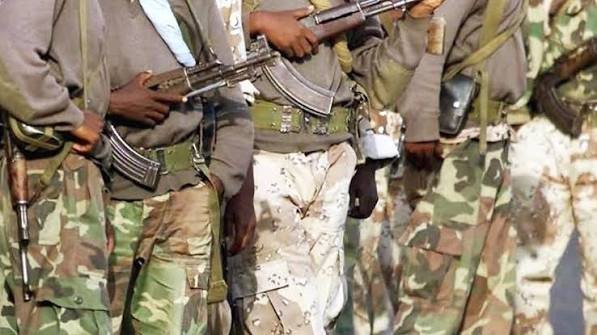
Renewed fighting in northern Ethiopia is raising fears that the country’s latest conflict could develop into a wider regional confrontation, as worsening relations with neighbouring states add another layer of uncertainty to an already volatile security situation.
The escalation comes as Ethiopian federal forces battle armed groups linked to the Tigray People’s Liberation Front (TPLF), while tensions between Addis Ababa and Eritrea have deteriorated sharply. Reports of Eritrean troops entering parts of northern Ethiopia have further heightened concerns that the conflict could extend beyond the country’s borders.
Although several neighbouring governments have strategic interests in the outcome, whether they will intervene directly remains uncertain. Their decisions are likely to depend on developments on the battlefield, Ethiopia’s ambitions for access to the Red Sea and longstanding disputes over regional security and the Nile River.
Renewed Fighting Threatens Ethiopia’s Fragile Peace
The latest violence has undermined the fragile peace established after the devastating Tigray war of 2020–2022.
That conflict pitted Prime Minister Abiy Ahmed’s federal government against the TPLF, which had dominated Ethiopian politics for decades before Abiy came to power in 2018.
The war ended with the Pretoria Agreement in November 2022, which established a framework for ending hostilities and restoring stability in Tigray. However, tensions between the federal government and Tigrayan political leaders persisted, leaving the peace agreement vulnerable to renewed confrontation.
Fighting erupted again in late September 2026, spreading across Tigray and into neighbouring Amhara and Afar regions.
Federal forces and their allies subsequently advanced into key areas, including the regional capital, Mekelle. The TPLF and allied opposition fighters withdrew from the city but vowed to continue resisting the government.
The developments have raised concerns that the capture of major towns may not bring an immediate end to the conflict. Instead, fighting could continue in rural and mountainous areas, potentially forcing federal troops into a prolonged campaign against insurgent forces.
Why Ethiopia’s Neighbours Are Watching Closely
Ethiopia occupies a strategically important position in the Horn of Africa, making its internal conflicts a concern for neighbouring countries.
Its relationships with Eritrea, Egypt and Sudan have been strained by competing security interests, territorial concerns and disagreements over access to water and maritime trade routes.
The renewed fighting has intensified those tensions, particularly after Ethiopia’s military leadership accused neighbouring countries of supporting armed groups operating against the federal government.
Eritrea, Egypt and Sudan have rejected accusations that they are backing the opposition alliance. Egypt has reiterated its position that regional disputes should be handled in accordance with international law and respect for national sovereignty.
Nevertheless, the combination of Ethiopia’s internal conflict and its deteriorating diplomatic relationships has created an environment in which developments on one battlefield could have consequences for the wider region.
Analysts warn that if neighbouring countries become more directly involved, Ethiopia’s conflict could evolve into a broader confrontation involving several states with competing strategic objectives.
Eritrea Emerges as a Key Factor
Of all Ethiopia’s neighbours, Eritrea occupies a particularly sensitive position in the current crisis.
The two countries fought a devastating border war between 1998 and 2000 before relations improved significantly during Abiy’s early years in office. Eritrean forces later fought alongside Ethiopian government troops during the 2020–2022 war against the TPLF.
However, the relationship has deteriorated since the Pretoria peace agreement.
One major source of tension is Ethiopia’s renewed determination to secure access to the sea. The country became landlocked when Eritrea gained independence in 1993 and now depends heavily on neighbouring states, particularly Djibouti, for access to international shipping routes.
Ethiopian leaders have increasingly described maritime access as a strategic priority, prompting concern in Eritrea that Addis Ababa could seek access to its coastline, including the port of Assab.
Against this background, reports that Eritrean troops have entered towns in northern Tigray have attracted considerable attention.
Such movements could indicate that the conflict is acquiring a more direct regional dimension, although Eritrea’s intentions and the extent of its involvement remain uncertain.
The deterioration in diplomatic relations has also been significant. Ethiopia announced plans to close its embassy in Eritrea and expelled Eritrean diplomats, while Asmara responded by severing diplomatic ties.
The combination of military tensions, diplomatic breakdown and competing maritime ambitions makes the Eritrean border one of the most sensitive areas to watch as the conflict develops.
Egypt and Ethiopia Remain Divided Over the Nile
Relations between Ethiopia and Egypt have been shaped for years by their dispute over the Grand Ethiopian Renaissance Dam (GERD), which Ethiopia built on the Blue Nile.
The dam is central to Ethiopia’s ambitions to expand electricity generation and support economic development. Egypt, meanwhile, considers the Nile essential to its water security and has repeatedly expressed concern about the effects of the project on downstream water supplies.
The dispute has become an important part of the broader strategic rivalry between the two countries.
With Ethiopia now facing renewed internal conflict, questions have emerged over whether regional competitors might seek to use the situation to advance their own interests.
However, allegations that Egypt is supporting armed groups inside Ethiopia have been rejected by Egyptian officials. There is no publicly established evidence that Cairo has decided to intervene militarily in the Tigray conflict.
Egypt’s position is also influenced by its own security concerns, including developments in Sudan and the wider Red Sea region.
For now, the Nile dispute remains one of several factors shaping the relationship between Cairo and Addis Ababa, rather than proof that Egypt intends to enter Ethiopia’s war.
Sudan’s Conflict Adds Another Layer of Instability
Sudan’s own devastating war has complicated the security environment surrounding Ethiopia.
The Sudanese Armed Forces and the paramilitary Rapid Support Forces have been fighting since April 2023, creating a humanitarian emergency and increasing instability across parts of the Horn of Africa.
Sudan and Ethiopia have exchanged accusations over alleged support for armed groups, adding to their already strained relationship.
The overlapping conflicts create risks for border security, refugee movements and regional trade. They also make it more difficult for neighbouring governments to separate their domestic security concerns from the wider struggle for influence in the region.
At the same time, Sudan’s military and political leaders must contend with their own war, which could limit their ability or willingness to become directly involved in Ethiopia’s conflict.
Consequently, Sudan’s role in the crisis remains uncertain, and allegations of external involvement should not be confused with confirmed military intervention.
Four Countries Discuss Regional Security
Regional diplomacy has also become increasingly important as tensions rise.
On October 4, the leaders of Egypt, Eritrea, Sudan and Somalia met at a consultative summit in Egypt to discuss regional developments and strengthen cooperation.
Their discussions included political coordination, economic and trade relations, and the importance of respecting national sovereignty and resolving disputes peacefully.
The meeting attracted attention because the four countries share concerns about aspects of Ethiopia’s regional ambitions, particularly its pursuit of access to the Red Sea.
However, the summit did not establish a formal military alliance against Ethiopia. The participating countries have different priorities and bilateral relationships, meaning their shared concerns do not necessarily translate into an agreement to fight alongside one another.
Even so, the meeting illustrates how Ethiopia’s domestic conflict is unfolding against a backdrop of broader diplomatic realignment.
If the fighting intensifies or relations between Addis Ababa and its neighbours deteriorate further, regional consultations could become increasingly important in determining how the crisis develops.
Could Neighbouring Countries Intervene Militarily?
Direct intervention remains one of the biggest uncertainties surrounding the conflict.
Eritrea has the most immediate geographical and security interests because of its shared border with Ethiopia and the reported movement of its troops into northern Tigray.
For Cairo, the central concerns include the Nile dispute and Ethiopia’s ambitions for maritime access. Sudan’s priorities are heavily influenced by its ongoing civil war, while Somalia must balance its own security challenges and complicated relations with Addis Ababa.
These competing interests make a coordinated military response far from inevitable.
Some governments could seek to influence events through diplomacy, political alliances or indirect support for partners without sending their own forces into Ethiopia.
There is also a risk that escalating accusations between neighbouring countries could increase mistrust and trigger retaliatory actions, even if no government initially intends to begin a wider war.
The key question is whether the regional powers will prioritise containing the crisis or use Ethiopia’s internal difficulties to pursue their own strategic objectives.
Ethiopia’s Multiple Conflicts Could Stretch Federal Forces
The government is also dealing with security challenges beyond Tigray.
Armed opposition activity in Amhara and Oromia has placed additional pressure on federal forces, which must divide their attention between different regions.
The renewed Tigray conflict could further strain military resources, particularly if opposition fighters avoid direct confrontations in major towns and instead pursue a prolonged insurgency.
Although government forces have regained control of important locations, capturing territory does not necessarily guarantee lasting security.
If fighting continues across multiple fronts, the consequences could include further displacement, disruption to essential services and increased pressure on an already vulnerable civilian population.
The conflict also threatens to undermine efforts to rebuild communities affected by the previous war, which caused enormous loss of life and displaced millions of people.
For Ethiopia, the immediate challenge is therefore not simply to regain control of territory but to prevent renewed fighting from developing into another prolonged national crisis.
A Critical Moment for the Horn of Africa
Ethiopia’s renewed conflict comes at a time when the Horn of Africa is already dealing with overlapping security, political and humanitarian challenges.
The fighting in Tigray, deteriorating relations with Eritrea, disputes over the Nile and the search for Red Sea access are increasingly connected.
However, a wider regional war is not inevitable. Diplomatic engagement, respect for national sovereignty and renewed efforts to prevent cross-border escalation could still limit the conflict’s spread.
For now, the international community will be watching developments along Ethiopia’s borders, particularly any confirmed movement of foreign troops and evidence of direct involvement by neighbouring states.
The decisions made by Ethiopia’s leadership and its regional rivals in the coming weeks could determine whether the latest fighting remains primarily an internal conflict or becomes a much wider crisis for the Horn of Africa.