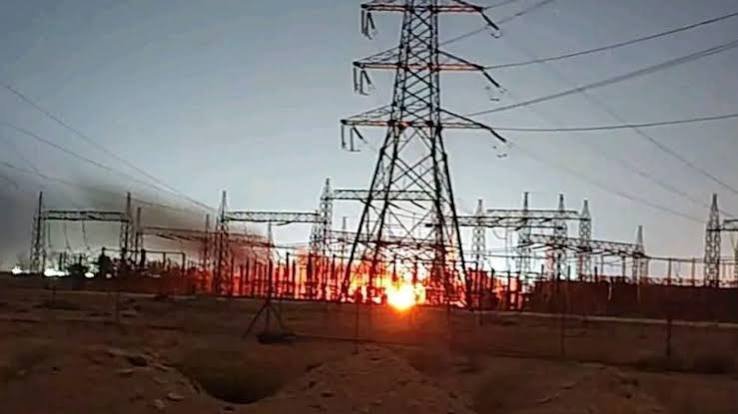
Sudan has suffered another wave of attacks on its electricity infrastructure after suspected drone strikes targeted three power distribution stations in Kassala and Northern states, triggering widespread blackouts and disrupting essential services.
The attacks occurred on Monday, November 2, as the country’s power network continued to face mounting pressure from repeated aerial assaults linked to the ongoing conflict between the Sudanese Armed Forces (SAF) and the paramilitary Rapid Support Forces (RSF).
According to local sources cited by Sudan Tribune, the latest strikes targeted the Aroma and Halfa El Jadida electricity distribution stations in Kassala State, as well as another facility in Merowe in Northern State.
The attacks reportedly destroyed the two installations in Kassala, cutting electricity supplies across parts of the eastern region.
The incident forms part of a wider campaign against Sudan’s electricity infrastructure, with more than 17 distribution stations reportedly suffering serious damage across several states in recent attacks.
Three Electricity Facilities Targeted
The Aroma and Halfa El Jadida stations in Kassala State were reportedly struck by RSF drones during the early hours of Monday.
Local sources said the attacks caused extensive destruction at both facilities, leaving communities and essential services without electricity.
A separate strike also hit a power distribution station in Merowe, Northern State, close to the Merowe Dam, one of Sudan’s major hydroelectric installations.
The Aroma facility is particularly important to the eastern electricity network because it receives high-voltage power before distributing it to the town and surrounding communities.
Its destruction could therefore have consequences beyond residential electricity supplies.
The station also supports critical infrastructure, including hospitals, healthcare centres and water pumping facilities. Prolonged power interruptions could make it more difficult for these services to operate normally.
More Than 17 Power Stations Damaged
The latest attacks have added to the growing damage inflicted on Sudan’s electricity network over the past week.
According to Sudan Tribune, more than 17 distribution stations have sustained severe damage across Gedaref, Khartoum, Al Jazirah, Red Sea, Sennar, White Nile, South Kordofan, River Nile, Northern and Kassala states.
The attacks have caused blackouts in several cities and disrupted services that depend on a reliable electricity supply.
Electricity infrastructure has become increasingly vulnerable as the war between Sudan’s military and the RSF continues.
The country’s power network is already struggling with the consequences of prolonged fighting, damaged facilities, fuel shortages and difficulties maintaining essential equipment.
The latest strikes have further complicated efforts to keep electricity flowing to homes, businesses and public institutions.
Hospitals and Water Facilities Face Disruptions
The damage to electricity distribution stations has raised concerns about the impact on ordinary residents and essential public services.
Hospitals and healthcare centres depend on stable electricity to operate medical equipment, maintain medicine storage facilities and provide treatment to patients.
Water pumping stations also require reliable power to deliver supplies to residential areas.
When electricity infrastructure is damaged, communities can face multiple difficulties, particularly where backup generators are unavailable or fuel supplies are limited.
Businesses and small industries are also likely to experience interruptions, adding to the economic pressure already facing communities affected by the war.
The extent of the disruption caused by Monday’s attacks and the time required to restore electricity to affected areas had not been fully established in the initial reports.
Sudan Files Complaint Against Ethiopia
The latest strikes came as Sudan’s government intensified diplomatic efforts over allegations of foreign involvement in attacks against civilian infrastructure.
On Sunday, November 1, Sudan submitted formal complaints against Ethiopia to the United Nations Security Council and the African Union Peace and Security Council.
Khartoum accused Addis Ababa of involvement in recent attacks targeting civilian locations and electricity facilities, alleging that the strikes had caused casualties and interrupted public services.
Ethiopia has rejected Sudan’s accusations of allowing its territory to be used for attacks against Sudan.
The allegations have added another layer of tension to relations between the neighbouring countries, which share a long border and have previously experienced disagreements over security and regional issues.
Sudan’s accusations have not been independently established, and the diplomatic dispute remains unresolved.
Sudan’s Electricity Crisis Deepens Amid War
Sudan’s electricity infrastructure has increasingly become part of the wider conflict, with repeated attacks threatening the country’s ability to maintain basic services.
The damage to distribution stations has affected communities across different regions, while repairs are complicated by insecurity, shortages of equipment and limited resources.
The country’s electricity challenges also have wider economic consequences. Factories, commercial businesses, agricultural operations and public institutions all depend on reliable power to function.
As the conflict continues, restoring damaged facilities and protecting remaining infrastructure will be critical to preventing further deterioration of essential services.
The latest attacks in Kassala and Northern states highlight the growing pressure on Sudan’s power network and the risks facing civilians who depend on it.
For now, authorities and local communities face the difficult task of dealing with widespread outages while the wider conflict shows little sign of ending.