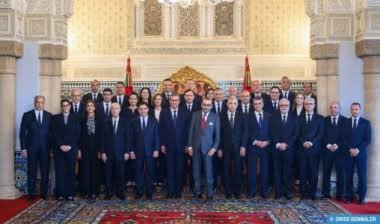
Morocco has entered a historic chapter in its political development following the swearing-in of a new government headed by Fatima Ezzahra El Mansouri, the first woman to serve as the country’s prime minister.
King Mohammed VI presided over the official appointment ceremony at the Royal Palace in Rabat on Friday, October 16, 2026, formally ushering in a new administration following September’s parliamentary elections.
El Mansouri’s government brings together four political parties that have secured a parliamentary majority, creating a coalition expected to address the country’s economic challenges, improve public services and advance major development projects.
Her appointment represents a significant milestone for women in Moroccan politics, although the new administration faces considerable pressure to translate the historic achievement into meaningful improvements in the lives of ordinary citizens.
Four-Party Coalition Takes Shape After Elections
The formation of Morocco’s new government follows the September 23 parliamentary elections, in which El Mansouri’s Authenticity and Modernity Party (PAM) emerged as the leading political force.
PAM subsequently reached an agreement with three other parties: the Istiqlal Party, the Socialist Union of Popular Forces and the Party of Progress and Socialism.
Together, the four parties control 207 seats in Morocco’s 395-member House of Representatives, comfortably exceeding the 198 seats required for a parliamentary majority.
The coalition agreement provides the political foundation for El Mansouri to begin implementing the government’s agenda and responding to the priorities identified during the election campaign.
The new administration’s formation also concludes the process of selecting a government following King Mohammed VI’s decision on September 29 to appoint El Mansouri as head of government and task her with assembling a cabinet.
With the ministerial appointments now formalised, attention is shifting towards the policies the coalition intends to pursue during its time in office.
Experienced Ministers Retain Key Positions
Although the new administration introduces changes in several areas, a number of prominent officials from the previous government have retained their positions.
Nasser Bourita remains foreign affairs minister, while Abdelouafi Laftit continues as interior minister. Justice Minister Abdellatif Ouahbi has also kept his portfolio.
Other officials retaining important responsibilities include Nizar Baraka, who continues to oversee equipment, water and forests.
The decision to retain several experienced ministers suggests that the government intends to preserve continuity in important areas of public administration while introducing changes elsewhere.
One of the notable appointments is Fouzi Lekjaa as economy and finance minister. Lekjaa, who previously served as a budget minister and heads Morocco’s football federation, will take responsibility for a portfolio central to the government’s economic and financial priorities.
Meanwhile, Khalid Hatimi has been appointed agriculture minister, with responsibility for agriculture, maritime fisheries and food sovereignty.
Nabil Benabdallah, leader of the Party of Progress and Socialism, returns to government as education minister, while Charafat Afailal has been named energy minister.
These appointments place economic management, education, agriculture and energy among the areas to watch as the new administration begins its work.
Women’s Representation Remains a Key Talking Point
El Mansouri’s rise to the highest government office marks an important moment for women’s participation in Moroccan politics. However, the composition of her cabinet also highlights the work that remains to achieve greater gender representation across the country’s political institutions.
The new government has seven women among its 32 members, including the prime minister. Two other women have been appointed to ministerial positions: Charafat Afailal, who will oversee energy, and Najwa Kokos, who has been assigned responsibility for family, social development and equality.
Four women have also been appointed as ministers delegate, bringing female representation into different areas of government administration.
While the appointment of Morocco’s first female prime minister is a landmark development, the number of women serving in the wider cabinet is likely to remain part of discussions about political inclusion and equal opportunities.
El Mansouri will therefore be expected to demonstrate leadership not only through her position but also through the government’s approach to women’s economic participation, social protection and access to public services.
Unemployment and Public Services Await the New Administration
Beyond the historic significance of the new government, its ability to address everyday economic and social concerns will be an important measure of its performance.
Unemployment remains a major challenge, particularly for young people seeking stable jobs and better opportunities. Demands for improved education and healthcare have also placed pressure on political leaders to deliver tangible results.
The new administration will need to develop policies that encourage job creation, support businesses and improve the quality of essential public services.
Economic management will be particularly important as households continue to look for relief from the cost of living and greater access to employment opportunities.
Lekjaa’s appointment as economy and finance minister comes at a time when the government must balance development ambitions with the need to manage public resources effectively.
Meanwhile, Benabdallah’s return to government as education minister places him at the centre of efforts to address concerns about the country’s education system.
The success of these policies could influence public confidence in the coalition and determine how effectively it responds to the expectations surrounding the new administration.
The government will also need to maintain cooperation among its four constituent parties. Although their combined parliamentary strength gives the coalition a comfortable majority, translating that advantage into coordinated policymaking will be essential.
Morocco Prepares for the 2030 FIFA World Cup
Another major responsibility facing El Mansouri’s government is the completion of preparations for the 2030 FIFA World Cup, which Morocco will co-host with Portugal and Spain.
The tournament represents a significant opportunity for Morocco to strengthen its international profile, attract visitors and encourage investment in infrastructure.
The country has committed substantial resources to development projects linked to the competition, with the wider investment programme estimated at approximately $20 billion.
Preparations involve major infrastructure requirements, including improvements to transport networks, sporting facilities and other services needed to accommodate international visitors.
For the new administration, the challenge will be to ensure that spending on the tournament produces lasting benefits beyond the competition itself.
Investments in transport, tourism and public infrastructure could support economic activity and create employment opportunities if projects are delivered effectively.
However, the government will also need to consider how these large-scale commitments fit alongside other national priorities, including healthcare, education and employment.
The ability to balance international ambitions with domestic needs will be an important test of El Mansouri’s leadership.
What El Mansouri’s Government Means for Morocco
The inauguration of Morocco’s new administration combines a historic political milestone with significant expectations for economic and social reform.
As the country’s first female prime minister, El Mansouri has assumed office at a moment that will attract attention both within Morocco and internationally.
Her four-party coalition has the parliamentary numbers needed to govern, while the retention of several experienced ministers offers a degree of continuity in important government departments.
Nevertheless, the administration’s long-term standing will depend on more than the symbolism of its formation.
Reducing unemployment, strengthening public services, managing public finances and completing preparations for the 2030 World Cup will require sustained coordination and effective implementation.
The government must also demonstrate that its policies can improve living standards and respond to the concerns of younger generations.
For Morocco, the coming period will reveal whether this historic change in leadership can be matched by measurable progress in governance and development.
El Mansouri now faces the task of turning the political momentum surrounding her appointment into practical results for the country.