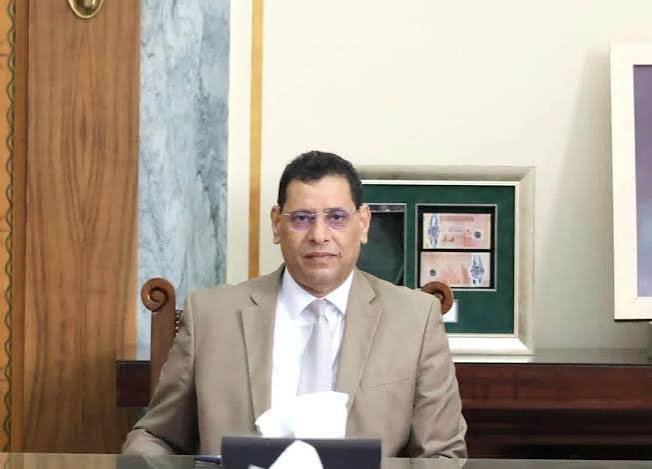
Libya’s House of Representatives has formally appointed Fawzi Abu Khazam as the new Governor of the Central Bank of Libya (CBL), following a parliamentary vote that accepted the resignation of his predecessor, Naji Issa.
The decision was reached on Monday, November 2, during a parliamentary session held in the southern Libyan city of Sebha. A total of 78 lawmakers out of the 90 members present voted in favour of the appointment, giving Abu Khazam formal backing to lead the country’s central monetary institution.
The development marks another important change in the leadership of Libya’s financial system, which has faced prolonged political divisions and disagreements over institutional control.
Abu Khazam had already been performing the governor’s responsibilities on an interim basis since October 22, following a decision by the leadership of the House of Representatives to provisionally accept Issa’s resignation.
His formal appointment is expected to provide a clearer leadership arrangement for the central bank, although questions remain about the wider political implications of the decision.
Naji Issa’s Resignation Accepted by Parliament
The parliamentary vote also formally accepted the resignation of former central bank governor Naji Issa, who took office in 2024 after an agreement between Libya’s eastern-based House of Representatives and the Tripoli-based High Council of State.
Issa’s appointment had helped resolve an earlier dispute over the leadership of the central bank, which had become a major point of disagreement between rival political authorities.
However, he submitted his resignation in August 2026 to the two legislative bodies. He did not publicly provide a detailed explanation for his decision.
The House of Representatives initially handled the resignation provisionally in October, allowing Abu Khazam, who was already a member of the central bank’s board, to assume the governor’s responsibilities while lawmakers considered the matter.
Monday’s vote completed the eastern parliament’s formal approval of the leadership change.
Who Is Fawzi Abu Khazam?
Before becoming governor, Abu Khazam served on the board of directors of the Central Bank of Libya.
His appointment to oversee the institution followed the House of Representatives’ decision to place him in charge during the leadership transition.
The central bank confirmed in an October 25 statement that Abu Khazam had assumed the governor’s responsibilities from October 22 under the parliamentary decision.
He subsequently chaired the bank’s first consultative board meeting, where members discussed institutional governance, monetary policy and the organisation of the bank’s internal operations.
Among the measures considered were the reconstitution of the Monetary Policy Committee and the establishment of committees responsible for governance, risk and appointments.
His immediate responsibility will be to maintain the bank’s operations while addressing the economic and financial challenges confronting Libya.
Libya’s Political Divisions Complicate the Appointment
Despite the parliamentary approval, the appointment comes against the background of Libya’s continuing political division.
The country has operated with rival political administrations since the aftermath of the 2011 uprising that ended Muammar Gaddafi’s rule.
The eastern-based House of Representatives is associated with a parallel administration in Benghazi, while the internationally recognised Government of National Unity, led by Prime Minister Abdulhamid Dbeibah, operates from Tripoli.
The Tripoli-based High Council of State has not publicly commented on the latest parliamentary vote.
This is significant because Issa’s appointment in 2024 followed an agreement involving both legislative bodies, helping to resolve a previous dispute over the central bank’s leadership.
The latest development therefore raises questions about whether the eastern parliament’s decision will receive the same level of political acceptance across Libya’s competing institutions.
In October, the United Nations Support Mission in Libya (UNSMIL) warned that the central bank’s operational independence and institutional integrity were essential to protecting the country’s financial stability.
The mission also stressed that leadership changes should follow established legal and institutional procedures.
Dbeibah Meets Abu Khazam Over Economic Challenges
Following the parliamentary decision, Prime Minister Abdulhamid Dbeibah met Abu Khazam to discuss Libya’s financial situation and the coordination of monetary and fiscal policies.
According to information released by the central bank, their discussions covered the exchange rate of the Libyan dinar, monetary stability and measures to address imbalances in public finances.
Dbeibah emphasised the importance of cooperation between the government and the central bank, particularly in controlling public expenditure and improving banking services.
He also called for wider adoption of electronic payment systems to make financial transactions easier, reduce dependence on cash and expand access to banking services.
Abu Khazam highlighted the need for continued coordination among state institutions to address economic difficulties and maintain confidence in the country’s financial system.
The meeting suggests that the new governor will face immediate pressure to address challenges affecting the Libyan economy.
Currency Stability and Public Spending Among Key Priorities
Libya’s economy remains heavily dependent on oil revenues, making government finances particularly sensitive to changes in oil production, exports and international prices.
The central bank also plays a crucial role in managing foreign currency reserves, regulating the banking sector and overseeing monetary policy.
One of the immediate concerns is the exchange rate of the Libyan dinar, which has faced pressure amid financial imbalances and high public spending.
UNSMIL has previously warned that excessive demands on the central bank to finance government expenditure could weaken foreign reserves, increase inflationary pressure and undermine confidence in the financial system.
Abu Khazam will therefore be expected to balance the financial needs of government institutions with the central bank’s responsibility to protect monetary stability.
His leadership will also be tested by the need to maintain uninterrupted banking services and strengthen coordination between financial institutions operating across the country’s divided political landscape.
For now, the parliamentary vote has formally confirmed Abu Khazam’s appointment, but the broader challenge will be ensuring that the Central Bank of Libya maintains its independence, credibility and ability to serve the country’s economy.