Leaders from Egypt, Eritrea, Somalia and Sudan have appealed for political dialogue and peaceful solutions as renewed fighting in Ethiopia raises fears of a wider regional crisis.
The call followed a high-level meeting in New Alamein City, Egypt, where Egyptian President Abdel Fattah el-Sisi, Eritrean President Isaias Afwerki, Somali President Hassan Sheikh Mohamud and Sudanese army chief Abdel Fattah al-Burhan held talks on Sunday.
In a joint declaration issued after the summit, the four leaders stressed the importance of resolving regional disputes through political engagement rather than military confrontation. The meeting comes at a particularly sensitive moment, with Ethiopia facing renewed fighting in the northern Tigray region and Sudan continuing to struggle with a devastating civil war.
Rising tensions around Ethiopia
The diplomatic statement comes as Ethiopia’s federal forces and an armed alliance have become locked in fresh fighting. The alliance includes the Tigray People’s Liberation Front (TPLF), which fought Ethiopian government forces during the 2020–2022 Tigray war.
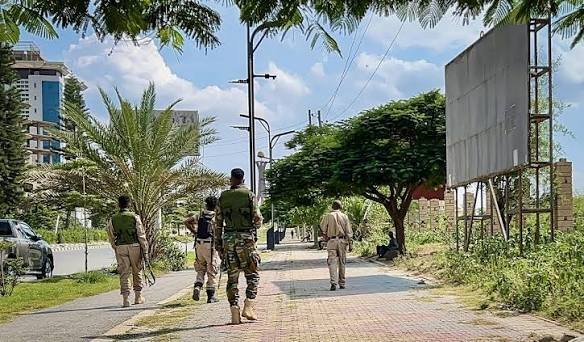
Government forces and allied fighters recently regained control of Mekelle, Tigray’s regional capital, after TPLF forces withdrew from the city. The latest development has revived concerns that the fragile peace agreement reached in 2022 could unravel and lead to another prolonged conflict.
Ethiopian authorities have accused Eritrea, Egypt and Sudan of supporting forces opposed to the government. The three countries have rejected allegations of direct involvement in the fighting.
Eritrea, meanwhile, has accused Ethiopia of attempting to create justification for possible military action against it, further increasing concern about the possibility of the conflict spreading beyond Ethiopia’s borders.
Dispute over Red Sea access
The four countries also addressed the increasingly sensitive issue of access to the Red Sea.
Their declaration stated that control and sovereignty over the Red Sea should remain with the countries that have coastlines along the strategic waterway. The position comes against the background of Ethiopia’s efforts to secure reliable access to the sea despite being landlocked.
Somali President Hassan Sheikh Mohamud has previously indicated that Somalia would not oppose Ethiopia obtaining commercial access through Somali ports, provided any such arrangement is reached through an agreement with Mogadishu.
The issue has become an important source of tension in the Horn of Africa, particularly as Ethiopia seeks greater maritime access to support its economic and strategic interests.
Sudan war also discussed
Sudan’s ongoing conflict was another major focus of the declaration.
The country’s army, led by al-Burhan, has been fighting the paramilitary Rapid Support Forces (RSF) since April 2023. The war has created a major humanitarian emergency and displaced millions of people.
The four leaders backed Sudan’s military-led authorities and called for a political process involving Sudanese parties as part of efforts to end the conflict. Sudan and Ethiopia have previously accused each other of interfering in Sudan’s war.
The declaration also reflects wider disagreements over Ethiopia’s regional policies. Egypt and Sudan remain locked in a long-running dispute with Addis Ababa over the Grand Ethiopian Renaissance Dam, with both downstream countries warning against measures they believe could threaten their water interests.
Growing concern over regional instability
The latest summit demonstrates the growing importance of diplomacy as tensions increase across the Horn of Africa and surrounding regions.
With fighting returning to parts of Tigray, tensions between Ethiopia and Eritrea worsening, and Sudan’s civil war continuing, the four leaders appear to be pushing for political engagement to prevent further escalation.
The situation remains fluid, particularly following the recapture of Mekelle by Ethiopian government-aligned forces. Any further deterioration could have serious consequences for civilians, regional security and already fragile humanitarian conditions.
For now, the joint declaration sends a clear message that dialogue and negotiated political solutions should take precedence as conflicts and diplomatic tensions continue to reshape the Horn of Africa.