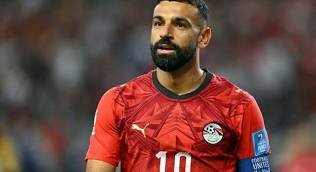
Egypt’s preparations for their 2027 Africa Cup of Nations qualifying campaign have been overshadowed by a growing dispute involving captain Mohamed Salah and head coach Hossam Hassan.
The tension intensified after Egypt opened their Group B campaign with a goalless draw against Angola, followed by Salah’s early departure from the national-team camp and a series of controversial comments from Hassan that attracted criticism from supporters and former players.
Salah started the Angola match but was substituted around the hour mark, a decision that quickly became a major talking point. The situation became more complicated when the Trabzonspor forward left camp the following day.
Reports and social-media discussions subsequently raised questions about whether the departure was connected to frustration over his substitution or Hassan’s post-match comments. However, the Egyptian Football Association said Salah’s absence from the next fixture had already been agreed with the coaching staff because of concerns about the artificial playing surface in Juba.
Why Salah Will Miss South Sudan Match
Salah is set to miss Egypt’s September 29 AFCON qualifier against South Sudan because the game is being played at Juba Stadium, which has an artificial-turf pitch.
The Egyptian Football Association said the decision was made to protect the 34-year-old attacker and that the arrangement had been discussed before the Angola game.
Hassan repeated that explanation ahead of the South Sudan fixture, stressing that Salah remains an important part of his plans.
The coach described the Egypt captain as a crucial player and said the decision was based on his desire to protect him from potential injury rather than a disagreement between the pair.
Salah’s absence is nevertheless significant. He has scored 68 goals for Egypt and is just one goal away from equalling Hassan’s national-team record of 69 goals.
Hassan Attempts to Clarify Controversial Comments
While trying to settle the Salah speculation, Hassan also addressed another controversy involving veteran goalkeeper Mohamed El Shenawy.
The coach had previously made comments about the Al Ahly goalkeeper’s career that were widely interpreted as suggesting that the 37-year-old’s international career had been finished before he returned to prominence.
Hassan later said his remarks had been misunderstood. He explained that he had been referring to El Shenawy’s previous shoulder injury rather than attempting to criticise or disrespect the goalkeeper.
He also reiterated his confidence in El Shenawy and the other goalkeepers available to Egypt.
The comments had generated considerable discussion because El Shenawy is one of Egypt’s most experienced players and has made 76 appearances for the national team.
Egypt’s Slow Start Adds to the Pressure
The controversy comes at an inconvenient time for Egypt, who are looking for a stronger start to their AFCON qualifying campaign.
The Pharaohs were unable to break down Angola in Cairo, settling for a 0-0 draw and leaving them with one point from their opening Group B match.
South Sudan, meanwhile, lost 2-1 to Malawi in their opening game. Malawi therefore began the qualifying campaign with three points, while Egypt and Angola had one each and South Sudan remained without a point.
Egypt are seeking qualification for the 2027 AFCON finals, which will be jointly hosted by Kenya, Uganda and Tanzania.
The team will therefore want to avoid dropping more points as the qualification race develops.
Questions Around the National Team
Hassan’s recent comments have created an additional media storm around a team that only recently enjoyed a strong period following its 2026 World Cup campaign.
The coach has now attempted to lower the temperature by stressing his respect for the players and insisting that there is no conflict with Salah.
Former Egypt international Hazem Emam has nevertheless criticised Hassan’s handling of press conferences, arguing that the coach needs to be more careful with his public statements.
For Egypt, the immediate priority is now the South Sudan fixture. With Salah unavailable, Hassan will have to rely on the rest of his attacking options to produce the result the Pharaohs need.
Salah’s return will also be closely watched, particularly given the attention surrounding his departure from camp and the public discussion that followed.
For now, both Hassan and the Egyptian FA maintain that the decision to leave Salah out of the South Sudan match was agreed in advance and was primarily motivated by concerns over the artificial pitch.
The coming matches should provide a clearer picture of whether the recent controversy was simply an uncomfortable episode during an international break or whether deeper issues remain within the Egyptian camp.