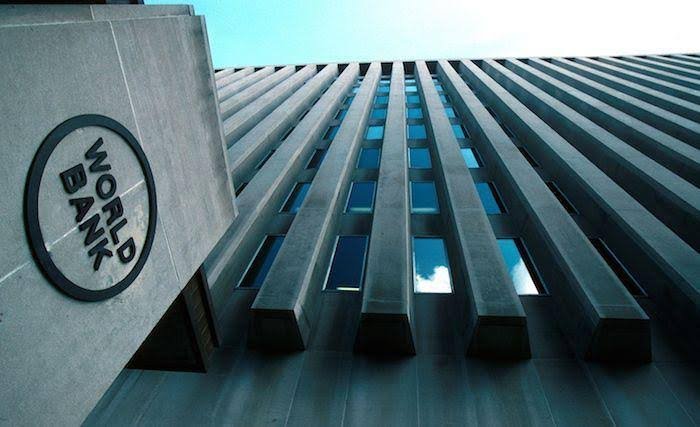
The Federal Government is seeking three new financing facilities from the World Bank with a combined value of $1.5 billion, even as Nigeria’s total public debt continues to increase.
Documents from the World Bank show that the proposed financing consists of three separate $500 million facilities targeting climate resilience, social protection and early childhood development.
The development comes after Nigeria’s public debt rose to N166.79 trillion at the end of June 2026, according to figures from the Debt Management Office.
$500m climate resilience financing
The first proposed facility is an additional $500 million for the Agro-Climatic Resilience in Semi-Arid Landscapes project, popularly known as ACReSAL.
If approved, the additional funding would increase the project’s overall financing from $700 million to $1.2 billion. The facility would be provided through the World Bank’s International Development Association, which offers concessional financing to eligible countries.
The World Bank is expected to consider the additional funding on October 29, 2026, with the Federal Ministry of Environment serving as the implementing agency.
The money is expected to support projects aimed at tackling environmental challenges, including land degradation, erosion, flooding and water insecurity.
Other planned interventions include watershed rehabilitation, irrigation and drainage systems, reforestation, water storage and measures designed to improve the ability of communities to cope with climate-related challenges.
ACReSAL currently covers 19 northern states and the Federal Capital Territory, focusing on areas affected by environmental degradation and declining agricultural productivity.
According to the World Bank, land degradation and desertification affect about 43 per cent of Nigeria’s land area. The institution has also warned that inadequate action on climate change could have significant consequences for the country’s economy.
Another $500m for social protection
A second proposed $500 million facility is the Household Prosperity and Empowerment-Social Protection Project, known as HOPE-SP.
Unlike the ACReSAL financing, the HOPE-SP facility remains in the preparation stage. Its technical design review is expected in October, while tentative approval has been scheduled for March 2027.
The Federal Ministry of Finance would be the borrower, while the Federal Ministry of Humanitarian Affairs and Poverty Reduction would oversee implementation.
The proposed programme is designed to expand social assistance for poor and vulnerable households.
It would also seek to improve the systems used to identify beneficiaries and strengthen coordination between federal, state and local governments.
The financing would comprise a $420 million results-based component and an $80 million investment financing component, according to World Bank documents.
The programme is also expected to encourage greater participation by federal and state governments in financing social protection programmes over time.
Early childhood development programme
The third proposed facility, also worth $500 million, is designed to support early childhood development across Nigeria.
The programme would cover all 36 states and the FCT, with attention focused on children from birth to five years.
Areas expected to benefit include healthcare, nutrition, early learning, childcare, water and sanitation.
The proposed financing is structured around a $400 million programme-for-results component and $100 million in investment project financing.
The World Bank’s proposal comes amid concerns about early childhood development outcomes in Nigeria, including child nutrition and access to organised early learning.
Nigeria’s rising debt
The new borrowing plans are coming at a time when Nigeria’s debt stock has recorded another increase.
The Debt Management Office put the country’s total public debt at N166.79 trillion as of June 2026, up from N152.40 trillion recorded in June 2025.
That represents an increase of about N14.39 trillion over the 12-month period.
Domestic obligations accounted for approximately N91.59 trillion, while external debt stood at about N75.20 trillion.
The Federal Government remained the largest debtor, with domestic and external liabilities making up the bulk of the country’s overall debt position.
Nigeria has also increased its use of Treasury bills as part of its domestic borrowing programme. Outstanding Treasury bills rose significantly during the year, contributing to the increase in federal domestic obligations.
Nigeria’s World Bank exposure
Nigeria’s existing financial obligations to the World Bank have also grown.
As of June 2026, the country owed the World Bank Group approximately $20.73 billion, consisting of $19.12 billion owed to the International Development Association and $1.61 billion to the International Bank for Reconstruction and Development.
The figure represents an increase from about $19.39 billion recorded a year earlier.
The proposed $1.5 billion facilities would therefore add to an already substantial financial relationship between Nigeria and the World Bank.
However, the new facilities are still subject to the bank’s approval procedures and should not be treated as part of Nigeria’s existing debt until they are approved and drawn.
The latest proposals also follow the World Bank’s approval in July 2026 of a separate $1.25 billion financing package for Nigeria under its Nigeria Actions for Investment and Jobs Acceleration programme. That facility was designed to support reforms aimed at investment, private-sector growth and job creation.
The latest request illustrates the Federal Government’s continued reliance on multilateral financing for major development programmes while it seeks to address environmental challenges, strengthen social protection and improve outcomes for young children.
The eventual economic impact of the proposed borrowing will depend on whether the funds are approved, how quickly they are disbursed and how effectively the projects are implemented.