Refugees and asylum seekers in Durban, South Africa, are facing renewed anxiety over possible attacks as an anti-immigration group’s September 30 deadline approaches.
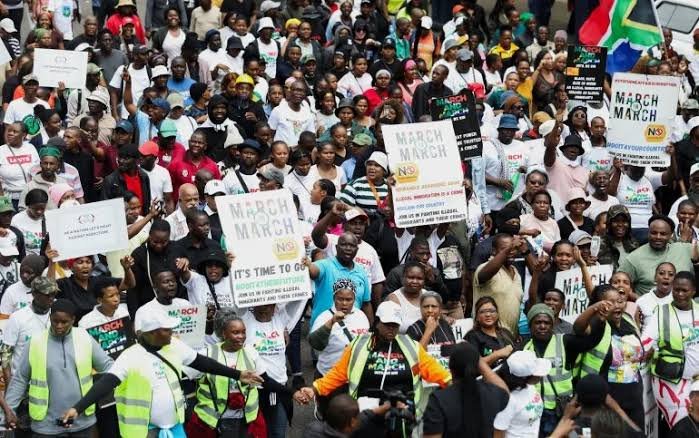
The deadline was announced by March and March, a movement that has organised demonstrations in different parts of South Africa and called for undocumented foreign nationals to leave the country.
For refugees who have already fled their communities because of attacks and hostility towards foreigners, the approaching deadline has created additional uncertainty.
One of those affected is Bishop Raphael Bahebwa, a refugee from the Democratic Republic of the Congo (DRC) who has lived in South Africa for 26 years. He told Al Jazeera that he had gone into hiding after allegedly receiving threats because of his advocacy for the rights of foreigners.
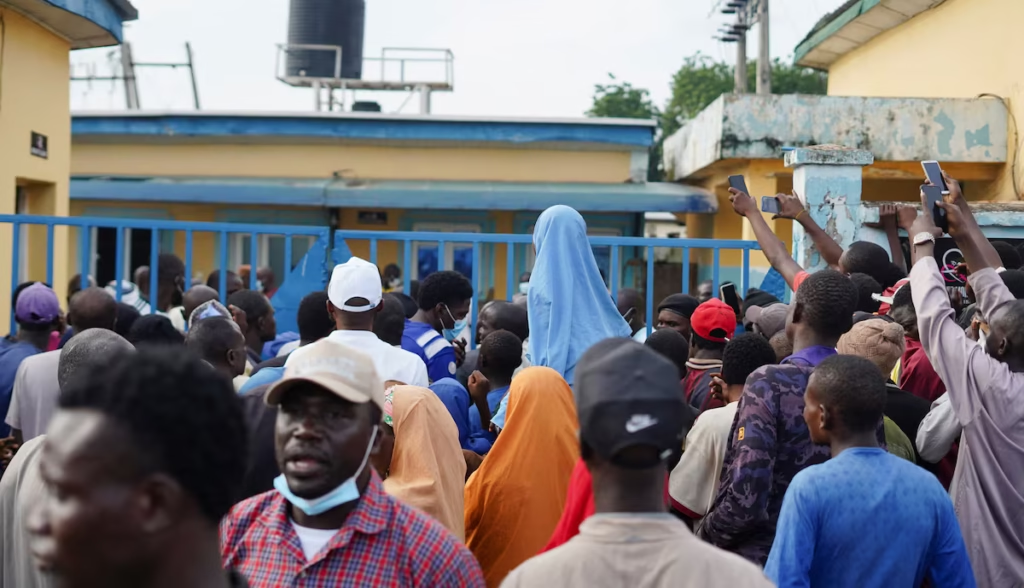
The situation has become particularly difficult for migrant communities in Durban, where hundreds of refugees and asylum seekers previously gathered outside a Department of Home Affairs refugee reception centre.
Many of those at the makeshift camp came from the DRC and Burundi, while others were from Uganda, Mozambique and Tanzania. They said they had sought refuge after experiencing or fearing anti-foreigner violence in the areas where they lived.
For several months, men, women and children reportedly slept on the pavement outside the government facility. Their basic needs were largely supported by volunteers and civil society organisations.
Some residents described difficulties obtaining regular food and medication. Al Jazeera also reported that one man with tuberculosis died while living at the camp, although the circumstances surrounding his death had not been independently established.
Tensions in Durban
The situation became more tense in September when members of March and March confronted refugees and asylum seekers outside the reception centre.
A confrontation on September 3 reportedly resulted in violence, with police intervening and at least four people injured. At another demonstration several days later, officers formed a line between protesters and migrants as tensions increased.
March and March says its campaign is focused on undocumented immigration, crime and problems affecting South African communities. Its representatives have rejected accusations that the movement is targeting foreigners because of their nationality and maintain that their demands are directed at people living in the country without proper documentation.
However, refugees say the hostility they experience does not always distinguish between people with valid documents and those without them.
The concerns are reinforced by previous incidents of violence against foreign nationals. According to the report, six refugees working in salons around Durban’s Warwick Street Market were attacked earlier in the year, with two requiring hospital treatment.
Refugees forced to leave makeshift camp
In September, South African authorities moved to clear the informal camp outside the refugee reception centre.
Those staying there were reportedly offered two main options: return to the communities they had previously left or accept temporary accommodation at the Lindela facility in Gauteng.
Lindela is a government-run immigration detention centre that has historically been used in connection with deportation and repatriation procedures. Some refugees were therefore reluctant to relocate there.
On September 15, 274 people were transported from Durban to Lindela, while around 150 others decided to remain in Durban and search for alternative accommodation.
For those who stayed, however, the underlying problem remained unresolved.
Kafuti Muyumba, a Congolese business owner and representative of the refugee community, said many migrants were afraid to return to neighbourhoods where they had already experienced threats or violence.
He also said some refugees had lost businesses and sources of income during the prolonged disruption.
The fears are partly rooted in South Africa’s history of xenophobic violence. Major outbreaks occurred in 2008 and 2015, resulting in deaths, injuries and displacement of foreign nationals.
For Congolese refugees in particular, returning home is also complicated by continuing conflict in parts of the DRC.
Government steps up immigration enforcement
The South African government has meanwhile increased immigration enforcement amid the continuing protests.
Government figures cited in the report show that between June 14 and August 20, authorities processed 86,596 foreign nationals for deportation or repatriation.
Malawians represented the largest group, followed by Zimbabweans and Mozambicans. The government said 90 percent of those repatriated had entered South Africa illegally, while 95 percent had crossed the border outside official entry points.
Authorities have stressed that immigration enforcement is the responsibility of the state and warned private groups against attempting to take the law into their own hands.
The September 30 deadline issued by March and March does not have legal authority, meaning the group cannot legally order foreign nationals to leave South Africa or carry out deportations themselves.
South African police have said they will continue normal policing operations and expect protesters to operate within the law.
Nevertheless, refugees remain concerned about what could happen when the deadline arrives.
For people who have already lost homes, businesses and livelihoods, the possibility of renewed unrest has made it difficult to plan their next steps.
Some have been moved hundreds of kilometres away to Lindela, while others are searching for housing in Durban despite fears about returning to the communities they previously fled.
With South Africa’s local government elections scheduled for November 4, migration has also become an increasingly prominent issue in public debate.
For refugees such as Bahebwa, the September 30 deadline represents another moment of uncertainty in an already difficult period.