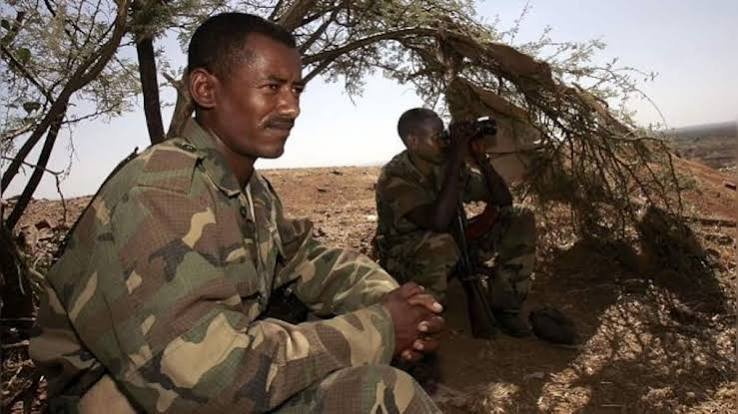
Ethiopia’s military has sought to ease concerns over a possible return to full-scale civil war, saying it is responding cautiously as fighting and political tensions intensify in the country’s northern regions.
Army Chief of Staff Field Marshal Berhanu Jula said the military was dealing with what he described as provocations from forces linked to the Tigray conflict with what he called “wisdom and restraint.”
His comments come after several days of renewed clashes involving federal forces and Tigrayan fighters, raising memories of Ethiopia’s devastating 2020-2022 conflict.
Army says it is exercising restraint
Berhanu’s comments represent one of the clearest statements from Ethiopia’s military since the latest violence intensified.
The army chief accused armed groups associated with the Tigray front of provoking the federal government and said the military was deliberately avoiding an unnecessarily aggressive response.
The comments are significant because the previous Tigray war caused enormous civilian suffering and left hundreds of thousands of people dead, according to estimates cited by international sources.
The conflict ended with the Pretoria peace agreement in November 2022, but political and territorial disagreements have continued in the years since.
Fresh fighting raises alarm
The latest escalation began with clashes involving Tigrayan forces and Ethiopia’s federal military.
Tigray’s authorities have presented their military actions as defensive, accusing federal forces of launching attacks against the region.
The Ethiopian government, however, has accused the Tigray People’s Liberation Front (TPLF) of carrying out an offensive against government positions.
Earlier in the week, Tigrayan forces were reported to have seized control of airports in the region and launched attacks in neighbouring Afar and Amhara states.
The developments prompted the suspension of some flights and raised fears that the violence could spread beyond Tigray.
Seven armed groups form alliance
The situation has become more complicated following the formation of an alliance involving seven Ethiopian armed groups.
The coalition includes the TPLF and other armed organisations that have previously been involved in Ethiopia’s internal conflicts.
The groups say their objective is to challenge the government of Prime Minister Abiy Ahmed.
The emergence of the alliance has raised concerns among regional observers because it brings together groups from different parts of Ethiopia and could potentially broaden the conflict beyond the Tigray region.
Ethiopia accuses Eritrea of backing armed groups
Ethiopian officials have also accused neighbouring Eritrea of supporting armed groups opposed to the federal government.
Addis Ababa has alleged that Eritrea has provided financial backing to members of the newly formed alliance.
Eritrea has repeatedly rejected similar accusations.
The allegations have added another layer to the crisis because relations between Ethiopia and Eritrea have deteriorated since the two countries’ brief period of rapprochement following the 2020-2022 Tigray conflict.
Any direct involvement by Eritrea could increase the risk of the crisis spreading beyond Ethiopia’s borders.
Residents fear return to wartime conditions
The renewed fighting has caused anxiety among residents in Tigray.
Reports indicate that people in Mekelle, the regional capital, have been stocking up on food, cash and other essential supplies as fears of a prolonged confrontation grow.
There have also been reports of disruptions to telecommunications and internet services in parts of northern Ethiopia.
The situation has raised memories of the previous war, when Tigray experienced severe restrictions on communications and access to essential supplies.
International community calls for dialogue
The latest developments have attracted concern from international organisations and foreign governments.
The United Nations and European Union have urged the parties to exercise restraint and return to the peace process that helped end the previous war.
The EU has specifically called for immediate de-escalation, saying disputes should be addressed through negotiations rather than military action.
The renewed fighting is particularly concerning because Ethiopia sits in a strategically important part of the Horn of Africa, a region already affected by Sudan’s civil war and tensions involving Eritrea and Red Sea access.
Risk of wider regional instability
The possibility of another prolonged conflict in Ethiopia has implications beyond the country’s borders.
The previous Tigray war displaced large numbers of people and created a major humanitarian crisis. A new conflict could place additional pressure on neighbouring countries and humanitarian agencies already dealing with instability across the Horn of Africa.
Analysts have also warned that tensions involving Ethiopia, Eritrea and Sudan could interact with one another, creating a broader regional security problem.
For now, Ethiopia’s military says it intends to respond with restraint. But with fighting already reported across parts of the north and a new alliance of armed groups challenging the federal government, the situation remains fragile.
The coming days will be closely watched as regional and international actors push for dialogue and seek to prevent the latest confrontation from developing into another prolonged Ethiopian civil war.