Nigeria has secured a major victory in an international arbitration dispute involving Sunrise Power and Transmission Company and the long-delayed Mambilla Hydroelectric Power Project in Taraba State.
An arbitration tribunal operating under the International Chamber of Commerce (ICC) in Paris rejected Sunrise Power’s $400 million claim against the Nigerian government, according to Attorney-General of the Federation and Minister of Justice, Lateef Fagbemi. The final decision was issued on September 17, 2026.
The ruling could remove a significant legal obstacle that has held back progress on the massive hydropower project for years.
Tribunal rejects Sunrise Power’s claim
The dispute centred on settlement agreements that Sunrise Power relied on in seeking payment from Nigeria.
According to Fagbemi, the ICC tribunal determined that the agreements were not legally binding on the Federal Government because the officials who signed them did not have the necessary authority to commit the country without presidential approval.
The tribunal also found that the settlement arrangements were affected by corruption and were inconsistent with Nigerian public policy, making them unenforceable.
Sunrise Power had sought $400 million under the disputed settlement arrangements. The claim consisted of a $200 million settlement amount and another $200 million described as a default payment.
The company has not immediately responded publicly to requests for comment on the latest ruling.
Nigeria to recover legal costs
The arbitration decision also has financial consequences for Sunrise Power and its principal, Leno Adesanya.
The tribunal ordered the claimants to cover 75 percent of Nigeria’s legal fees and expenses related to the arbitration. The amount is subject to 10 percent annual compound interest until payment is completed.
The decision represents an important development in a legal dispute that has stretched across several years and involved significant claims over the future of the Mambilla project.
Nigeria’s government has described the outcome as a defence of the country’s financial and legal interests.
Mambilla project has faced years of delays
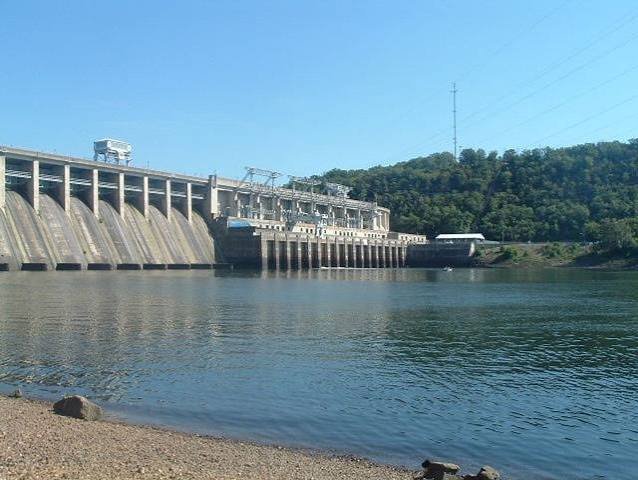
The Mambilla Hydroelectric Power Project is planned as one of Nigeria’s largest power-generation projects.
The scheme involves a proposed 3,050-megawatt hydroelectric plant in Taraba State. Plans for the project date back to a 2003 agreement involving Sunrise Power, with subsequent disagreements leading to years of litigation and arbitration.
The prolonged dispute has contributed to delays in moving the project towards full development.
Nigeria’s latest arbitration victory could now create an opportunity for the government to pursue the project without the particular legal dispute that has complicated its progress.
China financing linked to dispute resolution
The Mambilla project has also been connected to proposed financing from China’s Export-Import Bank.
According to reports, progress towards securing financing was dependent on resolving the disputes surrounding the project. The latest arbitration ruling could therefore help remove one of the obstacles to renewed discussions about financing and construction.
If eventually completed, the project would add thousands of megawatts to Nigeria’s electricity-generation capacity.
That prospect has made the Mambilla scheme an important part of successive Nigerian governments’ plans for addressing the country’s long-standing power challenges.
Sunrise has another major claim pending
Although Nigeria has prevailed in the latest arbitration, the broader dispute involving Sunrise Power is not necessarily over.
Fagbemi said Sunrise is pursuing a separate arbitration claim against Nigeria valued at more than $2.7 billion. That case is distinct from the $400 million claim rejected in the latest ruling.
The distinction is important because the latest decision does not automatically resolve every legal dispute connected to the Mambilla project.
Nigeria’s government will therefore continue to face legal proceedings related to the project’s history and contractual arrangements.
What the ruling means for Mambilla
President Bola Tinubu has described the ICC decision as removing a major legal barrier that had affected the Mambilla project for years.
In a statement issued after the ruling, the presidency said Nigeria remained committed to legitimate investors while maintaining its position against claims it considers legally unsupported.
The immediate significance of the arbitration victory is that the $400 million claim has been dismissed and Nigeria has been awarded a substantial portion of its legal costs.
The longer-term question is whether the decision will help the government restart meaningful progress on the Mambilla Hydroelectric Power Project.
For Nigeria’s energy sector, the project remains significant because an additional 3,050 megawatts of generation capacity could contribute to efforts to improve electricity supply.
After nearly two decades of delays and legal disputes, the latest arbitration ruling gives the Nigerian government another opportunity to pursue the project while addressing the remaining financial, contractual and technical challenges surrounding its development.