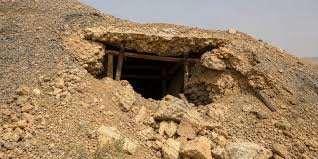
At least 82 people have died following the collapse of a gold mine in Sudan’s West Kordofan State, in a disaster that has raised fresh concerns over the dangerous conditions facing workers in the country’s mining sector.
The incident left several others injured, while the fate of an unknown number of miners remains uncertain as rescue efforts continue at the collapsed site.
Rescue workers and local miners reportedly spent hours digging through the debris in an attempt to locate survivors and recover those buried beneath the rubble. Working largely with basic equipment, the teams recovered 60 bodies by dawn before finding another 22 victims on Wednesday, bringing the confirmed death toll to at least 82.
A local administrator said approximately 50 people were injured in the collapse. However, authorities have yet to establish the exact number of miners who remain trapped or missing, leaving open the possibility that the death toll could rise.
The scale of the tragedy underscores the hazardous nature of Sudan’s gold-mining industry, particularly the widespread informal and small-scale operations that have expanded across the country.
For many Sudanese communities, artisanal mining has become an important source of employment and income. Thousands of people depend on the sector to support their families, often working in difficult conditions with limited access to protective equipment, proper engineering standards or modern mining technology.
Mine shafts can be particularly dangerous when they are poorly constructed or lack adequate support systems. Workers operating in such environments face the constant risk of collapses, rockfalls and other accidents.
The latest disaster has therefore brought renewed attention to calls for greater regulation and improved safety standards within Sudan’s mining industry.
The country’s gold sector has taken on an even greater significance since the outbreak of war, with the precious metal emerging as an important economic resource during the conflict. Sudan has been embroiled in a devastating war between the Sudanese Armed Forces and the Rapid Support Forces, with the conflict now entering its fourth year.
Gold has become one of the commodities linked to the financing of the rival sides, according to reports. Control over mining areas and the trade surrounding the precious metal have consequently assumed greater importance amid the wider struggle for economic resources.
A substantial portion of Sudan’s gold is also believed to leave the country through unofficial channels. The United Arab Emirates has frequently been identified as a major destination for Sudanese gold, although the trade routes and transactions surrounding the commodity remain difficult to fully monitor because of widespread smuggling.
For the rescuers at the West Kordofan mine, however, the immediate priority remains finding anyone who may still be alive beneath the collapsed structure.
The use of heavy machinery is considered necessary to reach deeper sections of the mine, but access to suitable equipment is proving difficult. Rescue workers are consequently facing a race against time as they search through tonnes of earth and debris.
The disaster comes against the backdrop of a wider humanitarian crisis caused by Sudan’s prolonged conflict, which has severely affected infrastructure and access to essential services in many parts of the country.
As rescue operations continue, families and communities are awaiting information about relatives who entered the mine but have not returned.
The collapse has not only produced a heavy loss of life but has also exposed the risks faced daily by thousands of Sudanese miners whose livelihoods depend on an industry where safety measures are often inadequate.