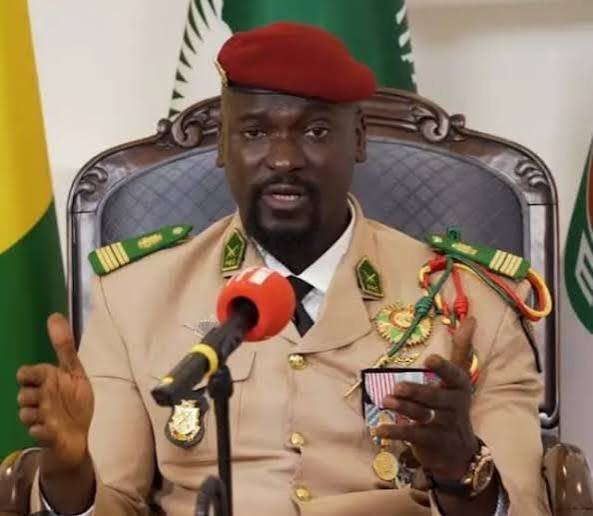
Guinea and Ivory Coast have moved to strengthen their relationship, with Presidents Mamady Doumbouya and Alassane Ouattara agreeing to deepen cooperation on security, trade and political matters.
Doumbouya arrived in Abidjan on Friday for talks with Ouattara as the two West African leaders sought to advance bilateral ties and find common ground on challenges confronting the region.
The discussions culminated in a meeting on Sunday, where security emerged as one of the key issues on the table.
Doumbouya called for closer intelligence-sharing between Guinea and Ivory Coast, arguing that stronger coordination was necessary to confront the growing threats posed by terrorism, cross-border criminal networks and other security challenges.
The Guinean president stressed that peace and stability remained essential to economic growth and development, warning that insecurity could undermine efforts by countries in the region to improve the lives of their citizens.
“Like you, I am convinced that there can be no development without peace and stability,” Doumbouya said.
He added that the region was facing different forms of insecurity and expressed Guinea’s readiness to work more closely with Ivory Coast.
According to the Guinean leader, cooperation should include intelligence exchanges and joint efforts to combat cross-border crime and terrorism.
The call for closer security coordination comes amid persistent concerns over instability and the spread of criminal activities across borders in parts of West Africa. The ability of criminal groups to operate across national boundaries has increased pressure on governments to improve intelligence-sharing and security cooperation.
However, security was not the only issue discussed by the two presidents.
The leaders also agreed to strengthen economic cooperation, particularly in the area of trade. Closer commercial ties could provide opportunities for both countries to expand economic activities and improve relations between their private sectors.
Political cooperation also featured in the discussions as Guinea and Ivory Coast looked to build a broader partnership based on shared interests.
Another issue that received attention was illegal gold mining, which Doumbouya described as a strategic concern.
A statement from Ouattara’s office said the Guinean president highlighted the need to confront illegal gold mining and address the challenges surrounding undeclared gold production.
The issue is significant for Africa, which remains one of the world’s major gold-producing regions. A 2024 report estimated that up to 40 per cent of gold produced across the continent is not declared, potentially costing African countries billions of dollars in lost revenue.
Beyond lost government income, illegal mining can create wider problems, including environmental damage, weak regulatory oversight and opportunities for criminal groups to exploit the sector.
Doumbouya’s emphasis on the issue therefore adds another dimension to the security and economic cooperation being discussed by the two countries.
For Guinea and Ivory Coast, the talks in Abidjan come at a time when West African nations are under growing pressure to work together on issues that extend beyond national borders.
The meeting also demonstrated the importance both leaders place on direct dialogue as they seek to address shared concerns and expand their countries’ partnership.
By placing security, trade, politics and illegal mining at the centre of their discussions, Doumbouya and Ouattara have signalled a willingness to pursue a closer relationship.
The latest engagement could pave the way for increased collaboration between the two countries, particularly in intelligence-sharing, economic activities and efforts to tackle transnational crime.
As regional challenges continue to evolve, Guinea and Ivory Coast appear determined to strengthen their cooperation and work together to protect their interests while contributing to greater stability across West Africa.