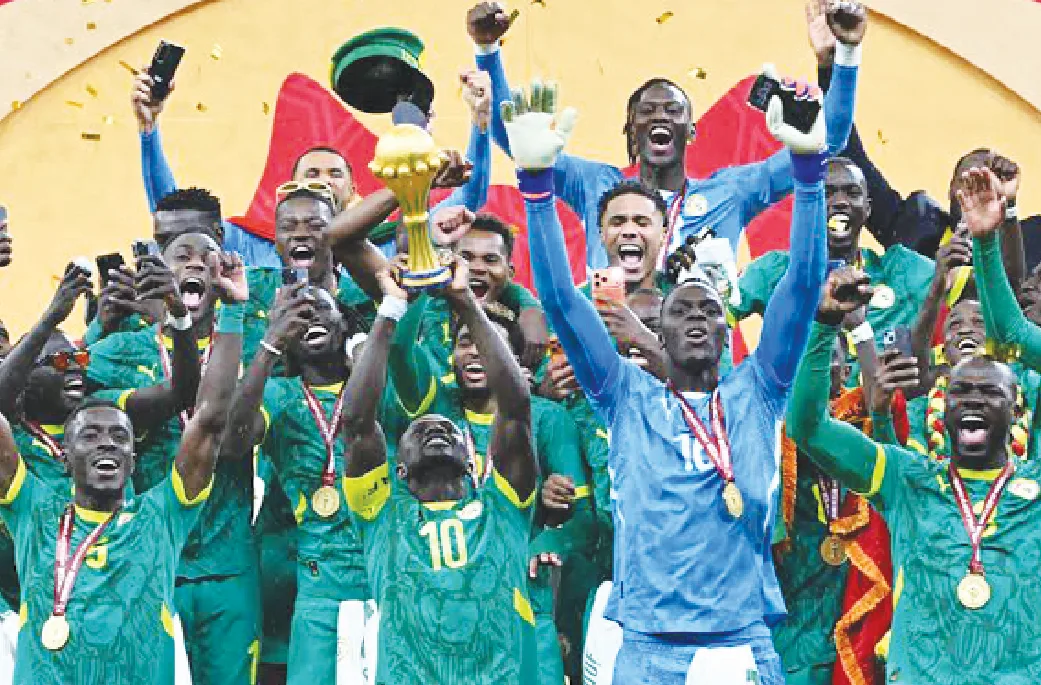
Senegal have officially been reinstated as the champions of the 2025 Africa Cup of Nations (AFCON) after the Court of Arbitration for Sport (CAS) overturned the decision that had awarded the title to Morocco following a controversial final in January.
The ruling, announced on Tuesday, November 24, 2026, brings a dramatic twist to one of the most disputed finals in African football history. Senegal’s appeal against the Confederation of African Football’s (CAF) earlier decision was upheld, restoring the country’s original 1-0 victory over Morocco in the final played in Rabat.
The dispute had attracted considerable attention across Africa and the international football community after Senegal’s players temporarily left the pitch in protest against a late penalty awarded to Morocco during the final. The incident became the central issue in the legal battle that followed the match.
CAS ruled in favour of Senegal after examining the circumstances surrounding the interruption, the referee’s decision to resume the match and the relevant provisions of the AFCON regulations.
The decision effectively reverses Morocco’s recognition as champions following CAF’s ruling earlier in the year, confirming Senegal as the rightful winners of the continental tournament.
CAS overturns CAF’s decision to award Morocco the trophy
The Court of Arbitration for Sport set aside the decision issued by CAF’s Appeal Board, which had declared Senegal to have forfeited the AFCON final and awarded Morocco a 3-0 victory.
The CAF ruling had been based on the conduct of Senegal’s players, who temporarily walked off the pitch after the referee awarded Morocco a penalty late in the match.
However, CAS concluded that the referee’s decision to restart the game fell within his authority and was covered by the football principle known as the “field of play” doctrine.
According to the court, referee Jean-Jacques Ndala had the authority to determine whether the conditions were suitable for the match to continue. After the Senegalese players returned to the pitch and both teams resumed play, the referee’s decision was considered an on-field judgment that could not be overturned in the manner CAF’s appeals panel had done.
CAS also concluded that Articles 82 and 84 of the AFCON regulations, which had been relied upon in the earlier forfeiture ruling, were intended to apply where a team’s conduct leads to a match being permanently abandoned.
Because the final resumed and was completed, the panel determined that those provisions did not apply to the circumstances of the match.
The court said the referee did not commit an error of law by restarting the game, and the panel’s decision was unanimous.
How the Senegal-Morocco AFCON final controversy unfolded
The controversy originated during the AFCON final on January 18, 2026, in Rabat, Morocco, when Senegal faced the tournament hosts in a closely contested match.
The game remained goalless late in regulation time, with both sides battling for the continental title. Tensions escalated after referee Jean-Jacques Ndala awarded Morocco a penalty following a VAR review of a challenge involving Morocco forward Brahim Diaz.
Senegal’s players reacted angrily to the decision, and members of the team left the pitch in protest. The interruption lasted approximately 15 minutes, creating a chaotic atmosphere in the stadium and attracting widespread attention from football fans.
After the Senegalese players eventually returned, the referee allowed the match to continue. Morocco’s Brahim Diaz stepped forward to take the penalty but failed to convert, with Senegal goalkeeper Edouard Mendy saving the attempt.
The match subsequently went into extra time, where Senegal found the breakthrough. Pape Gueye scored the decisive goal, giving Senegal a 1-0 victory and initially securing the country’s second AFCON title.
The final was later overshadowed by the disciplinary and legal dispute that followed the temporary walk-off.
In March 2026, CAF’s Appeal Board overturned the result, declaring Senegal to have forfeited the match and recording a 3-0 victory for Morocco. That decision led Senegal’s football federation to appeal to CAS, seeking to restore the result achieved on the pitch.
Why CAS ruled in Senegal’s favour
The central question before CAS was whether the referee’s decision to allow the final to continue could be challenged under the AFCON regulations invoked by Morocco and CAF’s Appeal Board.
Morocco’s football federation argued that Senegal’s temporary departure from the pitch constituted a breach of tournament rules and should have resulted in a forfeiture.
The Senegalese federation, however, challenged the decision, arguing that the referee’s authority to resume the match fell under the “field of play” doctrine.
The doctrine generally protects decisions made by referees during matches concerning sporting matters, recognising that such decisions should not ordinarily be reviewed by sports tribunals unless specific legal exceptions apply.
CAS agreed with Senegal’s position on the matter, concluding that the referee’s decision to restart the final was within his authority.
The panel also examined the tournament rules cited in the earlier CAF ruling and determined that they were not applicable because the match had not been permanently abandoned.
The ruling does not mean CAS endorsed the protest or the conduct of Senegal’s players during the interruption. Rather, the court’s decision focused on the referee’s authority to restart the match and the legal consequences of that decision under the applicable regulations.
The outcome reinforces the importance of the referee’s authority in determining whether a match can resume and whether sporting decisions made on the pitch fall within the jurisdiction of a tribunal.
Senegal celebrates the return of its AFCON title
The CAS decision has sparked renewed celebration among Senegalese football supporters, who had continued to insist that their team deserved to retain the title following the January final.
The Senegalese Football Federation welcomed the verdict, sharing a celebratory message on social media declaring the country once again the champions of Africa.
The decision restores the original result and allows Senegal to retain recognition as the winners of the 2025 Africa Cup of Nations.
The country’s football supporters had remained frustrated by CAF’s March decision, which had removed the title from Senegal despite the team’s victory in the final.
The legal battle has now concluded with CAS overturning that decision, although the broader controversy surrounding the final is likely to remain a talking point among football supporters.
The ruling also provides clarity over the tournament’s official outcome after months of uncertainty, during which the two countries disputed the championship status.
Morocco loses the AFCON title following CAS verdict
For Morocco, the CAS decision means the country no longer holds the 2025 AFCON championship that had been awarded following CAF’s appeals ruling in March.
Morocco’s football federation had defended the forfeiture decision, arguing that Senegal’s temporary departure from the field violated tournament regulations.
The Moroccan side maintained that the walk-off should have resulted in the match being awarded to the hosts under the relevant AFCON rules.
However, CAS rejected the basis on which the forfeiture decision had been made, restoring Senegal’s original victory.
The ruling represents a significant setback for Morocco’s legal position in the dispute, particularly after the country had been officially recognised as champions following CAF’s earlier decision.
The case has also highlighted the complicated relationship between tournament-specific regulations and the authority of match officials under the Laws of the Game.
What the CAS ruling means for African football
The decision could have broader implications for future football disputes involving protests, temporary interruptions and the authority of referees to resume matches.
By backing the referee’s decision in the AFCON final, CAS has reinforced the principle that certain sporting decisions made during matches are protected under the field of play doctrine.
The case also illustrates how football competitions can become embroiled in lengthy legal proceedings when match incidents lead to disputes over tournament regulations.
For Senegal, the ruling restores the championship won in January and closes a major chapter in the country’s football history.
For Morocco, the decision ends the legal dispute in favour of Senegal, although CAS awards may be challenged before Switzerland’s Federal Supreme Court on limited procedural or legal grounds.
As the football community moves forward, the Senegal-Morocco final is likely to be remembered not only for the dramatic penalty controversy and extra-time winner but also for the legal battle that followed.
The final outcome, however, is now clear: Senegal have been reinstated as the 2025 Africa Cup of Nations champions after CAS overturned CAF’s decision to award the title to Morocco.