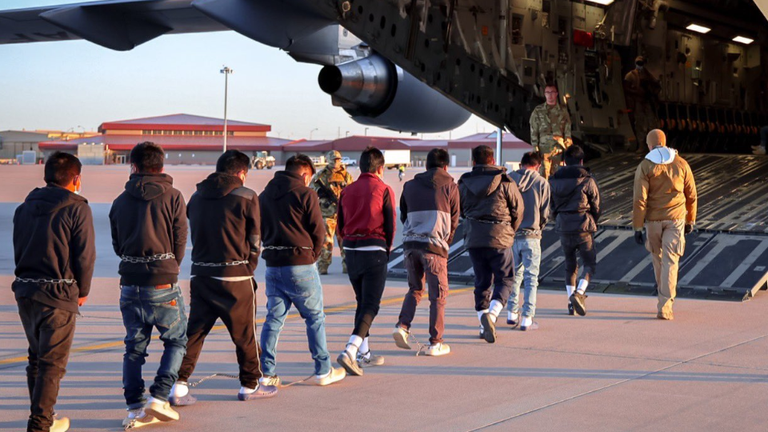
Migrants deported from the United States to South Sudan under President Donald Trump’s immigration crackdown have reportedly faced hunger, poor sanitation, prolonged detention and limited access to basic necessities, with relatives alleging that prison guards collected money intended to support detainees but failed to provide adequate assistance.
An investigation by the Associated Press published on November 20, 2026, detailed accounts from deportees and their families, describing conditions inside a detention facility in Juba, South Sudan’s capital.
According to the report, relatives were repeatedly asked to send money to guards for food, water, communication devices and other necessities. However, families alleged that much of the money was pocketed by the guards while detainees continued to experience shortages.
The revelations have renewed concerns about the treatment of migrants sent to countries other than their own under Washington’s third-country deportation policy, particularly when those destinations have limited resources and weak human rights protections.
Families Allegedly Paid Thousands of Dollars to Guards
Ngoc Phan, whose husband Tuan Phan was detained in South Sudan for nearly a year before being repatriated to Vietnam in June, said she sent approximately $4,000 to individuals identified as guards during his detention.
She reportedly made several payments after her husband complained about shortages of food, drinking water and other essential items.
According to her account, some of the money sent was followed by small quantities of food, including bananas, apples and peanuts, but the assistance was insufficient to address the detainees’ needs.
The AP report also cited relatives of other detainees who said they had made payments ranging from $100 to $1,000 at different times.
Families reportedly received requests for money to purchase necessities or support arrangements for detainees, with some payments accompanied by messages from individuals claiming to be guards.
The allegations raise questions about the management of detention facilities and the protection of migrants transferred to foreign countries under immigration agreements.
Deportees Report Hunger, Poor Sanitation and Restricted Access
Tuan Phan, 44, described difficult conditions inside a guarded building in Juba where he was held.
He reportedly lost about 20 pounds during his detention and said detainees sometimes went without proper meals for extended periods.
According to his account, food supplies were frequently depleted, leaving the men with limited options such as bread or rice. On some occasions, detainees reportedly went days without eating.
Water shortages were another major concern. Phan said detainees sometimes collected rainwater when supplies ran out, while deliveries of drinking water could be delayed for prolonged periods.
The report also described problems involving sanitation, electricity and restrictions on detainees’ movement.
Fuel shortages reportedly resulted in prolonged power outages, while plumbing problems contributed to unsanitary conditions inside the facility.
Phan also alleged that guards used force against detainees who complained about their living conditions. He described an incident in which a detainee seeking fresh air was struck in the face, while another man who complained about a lack of soap was reportedly confined to his room for several days.
The accounts highlight the difficulties faced by migrants held in facilities where oversight and access to independent assistance may be limited.
Five Deportees Remain in South Sudan
According to the AP report, five deportees remain in detention in South Sudan, with relatives and lawyers expressing concern about the length of their confinement and the uncertainty surrounding their cases.
Alma David, a lawyer representing one of the detainees, said her client had been held for more than a year without being charged with a crime.
The detainees were among migrants transferred to South Sudan under arrangements involving the Trump administration and foreign governments.
In July 2025, eight men from different countries, including Cuba, Laos, Mexico, Myanmar, Vietnam and South Sudan, were deported to the African country following legal proceedings in the United States.
The men had completed their criminal sentences in the US before being transferred into immigration custody, according to earlier reports.
The Trump administration has defended its deportation policy as a way to remove migrants who have final deportation orders but whose home countries may not accept them.
However, advocates and lawyers have criticised the practice of sending migrants to third countries where they may face detention, abuse or other dangers, particularly when they have legal protections against returning to their countries of origin.
South Sudan Defends Treatment of Detainees
South Sudan’s Foreign Ministry rejected the allegations of inadequate treatment, saying detainees receive food, water, medical care and access to relatives and lawyers.
The ministry also said the government covers the associated expenses and is working to resolve individual cases.
South Sudan has faced years of conflict, economic hardship, displacement and humanitarian challenges, leaving millions of people vulnerable to food insecurity and limited access to basic services.
The country’s difficult economic circumstances have also contributed to concerns about the ability of authorities to adequately manage the detention of foreign deportees.
The government, however, maintains that the detainees are being cared for and that its responsibilities are being handled in accordance with applicable procedures.
US Government Faces Questions Over Responsibility
The report also raised concerns about the extent of US involvement in monitoring the treatment of migrants deported to South Sudan.
Relatives and lawyers said they had struggled to secure assistance or assurances that the detainees’ conditions would improve.
A US congressional aide reportedly said embassy staff in Juba had been instructed not to visit the detainees or follow up on their treatment, although the US State Department did not directly address the claim when questioned.
South Sudan’s Foreign Ministry said Washington had relinquished responsibility for the deportees and no longer had legal jurisdiction over them.
The International Organization for Migration also said it could not intervene without a request from the South Sudanese government.
The situation has left families and legal representatives concerned about the welfare of those still detained, with limited avenues available to secure their release or improve their conditions.
The allegations have renewed scrutiny of third-country deportation arrangements and the safeguards available to migrants transferred to foreign detention facilities.
As immigration enforcement continues under the Trump administration, the experiences reported by deportees in South Sudan have raised broader questions about accountability, human rights protections and the responsibilities of governments involved in international deportation agreements.