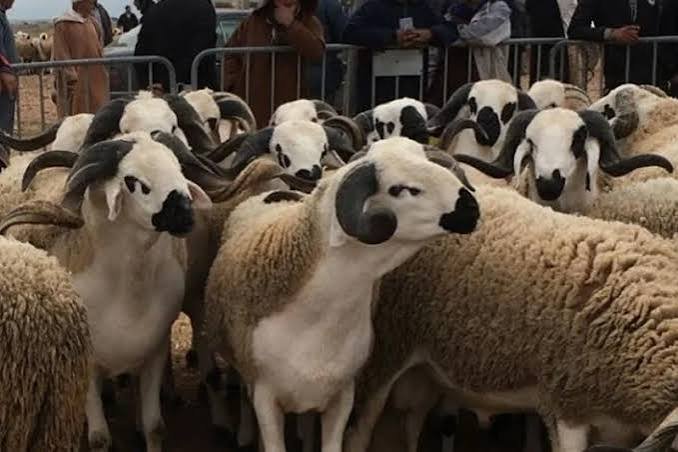
Morocco has reportedly reduced the value of its live animal imports from Spain by more than 80 per cent during the first nine months of 2026, according to European trade statistics, highlighting a significant change in the North African country’s livestock sourcing arrangements.
Figures from Eurostat, the European Union’s statistical agency, show that Spanish exports of live animals to Morocco fell from €186.7 million between January and September 2025 to approximately €36.7 million over the same period in 2026.
The decline represents a reduction of about €150 million, or 80.3 per cent, compared with the previous year. The development comes as Morocco continues to review its livestock import strategy and explore alternative sources of supply amid challenges affecting its domestic meat industry.
Despite the sharp decline, Spain remained Morocco’s largest European supplier of live animals in terms of export value during the period under review. However, France moved closer to Spain’s position, while other European countries recorded changes in their export figures.
European Livestock Exports to Morocco Also Decline
The reduction in Spanish exports forms part of a broader fall in live animal shipments from European Union countries to Morocco.
Eurostat figures indicate that the value of live animal exports from the EU to Morocco dropped by 62.1 per cent, falling from €242.1 million in the first nine months of 2025 to €91.9 million during the corresponding period in 2026.
The volume of animals shipped also declined considerably, falling by 73.6 per cent. This suggests that the change was not limited to the value of livestock traded but also involved a substantial reduction in the quantity supplied.
The figures point to a difficult period for European livestock exporters that have traditionally relied on Morocco as an important market for live animals.
Spain experienced the largest reduction among the leading suppliers, although other countries also recorded weaker trade performance.
France and Ireland Gain Ground
While Spanish exports declined sharply, France maintained a significant presence in Morocco’s livestock import market.
French live animal exports to Morocco were valued at €35.6 million during the first nine months of 2026, compared with €43.2 million in the same period a year earlier. This represented a decrease of approximately 17.4 per cent.
The gap between Spain and France consequently narrowed considerably, with the two countries accounting for much of the European Union’s remaining live animal exports to Morocco.
Ireland recorded a different trend, with its exports increasing by 152.7 per cent. The value of Irish shipments rose from €3.6 million in the first nine months of 2025 to €9.1 million in 2026.
Portugal also emerged as a supplier, recording exports worth €4.3 million during the period. Denmark, Belgium and the Netherlands maintained smaller shares of the market.
These developments suggest that Morocco’s livestock sourcing arrangements are becoming more distributed among European suppliers, although the available figures do not establish that the country has permanently shifted away from Spain.
Livestock Disease and Changes in Trade
One factor affecting Spain’s livestock trade with Morocco has been the outbreak of lumpy skin disease in parts of northeastern Spain in late 2025.
Spanish livestock farmers have previously called on their government to engage Moroccan authorities over the suspension of live cattle exports. The restrictions reportedly followed health concerns connected to outbreaks in Catalonia and Aragon.
According to reports in October 2026, the Spanish Union of Small Farmers and Livestock Breeders urged officials to pursue discussions with Morocco to allow exports to resume from areas not affected by the disease.
Morocco had been a major destination for Spanish cattle before the suspension. Spain reportedly exported 61,715 cattle to Morocco in 2024 and 51,986 in 2025, before the trade was halted in 2026.
The disease-related restrictions provide important context for the decline in livestock trade, although the overall Eurostat figures cover different categories of live animals and should not be interpreted as a measure of cattle imports alone.
Morocco Seeks to Diversify Livestock Supply
Morocco’s changing import figures come against the background of pressure on its domestic livestock sector.
Several years of drought and difficult climatic conditions have affected the country’s national herd, contributing to concerns about the availability of livestock and the supply of red meat.
The government has continued to consider imports as part of its efforts to address supply shortages and support the domestic market.
During discussions on the 2027 Finance Bill at the House of Representatives on November 11, Economy and Finance Minister Fouzi Lekjaa reportedly stressed the importance of diversifying livestock suppliers and opening up additional international markets.
The government is also examining the costs associated with importing animals, including purchasing prices, transportation expenses and the profit margins applied by importers.
Such measures are intended to improve oversight of the import process and provide a clearer picture of how international purchasing costs affect prices in Morocco.
What the Decline Means for Morocco’s Livestock Market
The latest figures suggest that Morocco is entering a period of adjustment in its livestock trade, with European suppliers experiencing different levels of demand.
Although Spain remained the leading European supplier by export value during the first nine months of 2026, the sharp reduction in its shipments has created room for other countries to strengthen their positions.
However, the decline in European exports does not automatically mean Morocco has replaced European suppliers with countries outside the EU. The available statistics mainly show changes in trade between Morocco and European partners.
The coming months will provide a clearer indication of whether the decline represents a temporary disruption caused by health restrictions and market conditions or a longer-term change in Morocco’s livestock import strategy.
For now, the figures highlight the growing importance of diversifying supply sources as Morocco works to address pressure on its domestic livestock industry and maintain the availability of meat in the local market.