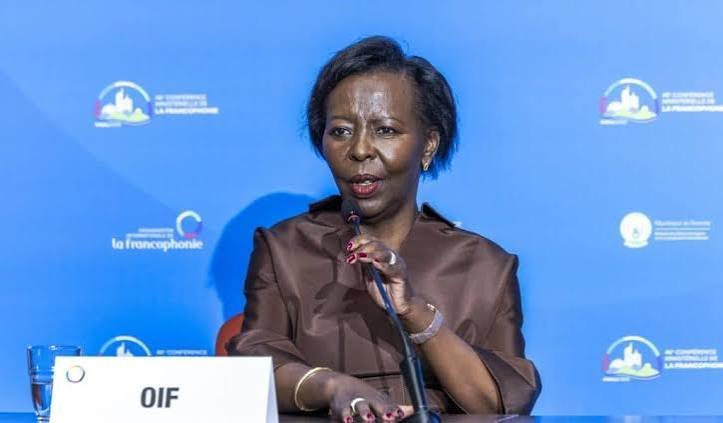
Member states of the International Organisation of La Francophonie (OIF) have postponed choosing their next secretary-general until 2027 after failing to reach agreement at a summit in Cambodia. The compromise gives countries another year to work through the leadership dispute while current secretary-general Louise Mushikiwabo remains in office.
The decision came at the OIF’s 20th Summit, held in Phnom Penh on November 15 and 16. The organisation said Cambodia’s summit presidency proposed extending Mushikiwabo’s mandate by 12 months, allowing an election to take place in 2027. During the extension, she is expected to help clarify the rules for selecting her successor before leaving office at the end of that period.
The delay followed several rounds of negotiations among member states. According to the Associated Press, the leadership contest had become entangled in tensions between Rwanda and the Democratic Republic of Congo (DRC). Rwanda supported a third term for Mushikiwabo, while Kinshasa opposed her reappointment.
A contested succession
Mushikiwabo, a Rwandan diplomat and former foreign affairs minister, has led the OIF since 2018 and was re-elected in 2022. She was seeking another term in a race that initially featured four candidates: Mushikiwabo; former Congolese minister Juliana Amato Lumumba; Mauritanian diplomat Coumba Bâ; and former Romanian prime minister Dacian Cioloș.
The field shifted shortly before the summit. The Associated Press reported that the DRC withdrew Lumumba’s candidacy and backed Cioloș, saying it wanted to support a unifying candidate. Rwanda, meanwhile, maintained Mushikiwabo’s candidacy. The members ultimately did not settle on a successor.
The dispute played out against strained relations between Rwanda and the DRC, which have accused each other over the conflict in eastern Congo. The DRC and other international actors accuse Rwanda of supporting the M23 armed group; Rwanda denies backing armed groups in Congo. The leadership contest therefore carried wider diplomatic weight beyond the choice of an organisation chief.
The AP reported that the DRC had threatened to leave the OIF if Mushikiwabo won another term. Such a departure would matter to the organisation: the DRC is among its most populous members and has a large French-speaking population. The compromise avoids an immediate leadership decision amid those tensions, though it does not resolve the underlying disagreements.
An additional year to settle the rules
The OIF’s decision means the planned leadership transition for 2027–2030 will not proceed on its original schedule. Instead, member states have until 2027 to negotiate a new path to the appointment. The OIF said Mushikiwabo would continue her duties during the extension and work on clarifying the election rules.
The organisation has historically selected its secretary-general through agreement among member states. The 2026 contest’s lack of consensus highlights the challenge of maintaining unity when candidates are backed by countries with competing political priorities.
The secretary-general leads the OIF’s work and represents the organisation internationally. The wider summit brought together leaders from member states and governments to discuss the group’s priorities. The OIF said delegates adopted the Phnom Penh Declaration, a resolution on crises and peacebuilding, and an appeal concerning cultural heritage.
The year-long extension creates time for diplomacy, but leaves key questions open: how the selection rules will change, whether the current candidates will remain in contention, and whether members can agree on a successor in 2027. For now, Mushikiwabo remains in office under the transitional arrangement, while the organisation’s members continue negotiations.