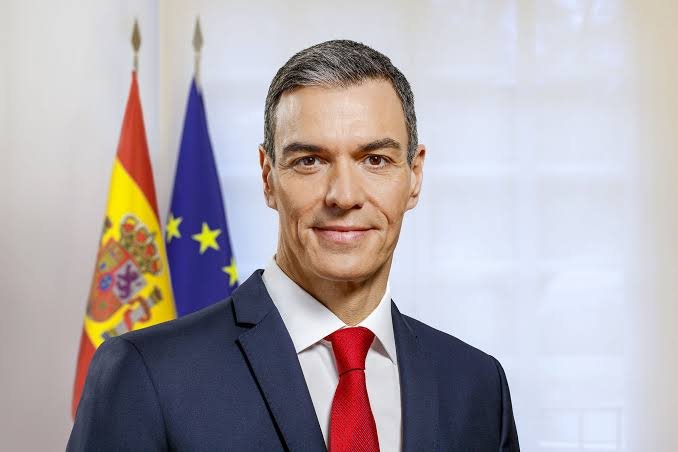
Spanish Prime Minister Pedro Sánchez has reiterated that FIFA will have the final say on where the 2030 FIFA World Cup final will be played, as political disagreements in Spain intensify over Morocco’s ambition to host the tournament’s biggest match.
Sánchez made the remarks during an interview with Spanish television channel La Séptima on Monday, November 9, addressing growing debate over the competition between Spain and Morocco to stage the final.
The Spanish leader avoided directly responding to calls by opposition politician Alberto Núñez Feijóo for Spain to withdraw from co-hosting the tournament if Morocco is selected to host the decisive match.
Instead, Sánchez stressed that the venue would be determined by football’s global governing body.
“This is an important issue. FIFA makes the decision,” he said, according to Spanish news agency Europa Press.
His comments come at a time when the proposed hosting arrangement for the 2030 tournament has become a subject of political discussion in Spain, particularly following Feijóo’s suggestion that the country should reconsider its participation if it does not secure the final.
Morocco, Spain and Portugal are jointly preparing to host the competition, but the location of the final remains undecided.
Sánchez maintains Spain’s ambition to host the final
Although Sánchez acknowledged FIFA’s authority over the selection process, he made it clear that Spain still hopes to secure the tournament’s showpiece fixture.
He also expressed confidence that Spain would host more matches than either of its co-hosting partners during the competition.
“I believe Spain is the country that will host the most matches at the World Cup. That is what has been proposed,” he said.
The prime minister also spoke positively about Morocco’s involvement in the joint bid, describing the North African country as a brother nation that joined Spain and Portugal in the project.
According to Sánchez, Spain and Portugal were responsible for initiating the original hosting proposal before bringing Morocco into the arrangement.
His remarks suggest that the Spanish government intends to maintain the partnership despite the growing disagreement over the final.
However, Sánchez did not explain what position his administration would take if FIFA ultimately awards the match to Morocco.
Feijóo threatens Spain’s participation
The controversy escalated after Alberto Núñez Feijóo, leader of Spain’s opposition People’s Party, said the country should withdraw from organising the 2030 World Cup if FIFA selects Morocco to host the final.
Feijóo made the comments during an appearance on Spanish football television programme El Chiringuito.
He argued that Spain deserved to stage the final because of its footballing history, achievements and experience hosting major international sporting events.
The opposition leader also made clear that he would push for Spain to leave the hosting arrangement if he became prime minister.
His position has introduced a political dimension to what is primarily a FIFA venue-selection process.
Spain’s hosting commitments involve cooperation with Morocco, Portugal and FIFA. Any attempt to withdraw would therefore raise questions about existing agreements and the practical arrangements already being developed for the tournament.
Feijóo’s proposal has also attracted attention because Spain remains one of the three confirmed co-hosts, and no official decision has been announced to change that arrangement.
Morocco targets the 2030 World Cup final
Morocco is seeking to host the final at the proposed Grand Stade Hassan II in Benslimane, near Casablanca.
The stadium, which is under construction, is planned to accommodate approximately 115,000 spectators. If completed as designed, it would be among the largest football venues in the world.
The project is a major part of Morocco’s preparations for the 2030 tournament and reflects the country’s ambition to stage some of the competition’s most important matches.
Moroccan football federation president Fouzi Lekjaa has publicly expressed confidence that the country will host the final. However, FIFA has not confirmed that Morocco has secured the fixture.
Morocco’s bid also carries significance for African football. South Africa was the first African country to host the FIFA World Cup in 2010, and the 2030 tournament will give Morocco another opportunity to showcase the continent’s capacity to stage major international sporting events.
Spain presents Bernabéu and Camp Nou as candidates
Spain also has prominent stadium options in the competition to host the final.
Madrid’s Santiago Bernabéu Stadium and Barcelona’s renovated Camp Nou are among the leading venues being considered.
Both stadiums have significant football histories and are associated with two of Spain’s most recognisable clubs, Real Madrid and Barcelona.
Spanish officials have repeatedly argued that the country’s infrastructure, football culture and experience organising major sporting competitions make it a strong candidate for the final.
National team coach Luis de la Fuente has also expressed support for the final being played in Spain, although he has not backed the proposal to withdraw from the tournament if the country loses the hosting contest.
The disagreement therefore extends beyond politicians, with football officials and sporting figures also expressing their preferences about the final’s location.
FIFA begins assessment of proposed venues
FIFA has begun evaluating candidate cities and stadiums across Morocco, Spain and Portugal as part of preparations for the 2030 World Cup.
Inspection visits are scheduled for November and December, with assessments expected to cover stadium facilities, transport connections, accommodation capacity and other operational requirements.
The process is intended to help FIFA determine whether proposed venues can meet the standards required for hosting World Cup matches.
The final is one of the most sought-after fixtures because of its global audience, commercial value and sporting importance.
Despite public statements from representatives in Morocco and Spain, FIFA has maintained that the decision will be announced through its established selection process.
The governing body has previously rejected claims that Morocco had already been promised the final.
Political disagreement puts spotlight on joint hosting arrangement
The dispute highlights the challenges that can emerge when several countries share responsibility for organising a major international sporting competition.
Morocco, Spain and Portugal are expected to work together on preparations, including stadium development, transport, accommodation and security.
The final venue, however, carries additional prestige and economic benefits, making it a particularly sensitive issue for the competing countries.
Sánchez’s latest comments indicate that his government recognises FIFA’s authority while continuing to pursue Spain’s ambition to host the match.
Feijóo, meanwhile, has taken a more confrontational position by linking Spain’s continued participation in the tournament to the outcome of the final venue decision.
For now, Spain remains a co-host alongside Morocco and Portugal, and there has been no formal announcement of a withdrawal.
The immediate focus will be on FIFA’s inspections and the evaluation of proposed venues. Until the governing body reaches a decision, both Morocco and Spain remain in contention to stage the 2030 World Cup final.